In Search of the Promised Land
In a world driven by self-optimisation tech, what is left for a luxury health retreat to offer? We head to Thailand’s RXV Wellness Village, seeking some magic among the data.
The question is straightforward, to be expected. Yet when Sirapob “Gunn” Chaimeekhiew, a wellness coordinator at RXV Wellness Village, enquires about personal health goals, the potential answers seem so numerous, so entangled, it makes sense to grab at “weight”, the fruit hanging lowest and largest from a decade of careless living.
It’s just a pre-resort Zoom consultation — when I arrive in Thailand in a week or so, RXV staff will confirm my goals, measure my health, and tweak their recommendations as the stay progresses — but isn’t gut health a more important issue? Or muscle mass? Then there’s brain health, good sleep and controlling stress. And what about balance, where how long a person can stand on one leg will determine how well they age, but where disequilibrium can be attributed to the inner ear, a vitamin deficiency or weak ankles from repeated high-heel accidents? “Everything,” I’m thinking. “Anything. Whatever you and I and a Rainbow Diet can fix in five nights at a health retreat in Thailand.”
The Rise of the Wellness Empire
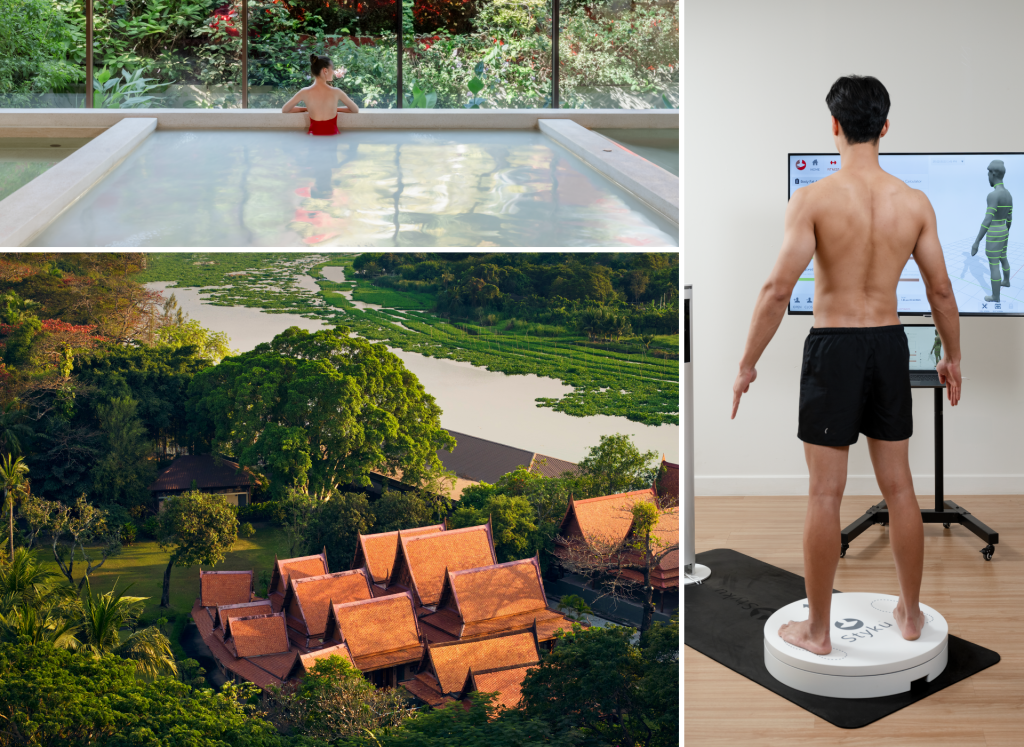
RXV Wellness Village, sitting on the Tha Chin River in the pretty Suan Sampran estate, opened in 2023. It comprises both a pre-existing brutalist hotel among century-old trees and a sweep of elegant spa, clinical and fitness facilities, and it’s part of a medical and wellness tourism industry in Thailand valued at $24.6 billion. (Indeed, much of the hour’s drive to Nakhon Pathom province from Bangkok’s Suvarnabhumi Airport is dotted with billboards for surgeries and injectables that picture men and women with vividly glossed lips and skin like milk.) At home too there’s a powerful business case for booking travellers seeking better bodies and minds. In August, the Victorian Government released a guide to creating wellness tourism destinations and experiences, and is investing in “wellness infrastructure” that includes a Nordic spa resort in the Grampians and further development of the Hepburn Mineral Springs Reserve.
Globally, the wellness tourism industry is set to be worth more than $2 trillion by 2028, according to business intelligence platform Statista — more than double its 2022 market value.
Escaping Reality
So why, when any smartwatch, ring, earbud or sleep pad can guarantee—if not good health—then the data to secure it, is a stretch at a wellness sanctuary even necessary? Why would such a stay be superior to all the hyper-optimisation tech that emerged from the late 2000s onwards?
Of course, it’s partially the tourism bit of wellness tourism. RXV Wellness Village is nothing like home and the frosty southern Australian winter I’d left behind. Housekeeping thoughtfully cranks down the air-conditioning in the Presidential Suite, and it will go a lot lower, because it’s 33 degrees outside. The gardens are old and manicured, and heaving with mangoes and twisted ylang-ylang trees and paths that ramble into village markets or traditional Thai buildings. The river boats are working craft, but to any outsider, they are beautiful.
The Art of Cocooning
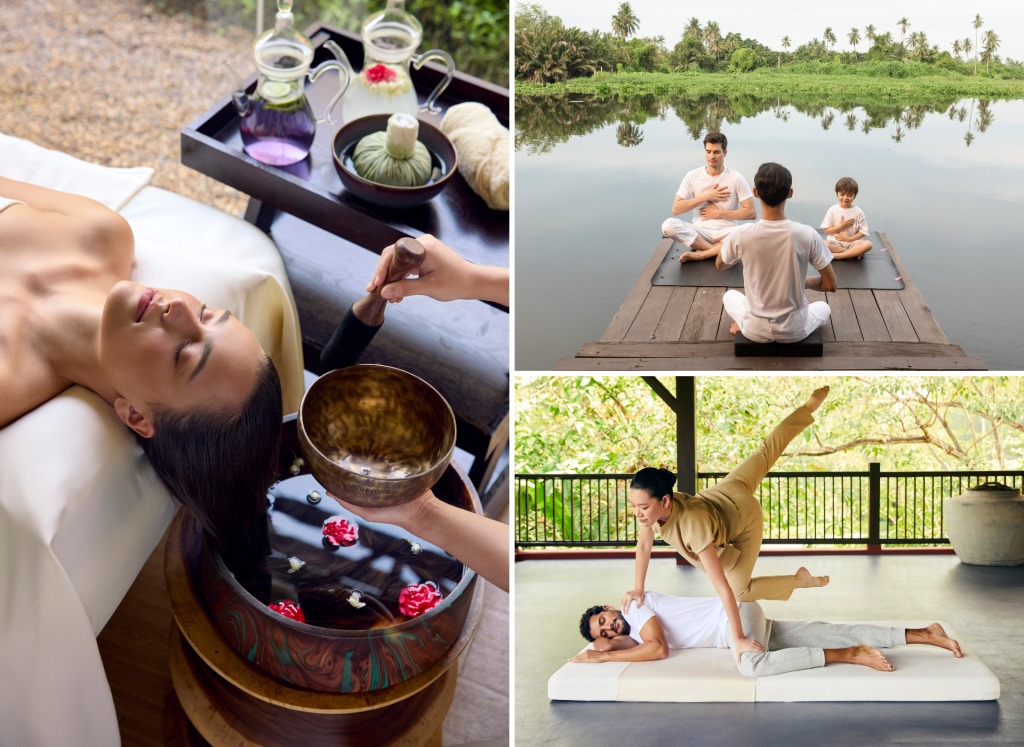
Then there’s the delicious cocooning of it all — the shedding of real life for a softer world of fluffy robes, essential oils and the vibrations of Tibetan bowls. Once a day, guests visit Bor Naam, the hydrotherapy hub. The design is simple and serene, and it feels like a true act of self-care if you’re there alone, which is usually the case, or a gentle communal experience when you’re not. (Although plenty of glamorous locals lunch at RXV, there are very few hotel guests during my stay: a handful of writers, a travel agent, the Stenmark twins, a fit mystery woman, and a family of four.)
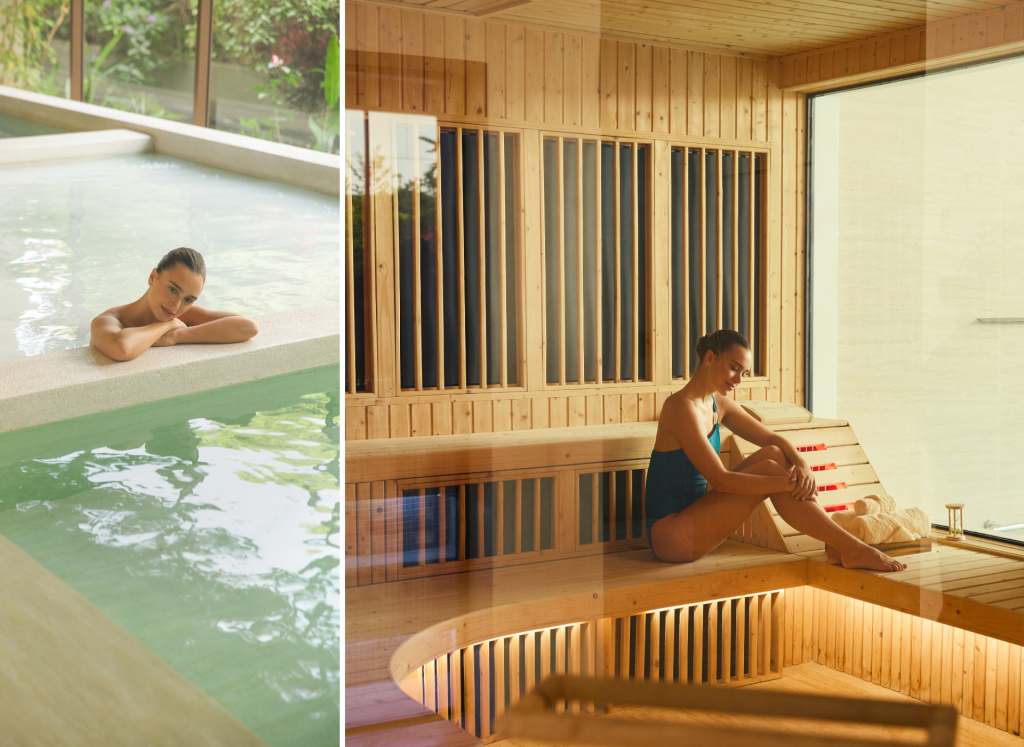
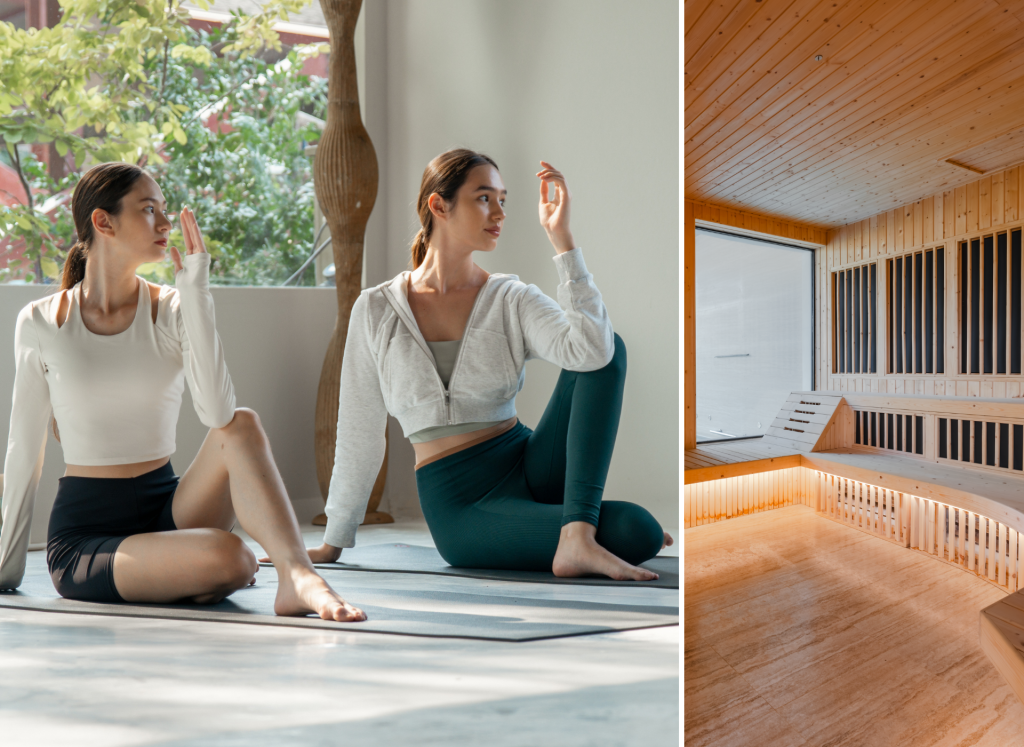
At Bor Naam, a wall chart outlines six “pathways” for different outcomes—muscle recovery, deep sleep, de-stress—that guide a bather’s progression through the fizzy oxygen bath, mineralised soda bath, cold plunge pool, hot vitality bath, infrared sauna, and steam room. The experience shower is a succession of water temperatures and droplet sizes to the sounds of ocean waves and birdsong. It might sound corny, but it’s delicious—part of the lure of any wellness resort journey that can sometimes seem less retreat and more like flying over the rainbow to where trouble melts and so does subcutaneous fat; where a person can luxuriate in yoga and massage and emerge transformed: a butterfly from the chrysalis, a Venus from her shell, even an old snake sloughing skin.
Facing the Data
So it’s a sharp slap of reality when my five-day personalised program starts with a Body Composition Analysis, where a Styku body scanner captures lean mass, fat mass and a detailed 3D image. That lumpen green figure, ringed to indicate waistline, thigh line and so on—that melting ice-cream of a woman—will haunt me ’til I die, which is sooner than expected because the report also includes that my numbers are better than 30 percent of women my age. There are darker ways to phrase that, but my assessor, a sunny physiotherapist nicknamed Mind, corrects me: 70 percent of my peers are better or the same.
Conversations in the Kitchen
“I think I have body dysmorphia, but the other way,” says another guest later, a young English writer also reeling from the green goblin on her report. “I think I look better than I do.” We are swapping experiences in the riverside RXV Kitchen, a restaurant that serves exquisite, brightly hued dishes. My favourites are the spiced organic pomelo of yum som-o, and the pink and petalled sphere of elderflower mousse. There’s alcohol if you want it, but many don’t; and when asked, the kitchen will customise calorie- and nutrient-controlled meals for no charge.
The young woman tells me of the backlash against self-optimisation among women her age. “Why check a watch to know if you slept well?” she argues, and monitoring a wearable suddenly seems a bit like allowing the kilos on a scale to colour one’s day. Before our visit, there’d been an uptick on TikTok of “manifestation content”, where beautiful women—mostly white, hyper-feminine women—champion visualisation and the abundance that follows. Meanwhile, the manosphere is built on a culture of productivity and self-denial, the rejection of anything that might undermine control.
Activating the Brain
Reality jumps me a second time during Brain Activation Exercise in the Wellness Gaya. The session is a combination of sensory inputs, motor outputs and brain games—a round of one-person cardio Twister with flashing coloured lights and a timer—and a test of physical coordination and reaction times that the personal trainer keeps assuring me is fun.
Between Science and Spirit
I do not cry. Later, in the cavernous suite, pulling open the curtains to views of the river and the curvy outdoor pools, I get a grip and acknowledge my good fortune. This is data—pure and useful—and it offers a blunt understanding of what needs fixing. The world’s “most measured man”, tech founder Bryan Johnson, is often maligned, with his team of doctors continually refining his diet, treatments, routines and pills in an endeavour to reverse ageing. Critics say to live so slavishly to health and longevity—to eat the same two meals every morning and go to bed at 8.30 pm—is no life at all. But Johnson will tell you that nothing beats feeling as well as he does, and that mockery is the “algorithmically predictable” reaction to any figure who questions norms. On returning to the Wellness Gaya for a Functional Weight Training circuit with Fluk, I concentrate on technique and revel in sweat.
The Breath Between
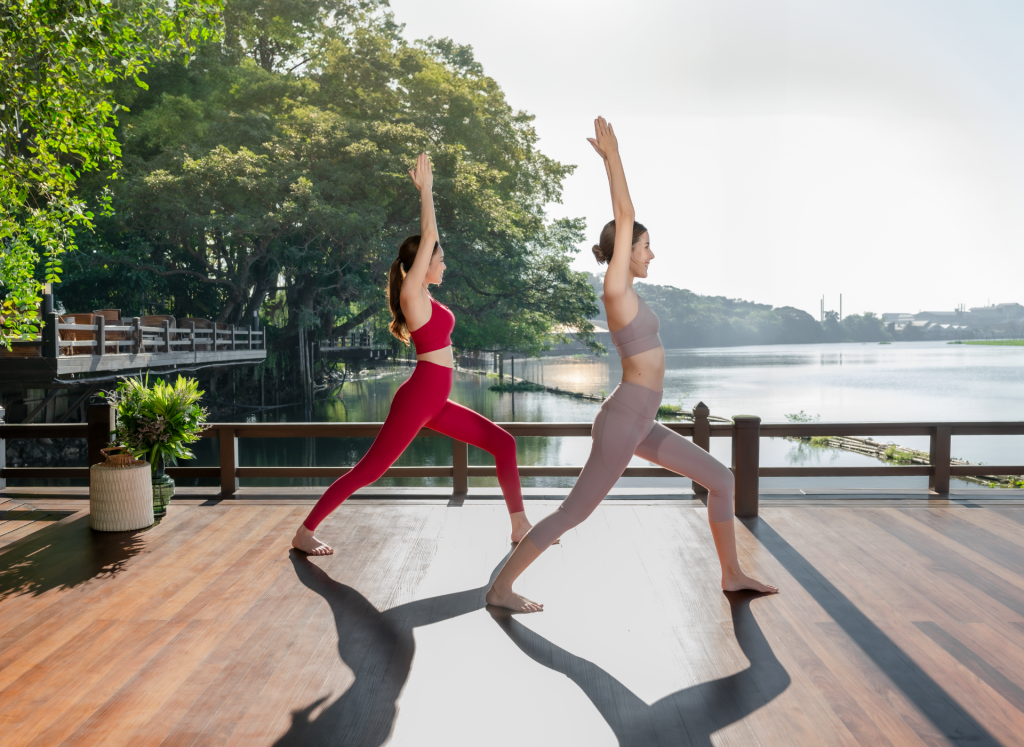
On day three, an MD at the Wellness Clinic administers an IV infusion of amino acids, with an extra “pack” of antioxidants. Still, for me the most powerful before-and-after shift follows both the acupuncture for gut health and a Breath Work class on the pier, where I’m suddenly able to slow down and breathe deeply (and spot dozens of fish jumping in the river after only being able to catch them in the corner of my eye before).
When Energy Speaks
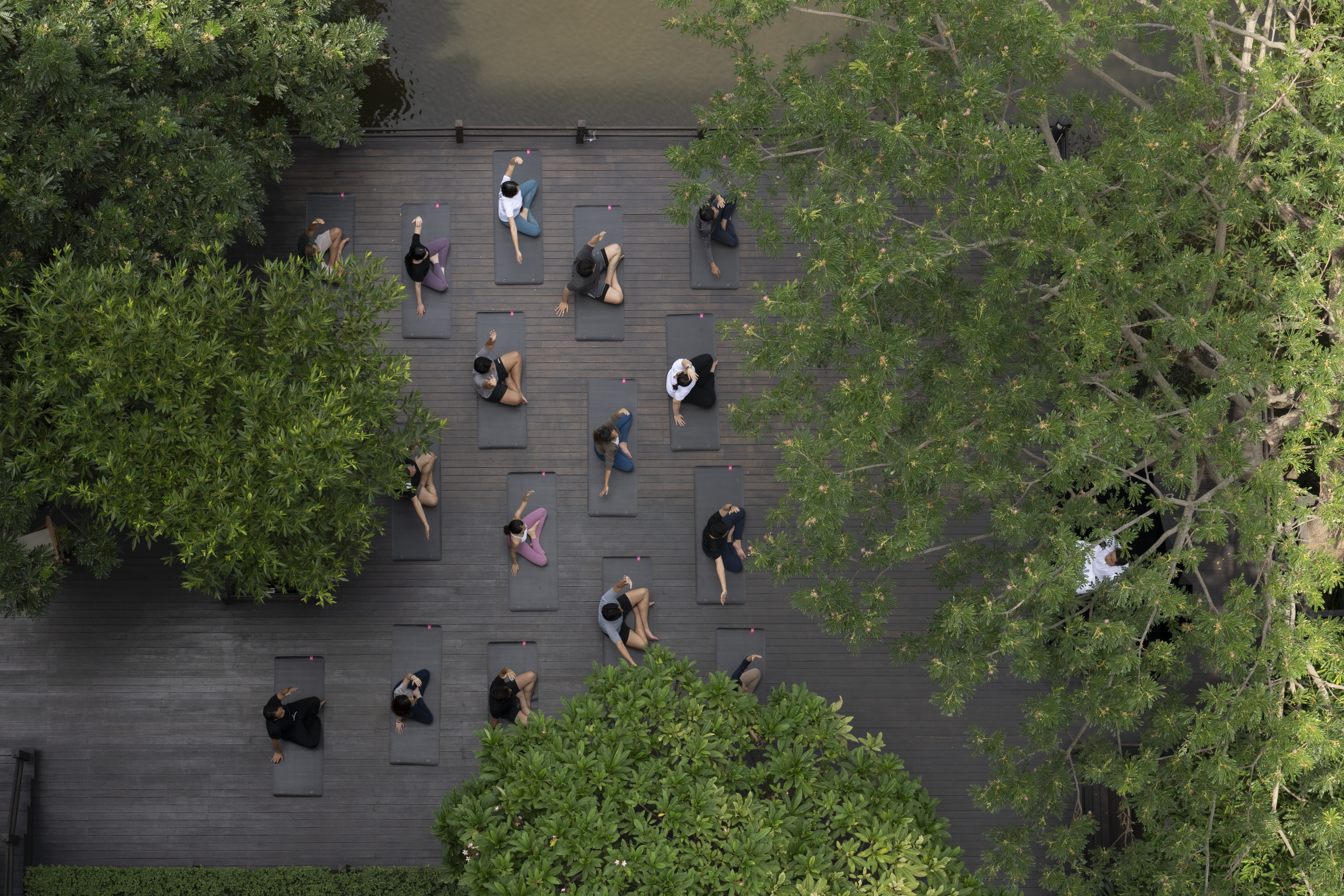
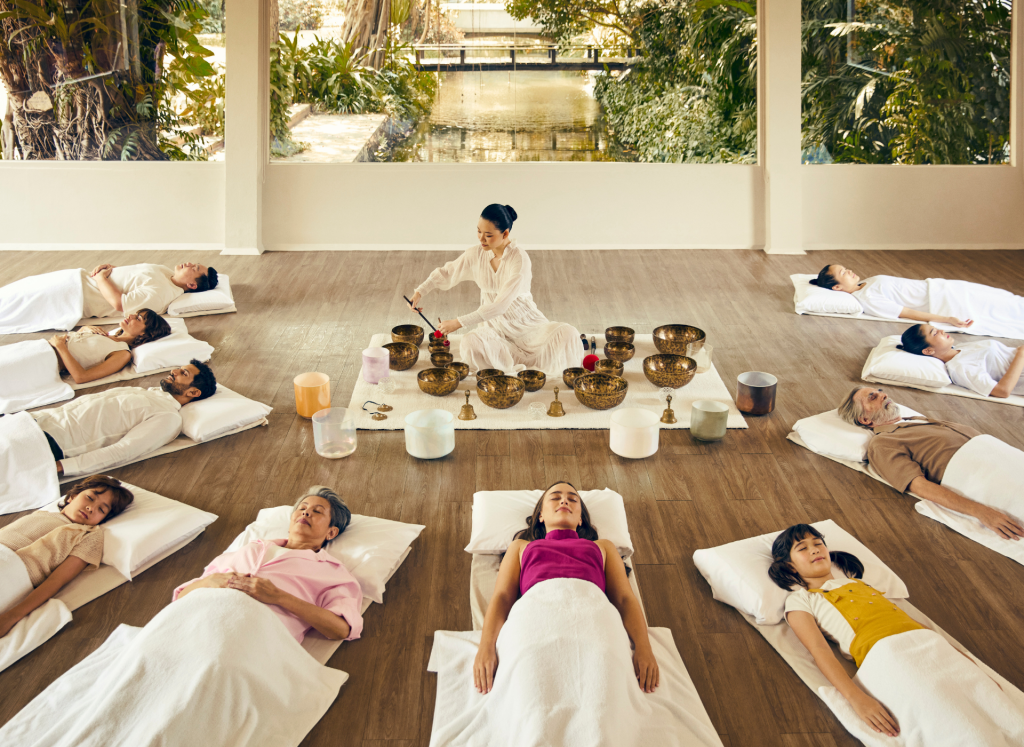
Like any health resort, there are swings between rigour and pampering, an interplay of science with the spiritual. No matter if yoga is on the pier or in a sunlit studio, the instructors are physiotherapists. Following a Sound Healing session, where the therapist Turtik strikes crystal bowls as participants lie in a circle, Gunn suggests my unexpected urge to cough could be because the body’s prone position narrowed airways or provoked mucous to drip. But when I share a dream from the night before, of not being heard over a crowd, the psychology graduate from Thailand’s prestigious Chulalongkorn University sucks in his breath. The throat chakra, according to ancient Indian wisdom, is associated with self-expression and personal truth; a blockage represents something suppressed. He recommends asking about it later during the Crystal Mandala Workshop, an art therapy I’d never have chosen for myself that proves illuminating and popular among guests.
The Ritual of Belief
In an Anti-Ageing Wellness Doctor Consultation, it’s surprising when an MD prescribes, alongside prebiotics and probiotics, Bach flower remedies determined by picture cards I choose from a selection and vials I hold against my chest. Surely it’s nonsense, yet this little ritual becomes a pleasure. Four times a day, I drink a glass of water and consider the attributes those drops are meant to instill. There’s plenty of research into the healing power of the mind; one Harvard Medical School study found that a placebo’s benefits persist even when someone knows they’re getting a placebo. So, I’ll continue to drink the Wild Rose, Pine and Hornbeam Kool-Aid, and feel all the better for it.

Subscribe to the Newsletter
Recommended for you
The Venice Simplon-Orient-Express Will Start Travelling From Paris to Monte Carlo Next Year
The new route will officially roll out in March 2027.
October 14, 2026
The 15 Best Luxury Hotels in London
In a city beloved for its double-decker buses and scones piled with clotted cream, London is quickly becoming known for something else—the world’s best luxury hotels.
By Katie Lockhart, Mark Ellwood
October 8, 2026
You may also like.

You may also like.
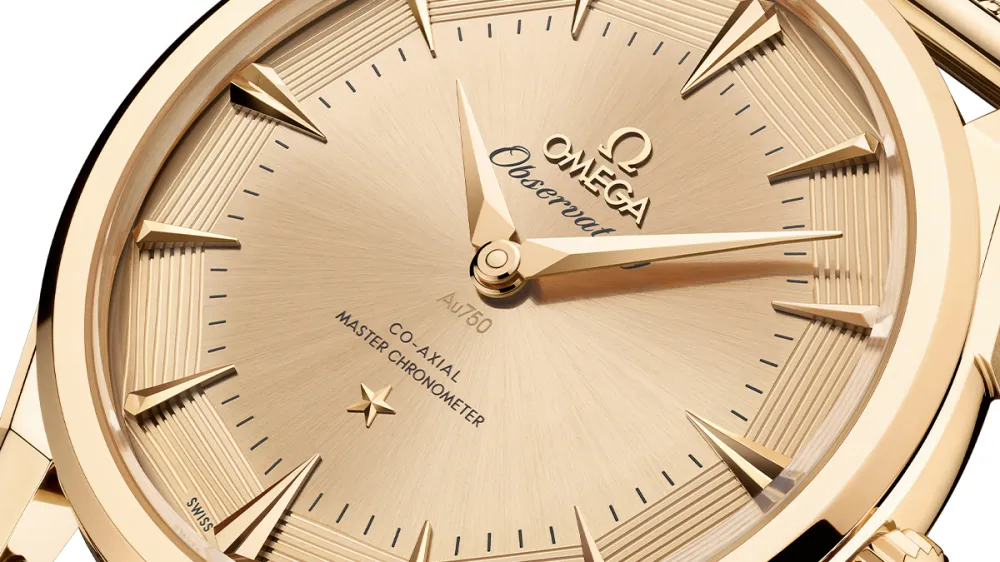
Omega Just Unveiled 9 Watches in Its New Constellation Observatory Collection
The line-up shows up a bevy of metals and colours, too, as well as two new calibres.
Omega’s latest watch is in a universe of its own.
The Swiss watchmaker just unveiled its new Constellation Observatory Collection today, the next step in its Constellation lineage and the first two-hand hour and minute timepieces to ever earn Master Chronometer certification. And if you were paying attention to any of the dazzling watches spotted at the Oscars this year, you would’ve caught a glimpse of the new line already: Sinners star Delroy Lindo rocked one of the models on the Academy Awards red carpet, giving us a pre-release preview of the collection.
Developed at Omega’s new Laboratoire de Précision (its chronometer testing lab open to all brands), the collection houses a set of nine 39.4 mm watches. The watches underwent 25 days of scrutiny there, analysed via a new acoustic testing method that recorded every sound emitted from the timepiece to track irregularities, temperature sensitivities, and more in the name of all things precision. (Details such as water resistance and power reserve are also thoroughly examined.) This meticulous process is all in the name of snagging that Master Chronometer label, meaning that the timepiece is highly accurate and surpasses the threshold for ultra-high performance. The Constellation Observatory Collection has now changed the game, though, thanks to its lack of a seconds hand.

“Until now, precision certification has required a seconds hand,” Raynald Aeschlimann, president and CEO of OMEGA, said in a press statement. “The development of a new acoustic testing methodology has made that requirement obsolete. It is this breakthrough that has enabled us to present the Constellation Observatory, the first two-hand watch to achieve Master Chronometer certification.”
In addition to notching its place in history, the collection also debuted a new pair of movements: the Calibre 8915 and the Calibre 8914, each perched on a skeletonised rotor base. The former’s Grand Luxe iteration will appear on the 950 Platinum-Gold model in the collection, which offers up that base in 18-karat Sedna Gold alongside a Constellation medallion in 18-karat white gold with an Observatory dome done in white opal enamel surrounded by stars. The second Calibre 8915, the Luxe, will find its home on the other precious-metal models in the line, either made with the brand’s 18-karat Sedna, Moonshine, or Canopus gold seen across the case, the hand-guilloché dial, and, of course, the movement itself. (Lindo chose to rock the Moonshine Gold on Moonshine Gold iteration, priced at approximately $86,000, for Sinners‘s big night at the Oscars.) As for the Calibre 8914, it can be found in the collection’s four steel models.

Each model is a callback to myriad design features on past Omega models. That two-hand dial, for one, comes from the 1948 Centenary (the brand’s first chronometer-certified automatic wristwatch), while the pie-pan dial (seen in various blue, green, and golden hues throughout the line) and that Constellation medallion caseback both appear on watches from 1952. The star adorning the space above 6 o’clock also harks back to 1950s timepieces from Omega. And to finish off the look, you can opt for alligator straps in a variety of colours, or perhaps a gold iteration to match the precious-metal models; the brick-like pattern on the 18-karat Moonshine bracelet was also inspired by Omega watches from the ’50s.
We’ll have to keep our eyes peeled for any other Constellation Observatory timepieces (or any other unreleased models from the brand) at the rest of the star-studded events headed our way this year—perhaps the Met Gala?
You may also like.
In Search of White Gold
Colorado’s barely known San Juan Mountains do a fine line in bespoke skiing experiences, luring alpine-sports cognoscenti and billionaire thrill-seekers alike.
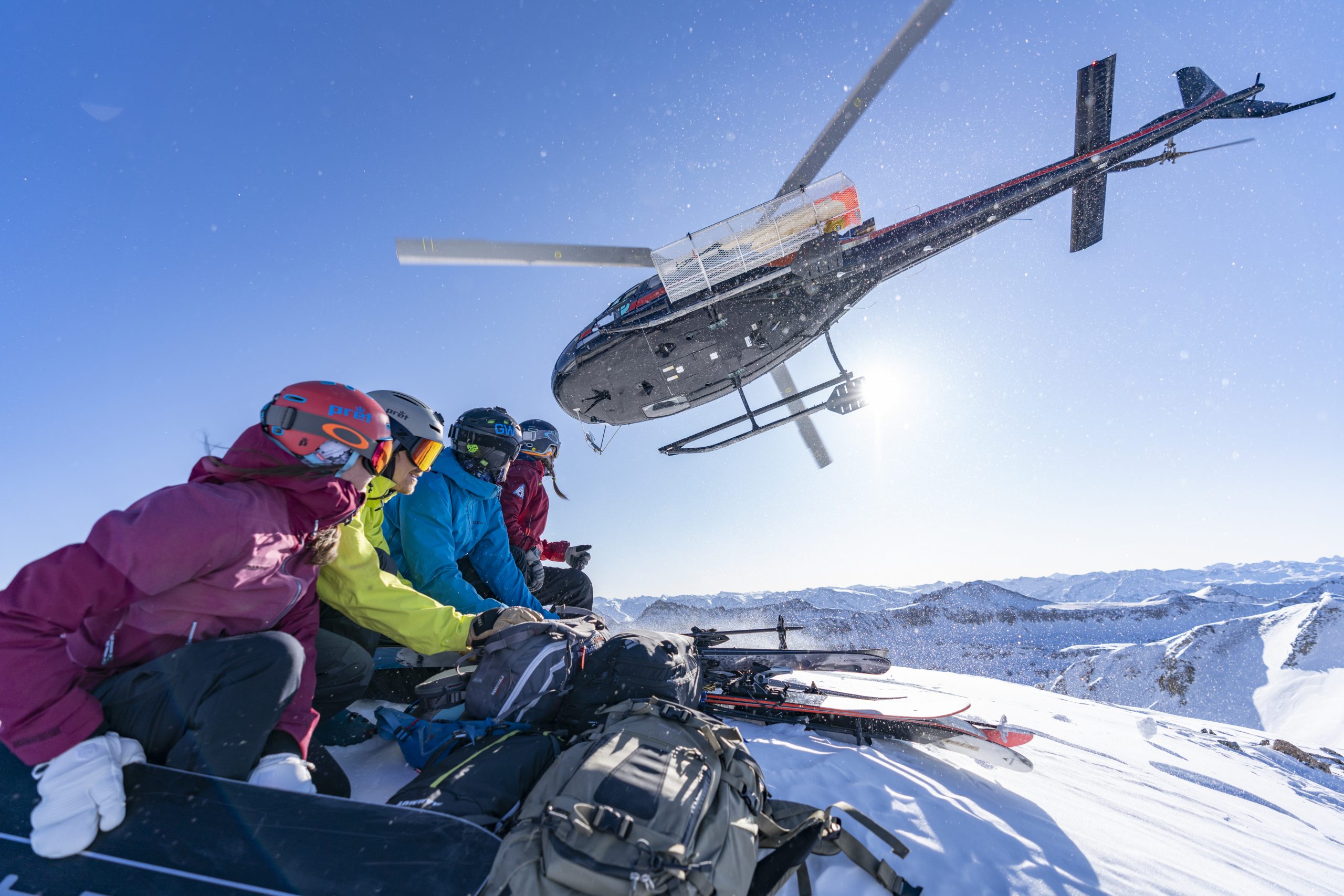
“Though no one currently on staff is at liberty to say, billionaire actor Tom Cruise is a very average heli-snowboarder. But although no one currently on staff is at liberty to say, Amazon CEO Jeff Bezos—the world’s second richest human—makes up for Cruise’s inability with his off-piste prowess. The pair have been clients of Telluride Helitrax, a heli-skiing outfit operating in the backcountry behind Telluride Mountain Resort, in remote south-west Colorado, since 1982. My source, a former guide who prefers to remain anonymous, admits he’s entertained a host of household-name One Percenters over the years.”
“Power billionaires aren’t going to the popular resorts any more,” he reveals over a happy-hour drink at a Telluride bar. “Luxury skiing these days, it’s all about exclusivity. No one with any clout shares snow, and at every resort, no matter how fancy, you have to share the slopes. But nowhere is more exclusive than the backcountry. That’s your billionaire’s playground. And no backcountry is more exclusive than San Juan backcountry.”
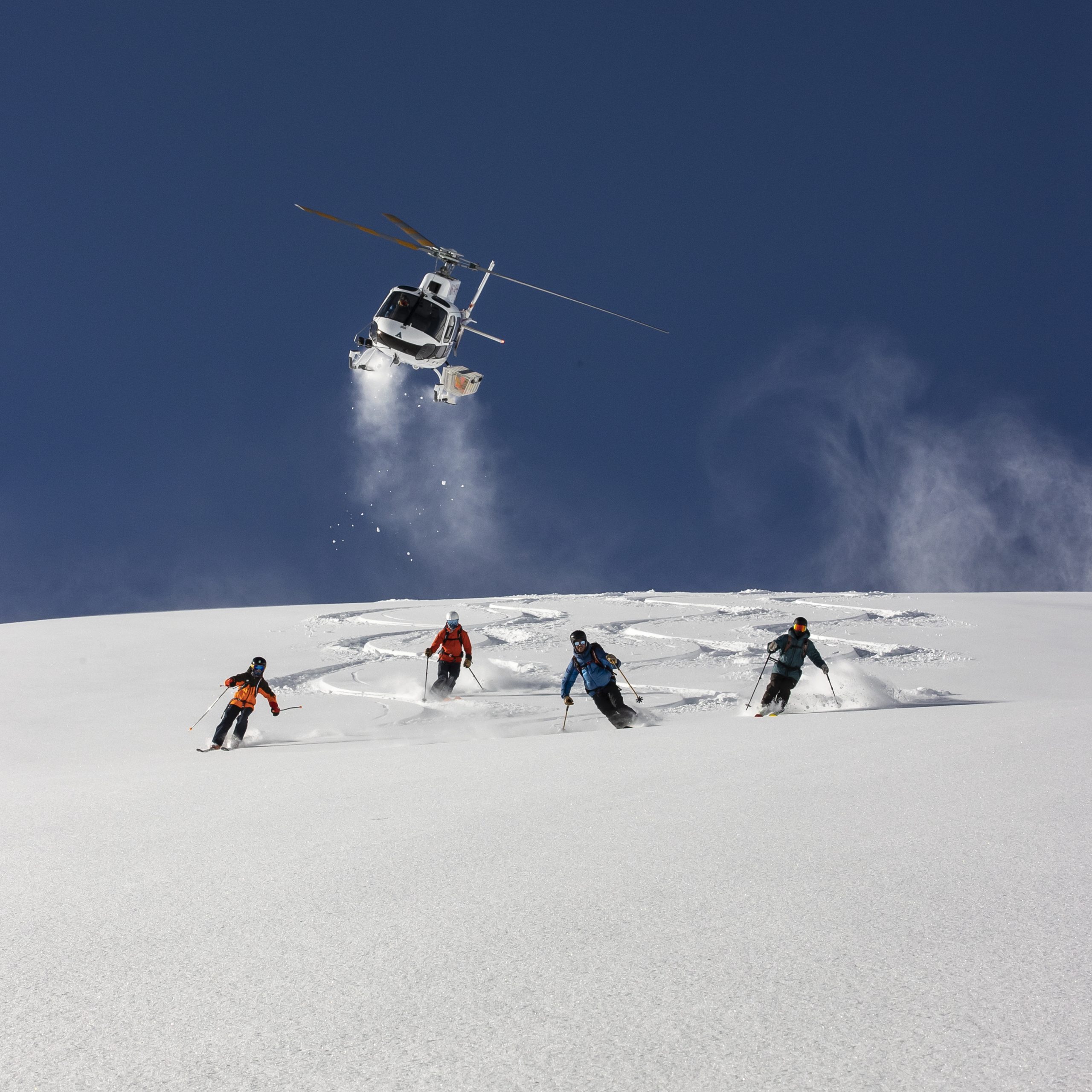
Which is precisely why I am here. Australia’s considerable brigade of free-spending, snow-crazed executives may jet off to Vail and Aspen each northern winter for thrills, but it turns out some of the world’s most choicest ski experiences have been right under their noses—only a short helicopter ride, car journey or private jet flight from said resorts.
Packed into the ultra-rugged southern end of the Rocky Mountains, the San Juans are a little chunk of the Swiss Alps in the US—young, ridiculously spectacular formations known for their steep slopes, deep powder snow and Disney-esque triangular peaks, all bathed in 300-plus days of sunshine a year. And the region is augmented by unique, and select, backcountry options that rival anything currently in the upscale ski orbit.
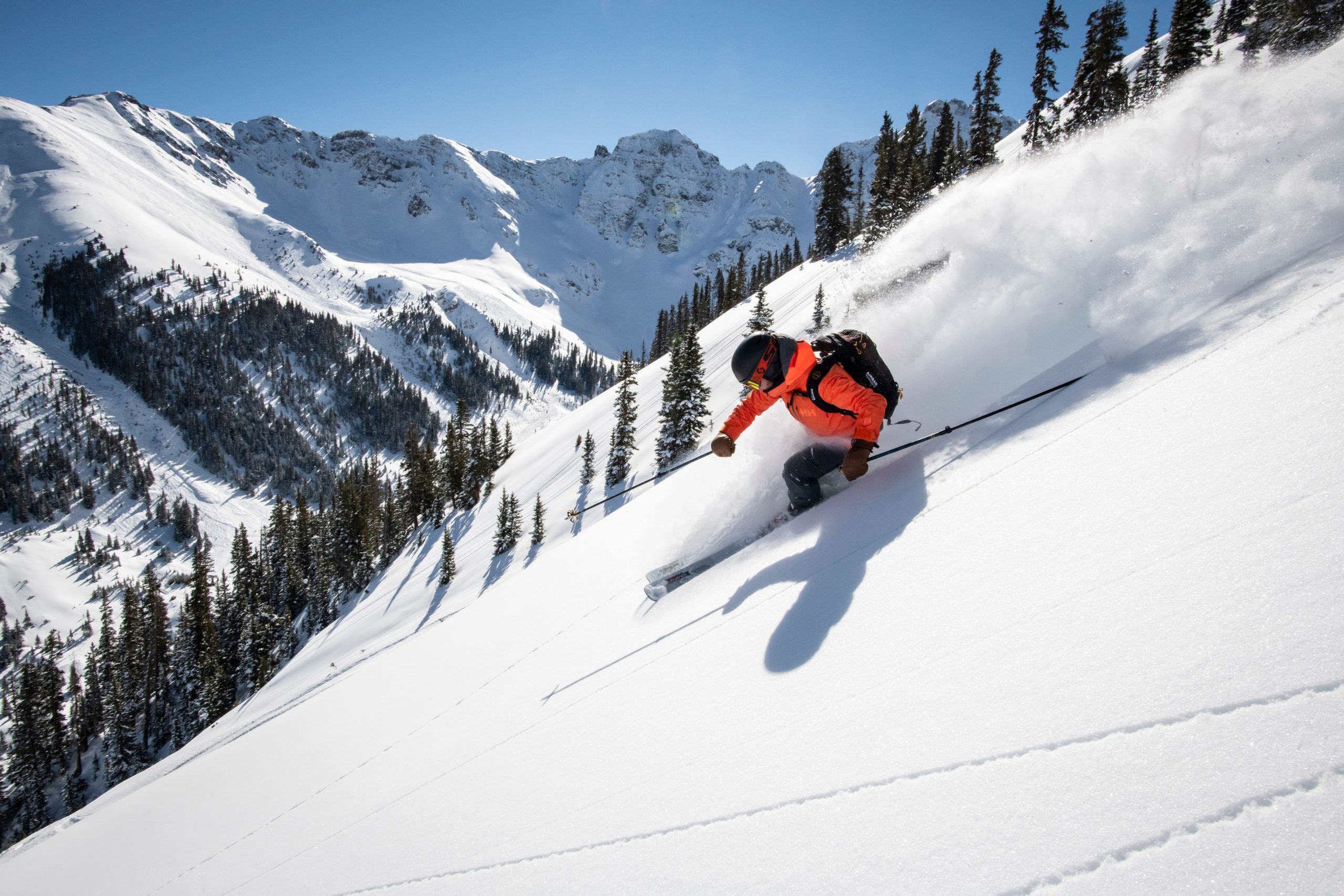
Case in point: North America’s highest skiing setting, Silverton Mountain. Located in the heart of the San Juans, outside the tiny town of Silverton, the 4,111 m peak boasts 736 hectares of chair-accessible terrain set among what is reputedly the deepest, steepest snow in the nation. It also offers a further 10,000 hectares of private terrain, serviced by heli-ski operation Heli Adventures. This is the Shangri-La of skiing: every slope connoisseur has heard of it, though most wonder if it actually exists.
We arrive via the treacherous Million Dollar Highway, where a disturbing lack of guard rails sometimes causes travellers to plummet into the valley floor (the death toll, grimly, averages eight people per year). Silverton Mountain was bought in 2023 by Heli Adventures’ young co-founders Andy Culp and Brock Strasbourger. While private punters can book the hill in its entirety, starting from around $14,000 per day, plus extra for single heli-skiing runs, the destination is also open to the public from Thursdays to Saturdays through winter.
“Silverton is a bastion for the pure ski experience,” Culp says. “All that corporate consolidation that happened when ski resorts all over the world developed condos and real estate and got super-busy… well, it never happened here. You’re able to access Alaska-like terrain from an old rickety chairlift, but you’re an hour’s drive from a pretty major airport [Montrose]. And you can access snow that’s even better than most heli-skiing straight off your lift.”
There’s no radio-frequency lift passes when I arrive. In fact, I don’t get a lift pass at all. A discarded school bus doubles as the “second chairlift”; it picks me up and returns me to a yurt which serves as a restaurant and bar. “There’s a time and a place to hang out at The Little Nell [Aspen’s legendary après-ski bar] and the world doesn’t need more of that,” Culp says. “This is the new luxury. We also run a heli-ski business out of Aspen [Aspen Heli-Skiing] but this is where we come. You can’t put a price tag on what we have here.”
I drive away from the mountain, back along the perilous Million Dollar Highway, park my car and disappear into the San Juan National Forest with guide Kaylee Walden. This white-coated outback between Silverton and Ouray, dubbed “the Switzerland of America”, offers swathes of primo backcountry skiing terrain. The ski touring here is often likened to Europe’s iconic Haute Route—an emblematic trail between Mont Blanc and the Matterhorn.
The operator Mountain Trip offers a Colorado version of that feted circuit, on a multi-day traverse between secluded huts. All in all, there’s nearly 8,000 km² of national forest and 2,500 hectares of wilderness to explore, frequented only by the occasional intrepid enthusiast.
A wood-burning sauna is being prepared as I arrive at Thelma Hut, 4,500 m above sea level. Traditionally, US Forest Service huts were humble affairs, with rudimentary bunks, self-service kitchens, and food supplies brought in by skiers. This evening, however, a chef is preparing local bison across from an open fireplace as the sun sets through a floor-to-ceiling window against a horizon of white mountains. As he works, I walk out into the snow to study the twilight sky; beaming planets shine down on me, necklaces of tiny stars sparkle.
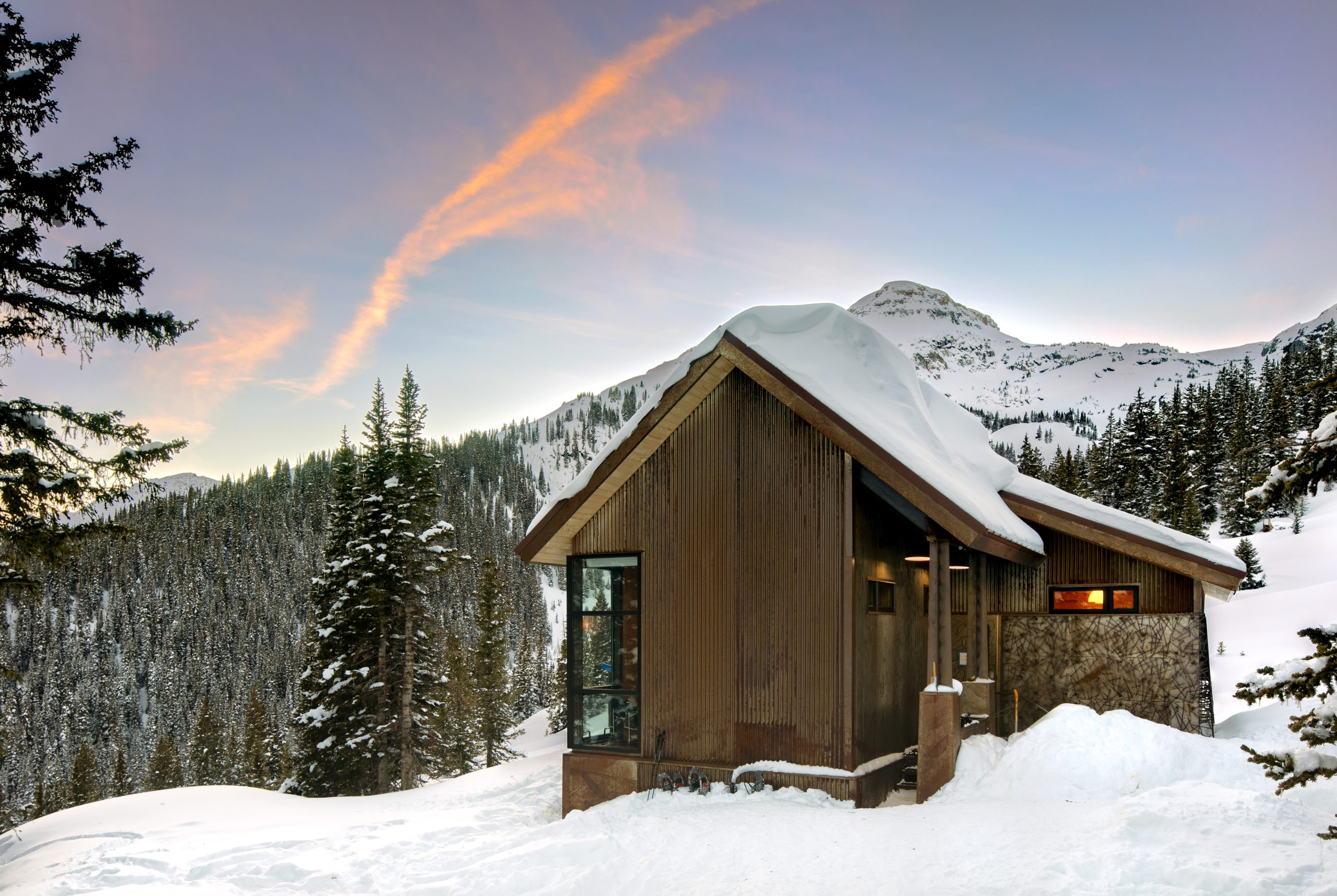
Back down to earth, upon my return to “civilisation”, we take a two-hour car ride to Telluride, probing through the San Juans. The small town is picture-postcard pretty, wedged at the end of a box canyon surrounded by Colorado’s tallest waterfalls, and hosts the highest concentration of 4,000-m-plus peaks in the state. Most of its buildings are on the National Register of Historic Places, including a bank that was robbed in 1889 by the outlaw Butch Cassidy.
While the locale offers everything from luxurious on-mountain dining options to 7-km-long runs, it’s the heli-ski enterprise that’s lured me. Telluride Helitrax holds sole rights to over 500 km² of completely deserted ski terrain, a few minutes’ flying time from town. The company runs a range of Eurocopters which guests can charter into Colorado’s best alpine basins, cirques and couloirs. “The range mightn’t be as expansive as Alaska,” says Telluride Helitrax program director Joseph Shults. “But the views, the terrain, the snow depth and quality is as good.”
I’m staying in a privately owned three-bedroom penthouse apartment, where a helicopter takes off each morning for convenience (when I’m done carving clouds, I move a kilometre up the mountain to the seven-bedroom, three-storey mountain retreat Hood Park Haven, valued at around $42 million). Telluride Helitrax uses an abundance of drop-off locations, all above the tree line, meaning everyone from intermediates to experts can be catered for.
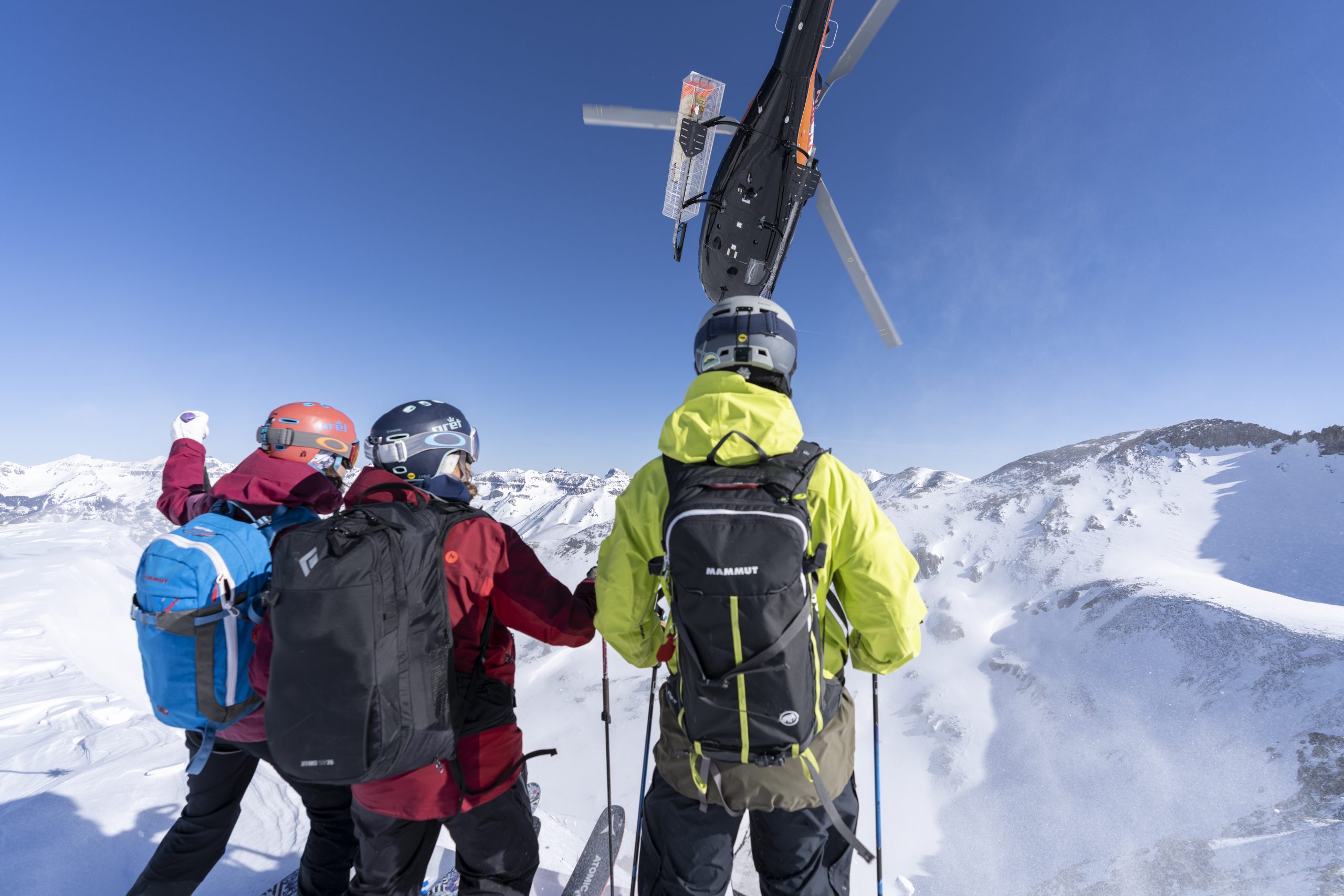
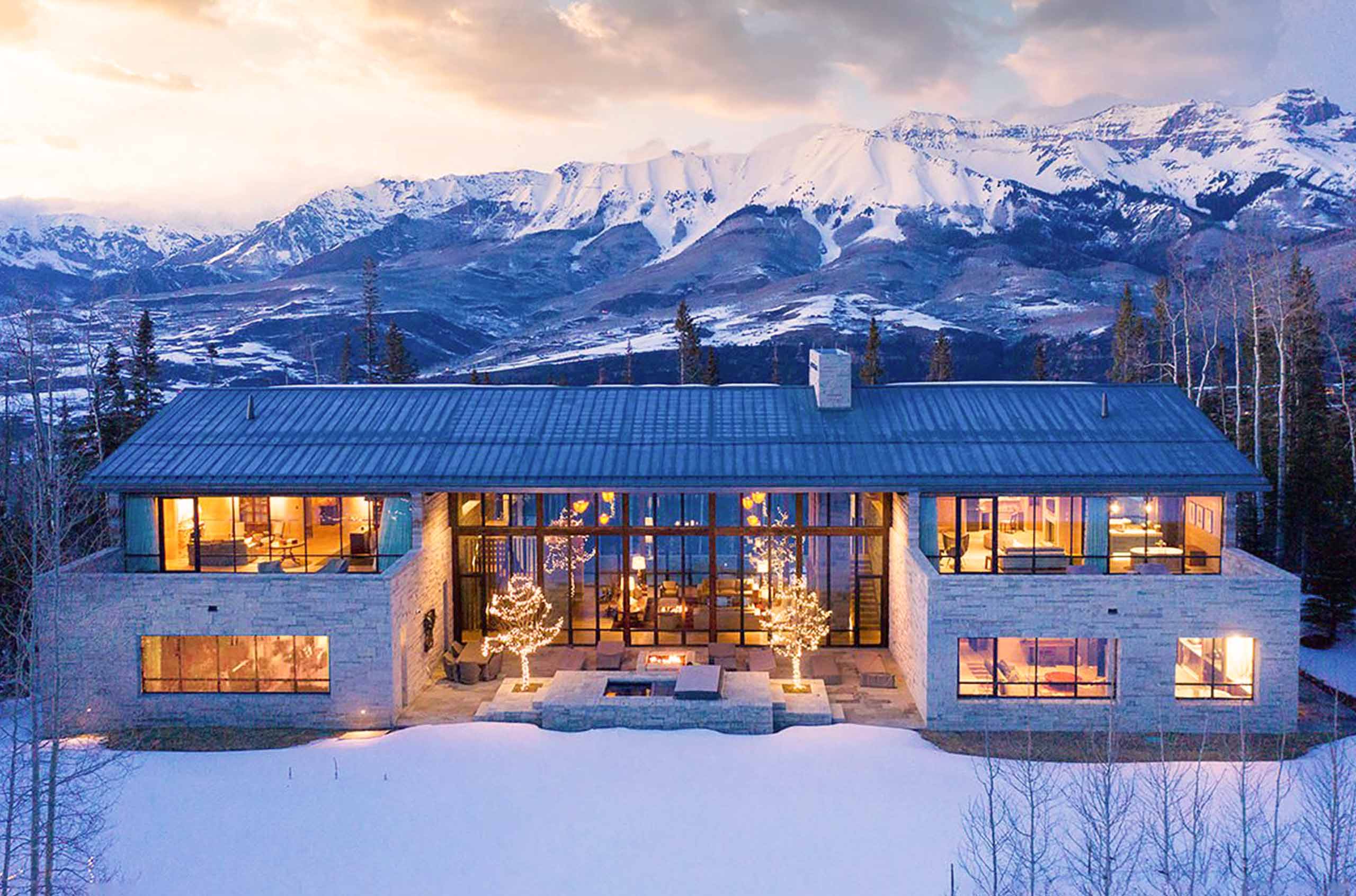
During my three-day odyssey, I don’t cross a single other ski track, but it’s the peace that is most startling. In this pocket of montane paradise, there is, literally, not a single sound—a stark contrast to the whirling fury of the chopper that transports me. My experienced guide Bill Allen won’t reveal who’s come before Robb Report. “You’d know their names,” he says, grinning.
And so the San Juans remain a secret to all but a fortunate few. Of all the luxuries the ultra-wealthy enjoy in the skiing ecosphere, the promise of untouched snow is by far the most enviable. Here in Colorado is where the white gold truly lies.
Photography: Kane Scheidegger (heli-skiing); Patrick Coulie (hut); Courtesy of Colorado Tourism Office (Hood Park Haven).
This article appears in the Autumn issue 2026 of Robb Report Australia New-Zealand. Click here to subscribe.
You may also like.

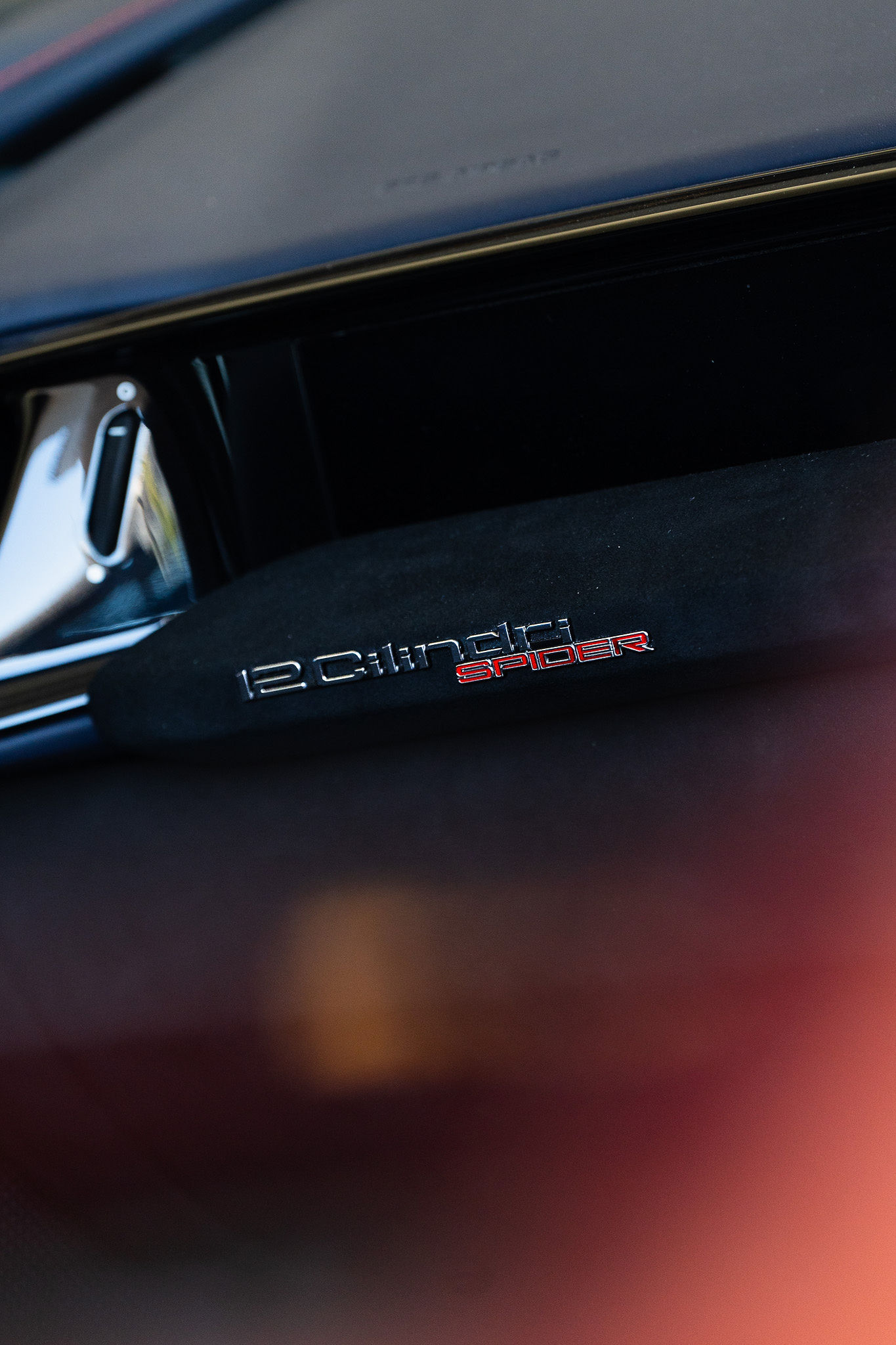
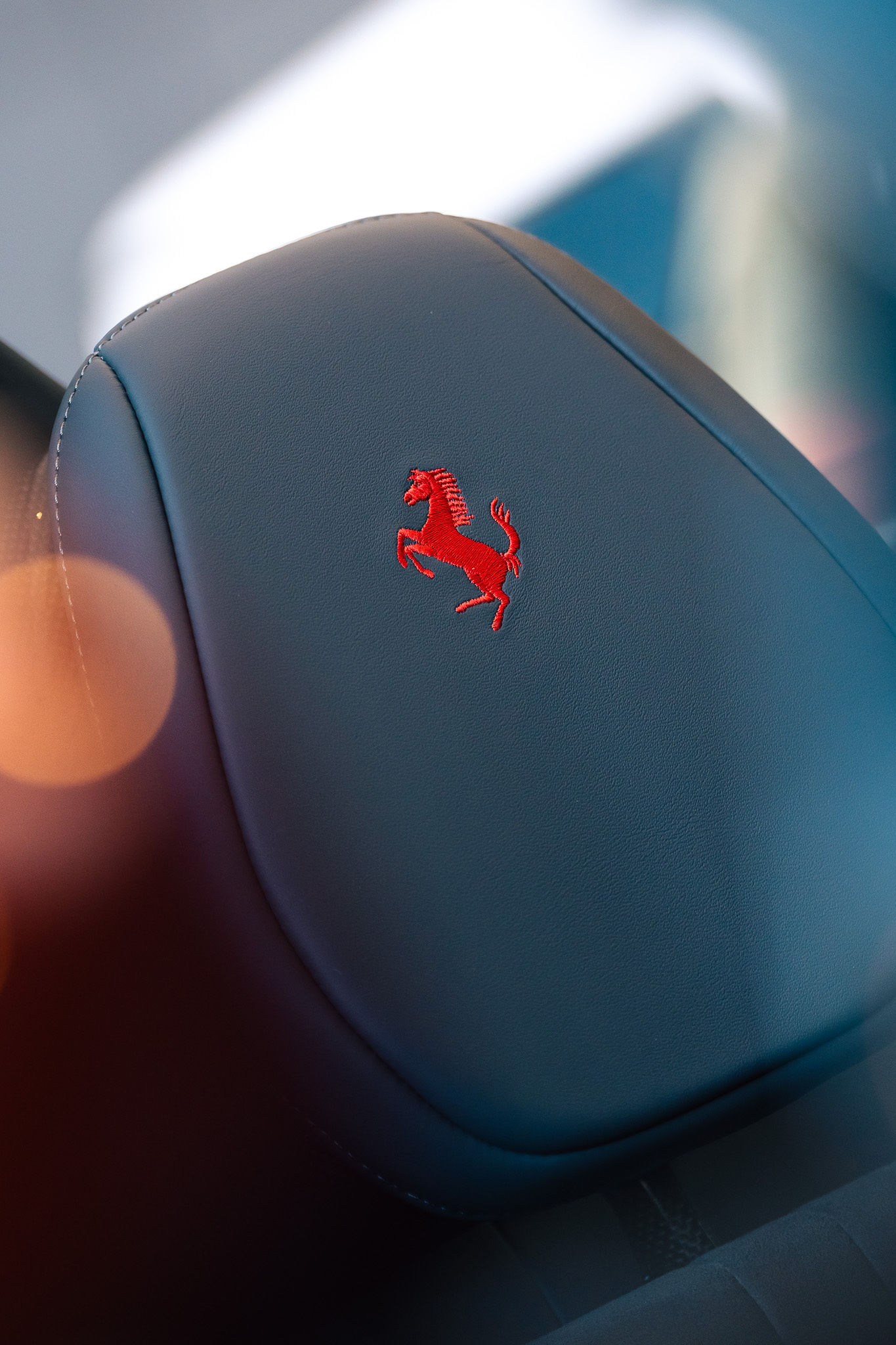
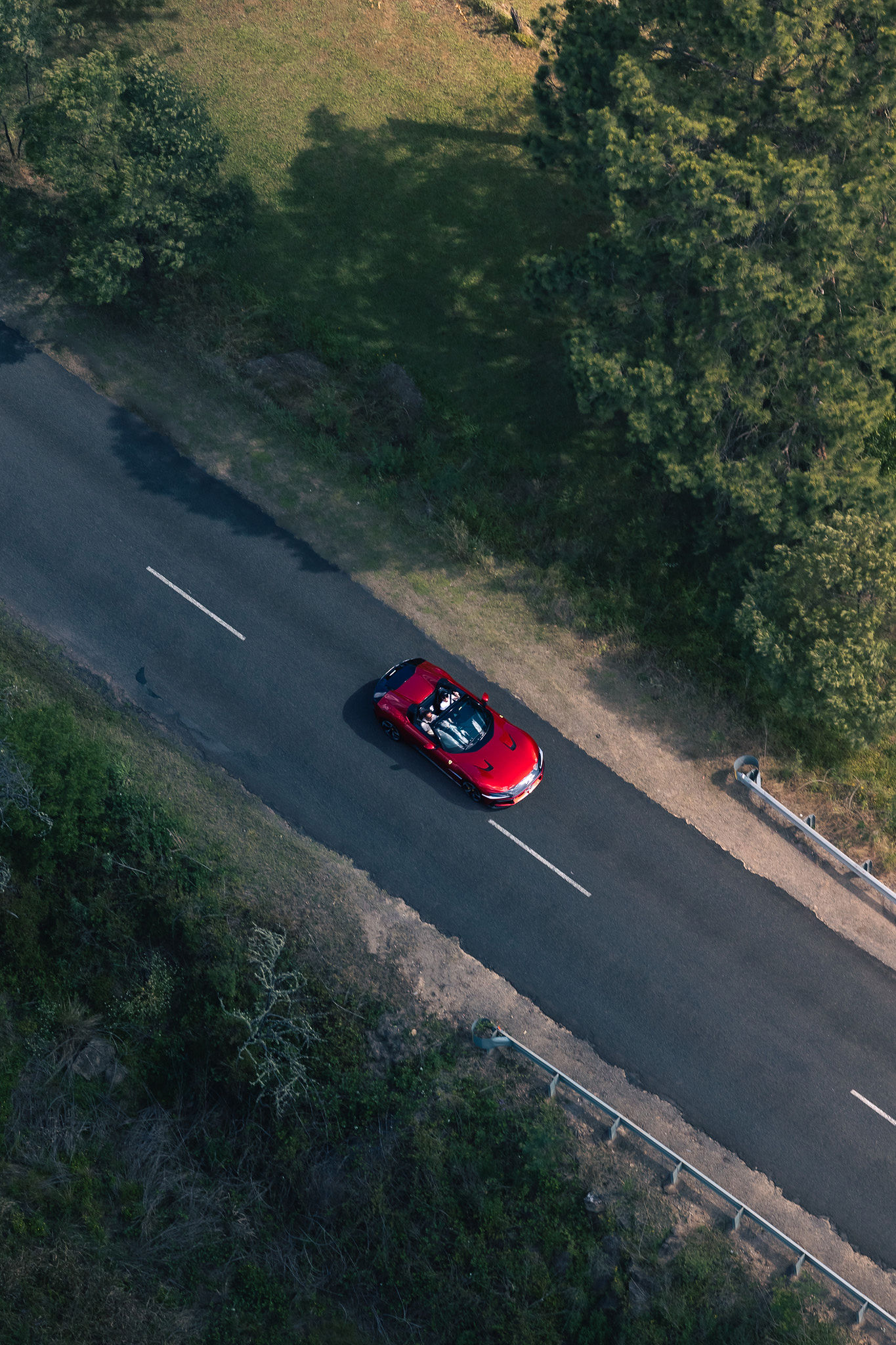
Best Combustion Supercar: Ferrari 12Cilindri Spider
A modern classic in the making, combining naturally aspirated power with elegant restraint to deliver performance that feels as refined as it is visceral.
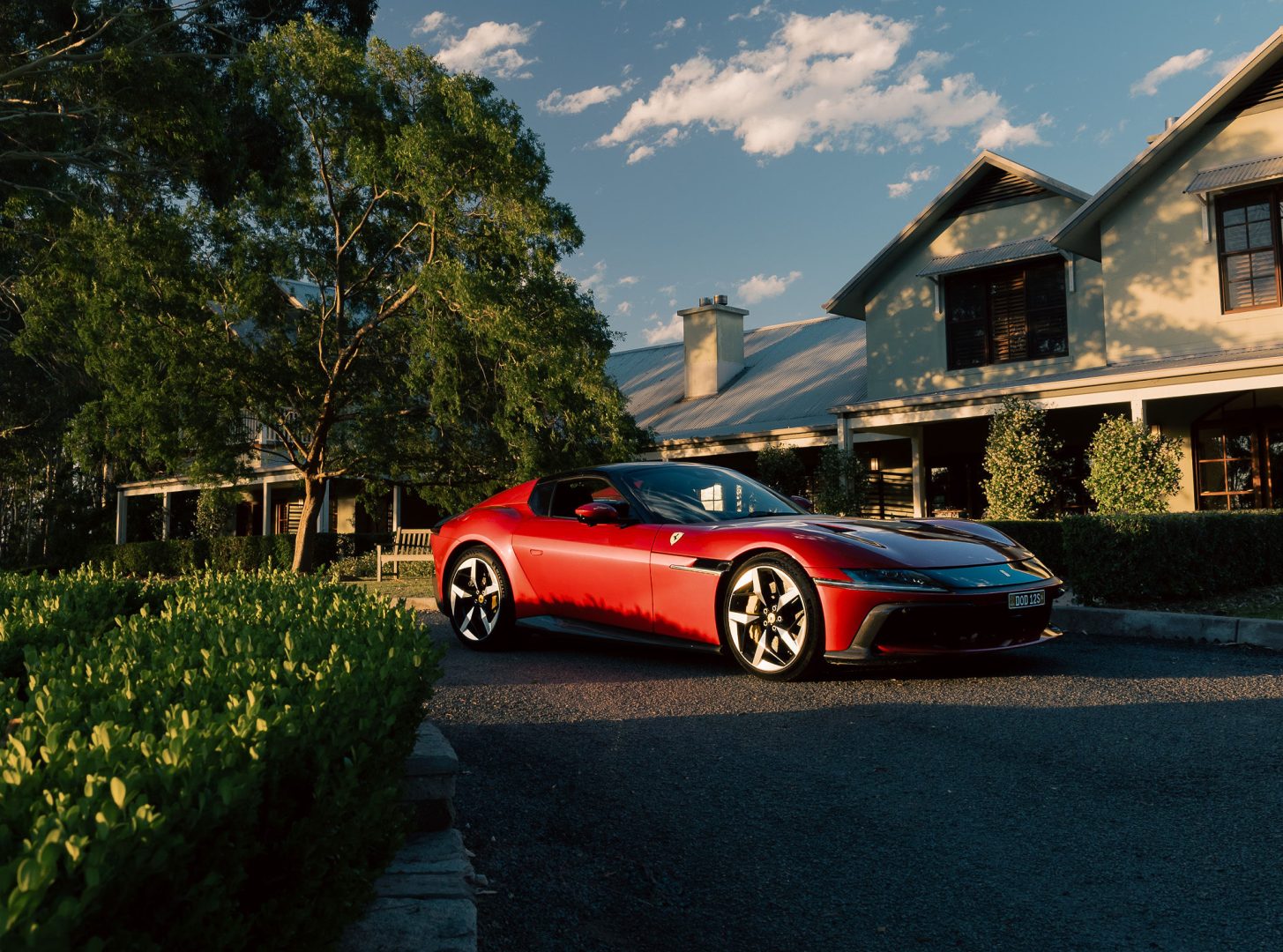
In a year when carmakers of all persuasions sheepishly extended hyperbolic electric targets, it’s fitting that the monastic puritans of Maranello—who, lest we forget, won’t finally yield to the sin of battery power until October with the Elettrica—opted to make combustion their major power play.
As an uncertain future of AI omnipresence barrels towards us, the 12Cilindri—an analogue, open-topped tribute to Ferrari’s late-’60s/early-’70s grand tourer, the Daytona—represents a defiant fade into the past, a pause for breath, a fleeting return to The Good Times when nascent technology provoked excitement rather than existential dread.
Guiding this automotive nostalgia trip is, as the nomenclature suggests, a naturally aspirated 6.5-litre V12 engine, generating an unceasing wave of power as it sears towards the 9,500 rpm redline with relative nonchalance. That’s because the 12Cilindri is not a mouth-foaming attack-dog. It scales performance heights with the refinement of the finest Italian works of art; its “Bumpy Road” mode facilitates comfy al fresco GT cruising, and even the imperious powerplant is mannerly at most speeds.
For all the yesteryear romance, progressive technologies and engineering, such as a world-class 8-speed transmission, advanced electronic aids and independent four-wheel steering, are baked into the deal. The 12Cilindri’s clean, stark design somehow toggles between retro and modern; and while vaguely polarising, one can’t ignore its magnetic road presence.
In terms of aesthetics, Ferrari describes the 12Cilindri as being “ready for space”; in many ways, a fantasy vehicle that transports users to another dimension is probably what the world needs right now.
The Numbers
Engine: 6.5-litre V12
Power: 610kW
Torque: 678 Nm
Transmission: 8-speed dual-clutch auto
0-100 km/h: 2.95 seconds
Top speed: 340 km/h
Price: From $886,800
You may also like.
High and Low
At Le Bernardin, Aldo Sohm oversees one of the most formidable cellars in fine dining. But on the beach, he’ll happily drink a cheap rosé. The world-class sommelier explains why taste—and humility—matter more than price.
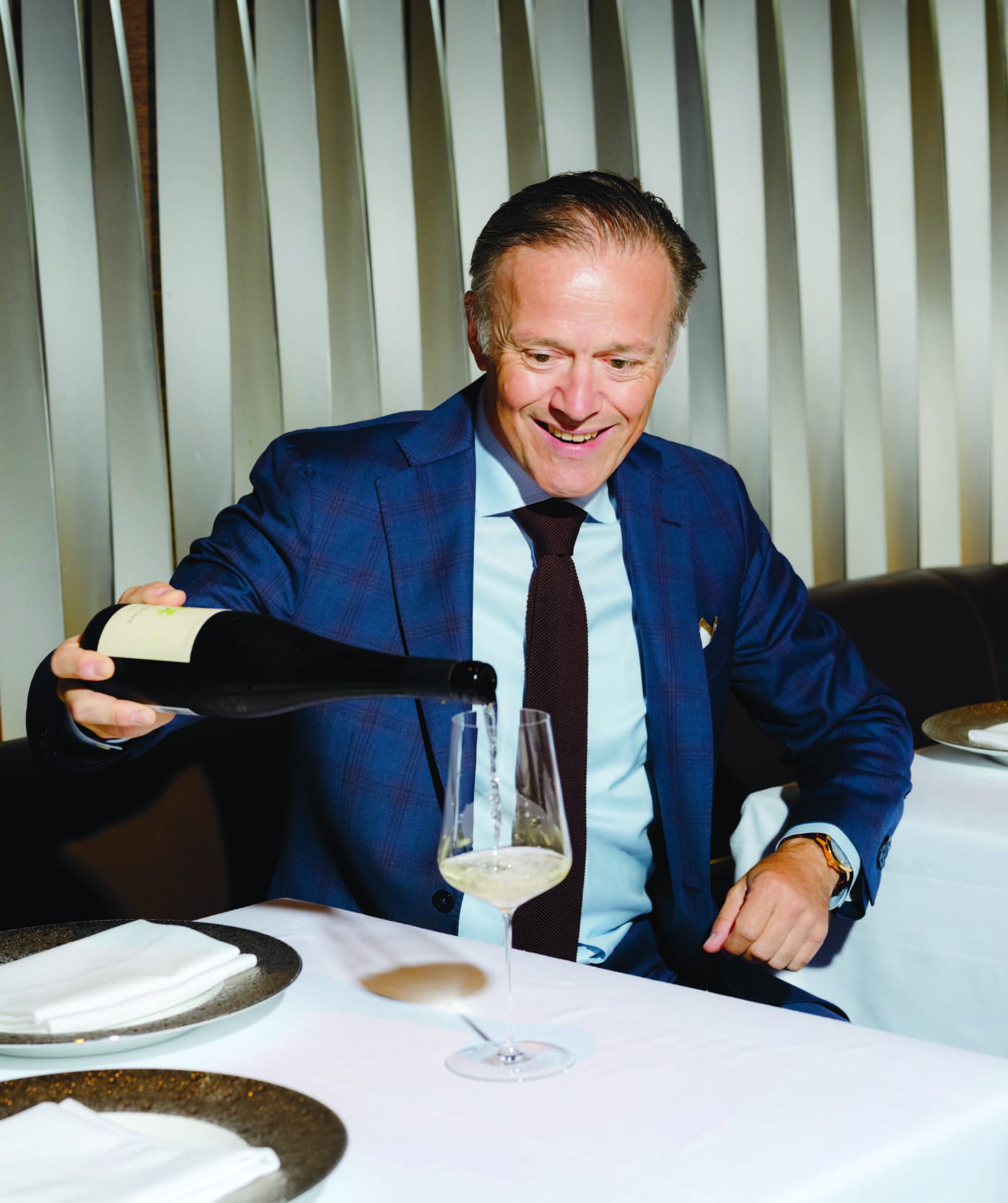
Aldo Sohm is one of the most accomplished sommeliers in the world. The 54-year-old Austrian heads up an oenophile’s empire on New York City’s West 51st Street, where he both serves as wine director at Michelin three-star Le Bernardin and leads his namesake wine bar, just across the road from the fine-dining institution. (He spends his time literally running back and forth between the two.) So it may come as a surprise that this man, who sips prized varietals all day, admits to the joys of a glass of Whispering Angel, a ubiquitous rosé that retails at stateside Target stores for US$22.99 (around $30) a bottle.
The context here is important; the aptly named Sohm is quick to clarify that he’s not about to start serving Whispering Angel as one of the pairings with chef Eric Ripert’s US$530 (around $750) eight-course tasting menu. But during a trip to the Caribbean for the Cayman Cookout food festival, Sohm’s wife requested a glass of rosé on the beach. When he went to fetch it, she specified that she wanted a cheap drop, not the fancy stuff that he likely would have grabbed. “I felt kind of gobsmacked, right?”
Sohm says as we’re sitting in the tasting room at Aldo Sohm Wine Bar. “Now, rather than just criticising, I have to admit: I got out of the water, and I tried Whispering Angel, too. It was delicious.”
Unlikely as it may be, this humility is perhaps the key to Sohm’s success. His lack of self-seriousness makes him an anomaly in the oftentimes highfalutin world of fine wine. Rather than shaming you for your preferences, Sohm will indulge your desires. Maybe, as in the case of his wife, you’re going to be right. More likely than not, you’re going to be wrong. He won’t simply tell you that, though; he’ll use his encyclopedic knowledge of wine to subtly steer you in the right direction, allowing you to come to that conclusion on your own. “You just wake up from your dream—and mistake—and realise that, ‘Oh yeah, he’s right,’” says Ripert, who has worked with Sohm for almost two decades.
Sohm intended to move to New York for only 18 months. Growing up in Innsbruck, in the Austrian Alps, he wanted to be a helicopter pilot. Like many childhood fantasies, that didn’t come to fruition, and he settled on something more practical, becoming a teacher at a hospitality school. Having overcorrected—“That was way too boring for me,” he admits—he switched to the more public-facing side of the industry, getting a job as a restaurant server. It was then, when he was about 21, that Sohm fell in love with wine. (Prior to that, he was a self-proclaimed Bacardi and coke guy.)
After studying wine on his own time, he began his formal sommelier education in 1998. He rose quickly through the ranks and was named the best sommelier in Austria in 2002, a title he defended the following two years and reclaimed in 2006. Amid that stretch, he sojourned to New York in 2004 with the goal of improving his English to compete in international competitions. It paid off: four years later, he won the top prize from the World Sommelier Association. But more than the accolades, Sohm had discovered a career. By then, he had joined Le Bernardin after stints at Wallsé, Café Sabarsky and Blaue Gans—all Austrian restaurants in Manhattan.
“Back then we had a very strong French sommelier community, and they controlled everything,” he says. “And it was an uproar because how come an Austrian sommelier came to one of the most French restaurants?” He proved his bona fides, and in 2013 Ripert and Maguy Le Coze, the co-owners of Le Bernardin, approached him with the idea of partnering with them in a wine bar. It was Ripert who suggested putting the connoisseur’s name on it.
Aldo Sohm Wine Bar debuted the following year, with a team that Sohm handpicked. Sarah Thomas was part of that opening crew, after meeting Sohm during a fateful dinner at Le Bernardin with her cousins. When her relatives divulged to him that she was a sommelier in Pittsburgh, he proceeded to serve a blind tasting to Thomas. “He didn’t say what I got right or wrong. He didn’t care about that,” she tells me. “He just wanted to hear me talk about wine, I guess. So I did.”
When he offered her a job at the end of the meal, she laughed. Sohm didn’t. Thomas promptly packed up and moved to New York. After she spent about nine months at the wine bar, Sohm promoted her to Le Bernardin, where she worked for another five years. When she decided to start her own business—Kalamata’s Kitchen, which aims to teach kids about other cultures through food—Sohm was one of her earliest investors. He may have found full-time teaching to be too banal, but it’s still a huge part of what he does now, identifying the next generation of stars and giving them the guidance to grow into their own—whether that takes them into the upper echelons of fine dining or beyond the white tablecloths altogether.
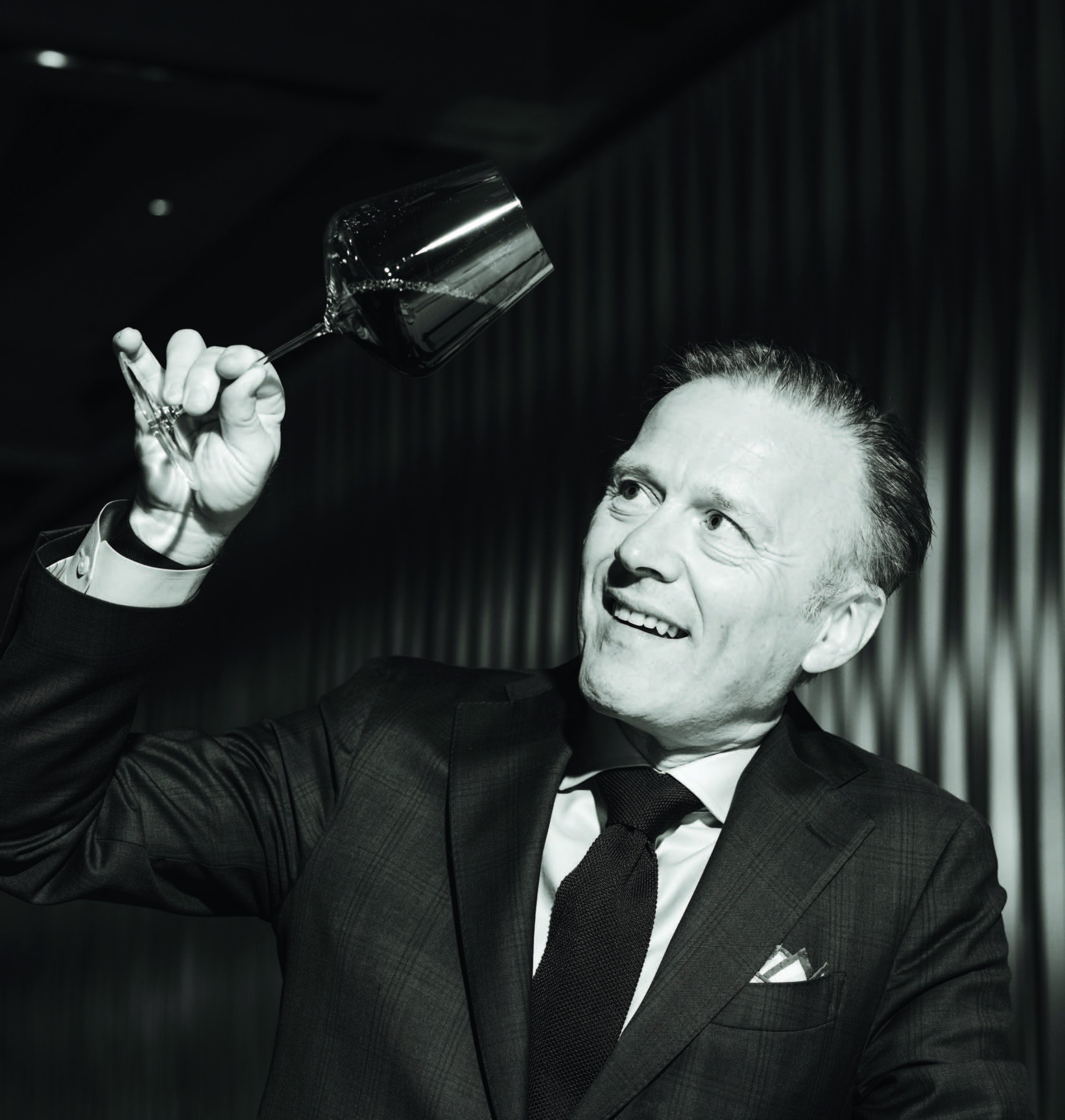
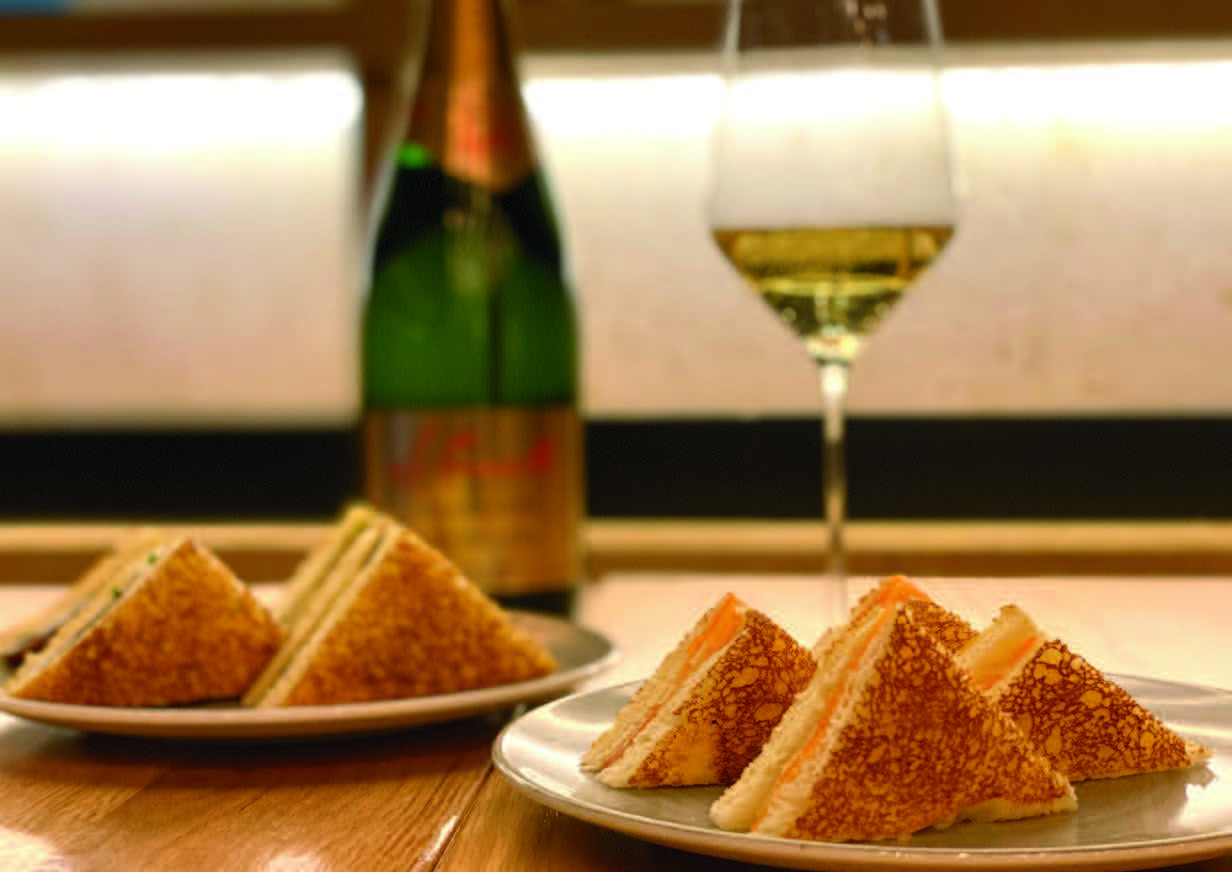
Overseeing two teams, at two very different spaces, feeds Sohm’s prodigious ambition. He’s on a mission to completely reshape the world of wine, from what’s in your glass to the glass itself to what you enjoy it with—say, Champagne with eggs. Along with his day jobs, he has partnered with the Austrian brand Zalto to create his own wineglasses. “As a sommelier, you criticise only, but you make nothing,” Sohm says. So, he also now wears the winemaker hat, producing a Grüner Veltliner under the Sohm & Kracher label, a relatively accessible quaff that’s a collaboration with his fellow countryman Gerhard Kracher. And in 2019 he added author to his résumé, releasing Wine Simple, a “totally approachable guide”, as the book’s subtitle puts it. He followed that up with Wine Simple: Perfect Pairings, to help you pick the right bottle for the right meal and the right moment.
“In wine pairings, you have three possible combinations,” Sohm says. “There’s the perfect pairing. Then sometimes you have flavours just going along… it’s like humans—they talk, they interact, but they never connect. And then there’s conflict.” It’s that first one he’s after every time.
“Sohm fell in love with wine when he was about 21. Prior to that, he was a self-proclaimed Bacardi and coke guy.”
Outside of the restaurant, the wine bar and the cellar, Sohm is an avid cyclist who owns six bikes, a number he admits is excessive—especially in New York City. Riding is what he credits with keeping him healthy, when so much of his time is spent eating and drinking—and drinking some more.
Still, despite the 18-year career at one of the world’s best restaurants, despite the top honours from his peers, despite the wine and the wineglasses and the wine books, Sohm doesn’t consider himself successful. Every day, he’s trying to figure out how he can self-correct. “I like what I do, so I go back home that night, think of things which I can improve,” he says. “I get annoyed when I make a mistake, but I improve the next day.”
His quest for perfection may never be over, but Sohm does concede that he’s happy—its own type of success. Sometimes he finds that happiness while sipping a glass of 1980 Domaine de la Romanée-Conti La Tâche, a bottle now so rare and coveted that he calls it “unattainable”. And sometimes, if to his chagrin, he finds it while drinking a mass-produced rosé on the beach.
Photography by Tori Latham
This article appears in the Autumn issue 2026 of Robb Report Australia New-Zealand. Click here to subscribe.
You may also like.
Going For Gold
Available in a range of shades and intensities, this metallic tone is still a first-place choice.
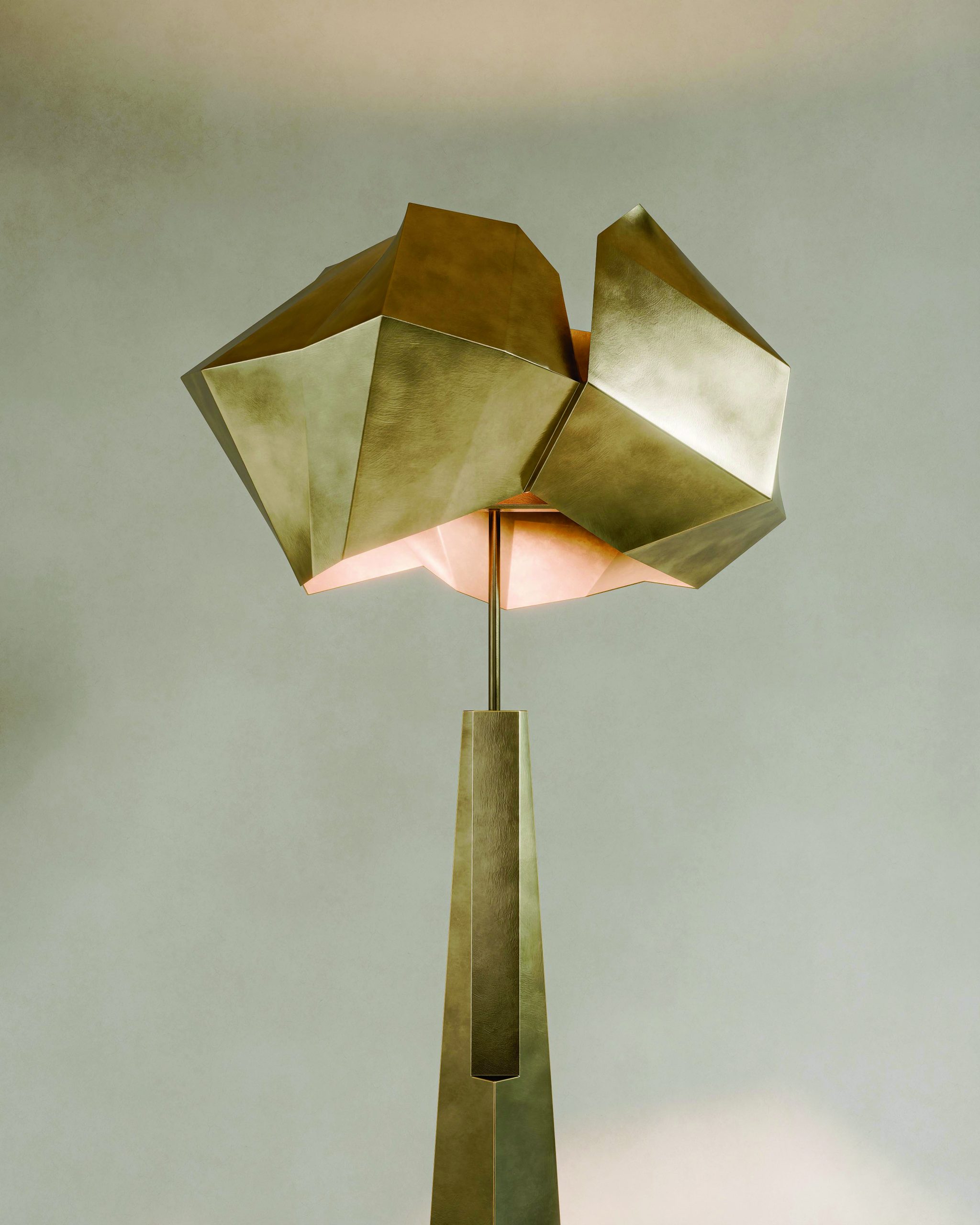
Above: Awakening 02, Sebastien Durelli Designed exclusively for StudioTwentySeven, Sebastien Durelli’s Awakening 02 floor lamp is available in a limited run of eight examples. Handcrafted in Italy from cast patinaed bronze, the striking piece takes inspiration from the naturally sculpted landscapes of Iceland, specifically the country’s glacial lagoons. The organic boulder-esque shade is rugged and elemental—like an exploded rock wrenched apart by seismic activity—while the base is sleek and symmetrical, providing visual balance in a deep bronze finish. From around $65,300
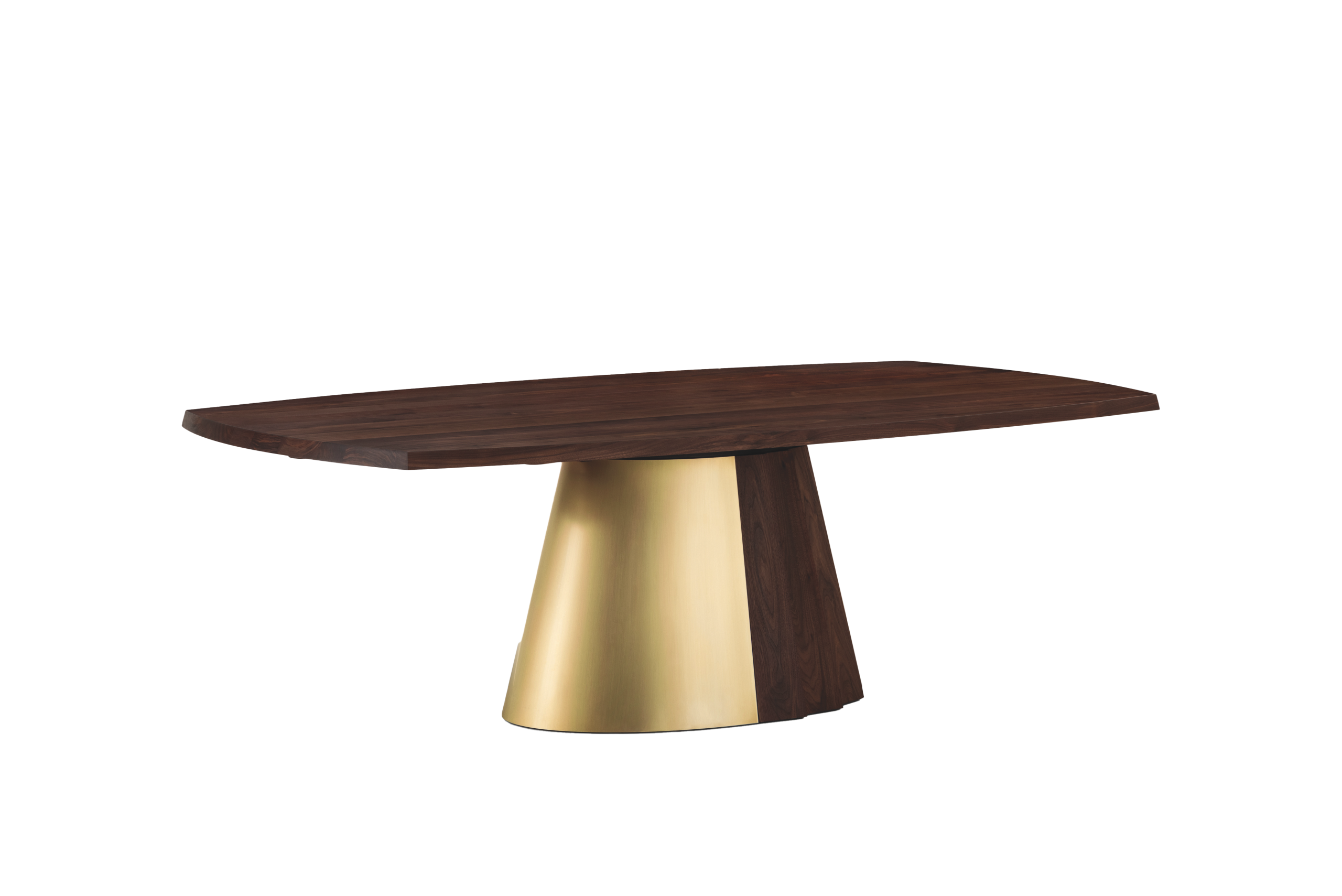
Above: Orion, De La Espada When it comes to the Orion dining table, the draw is in the details. Designed by Anthony Guerrée for De La Espada, this piece features a central base crafted from a series of overlapping wood slats—a textured moment that creates visual equilibrium with its smooth, curved-brass counterpart. A bona fide visual anchor, the Orion can be paired with thin-framed chairs for a sneak-peek view or heftier seats that provide a surprising reveal when guests sit down to dinner. From around $20,870
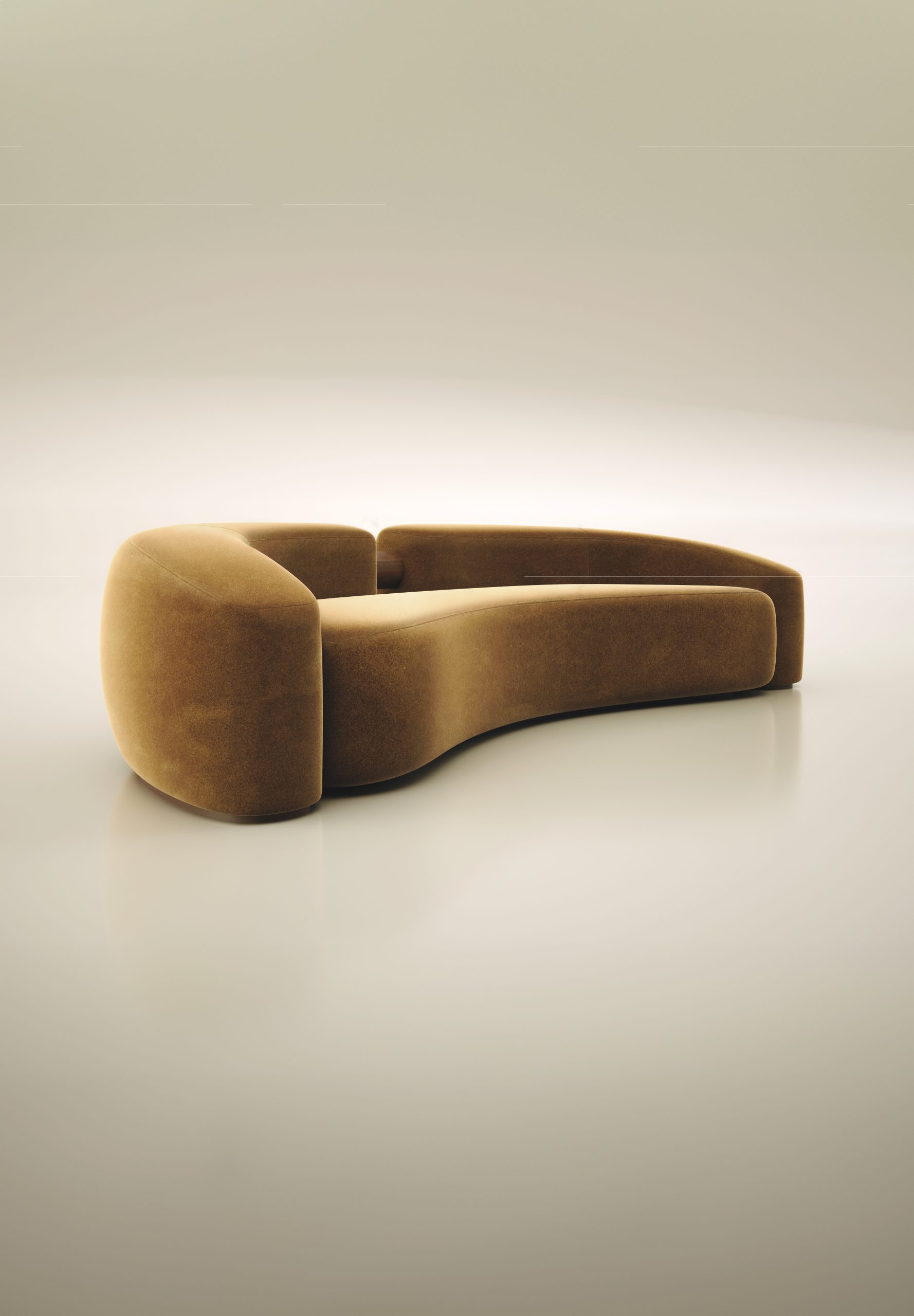
Above: LS35A, Luca Stefano This showstopper by Milan-based designer Luca Stefano is all curves. A sexy lounge sofa, seen here upholstered in Pierre Frey mohair with canaletto walnut details, the LS35A is available for customisation, but we think that this mossy-gold hue is incredibly chic, evoking the muted desert tones popular during the ’60s and ’70s. Around $66,280, as shown

Above: Jazz, Tom Bensari Part of master woodworker Tom Bensari’s Manhattan collection for StudioTwentySeven, the Jazz bookcase is an ode to the designer’s love of music. With edges that curve like brass instruments and shelves that skip like riffs, this unit is meticulously hand-built in Poland from oak and olive wood, with custom veneered interiors according to the client’s preference and a glowing finish that takes on a golden tint in just the right light. Around $29,320
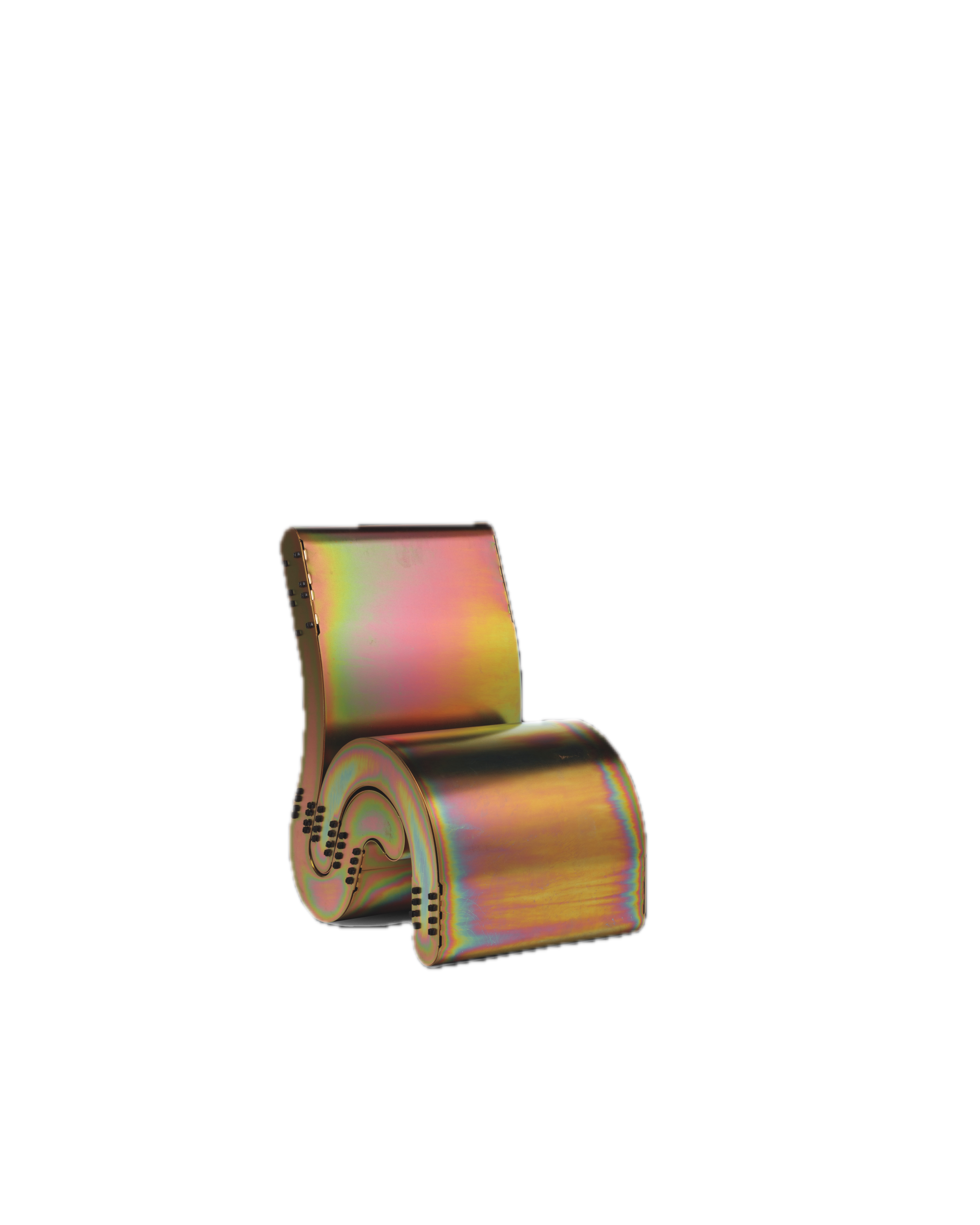
Above: Sleeper, Lucas Simões Last September at Christie’s in Los Angeles, Brazilian artist Lucas Simões unveiled his first furniture collection, Colendra. Presented in Lightness & Tension, an exhibition curated by roving gallerist Ulysses de Santi, Simões’s work is rooted in material exploration, as seen in the Sleeper chair, a curving steel form that suggests Brazilian midcentury modernism. A unique patina—which imparts the shimmery, rainbow-esque look of an oil slick—gives the piece a contemporary, artistic feel. Around $22,440
This article appears in the Autumn issue 2026 of Robb Report Australia New-Zealand. Click here to subscribe.