In Conversation: Reko Rennie
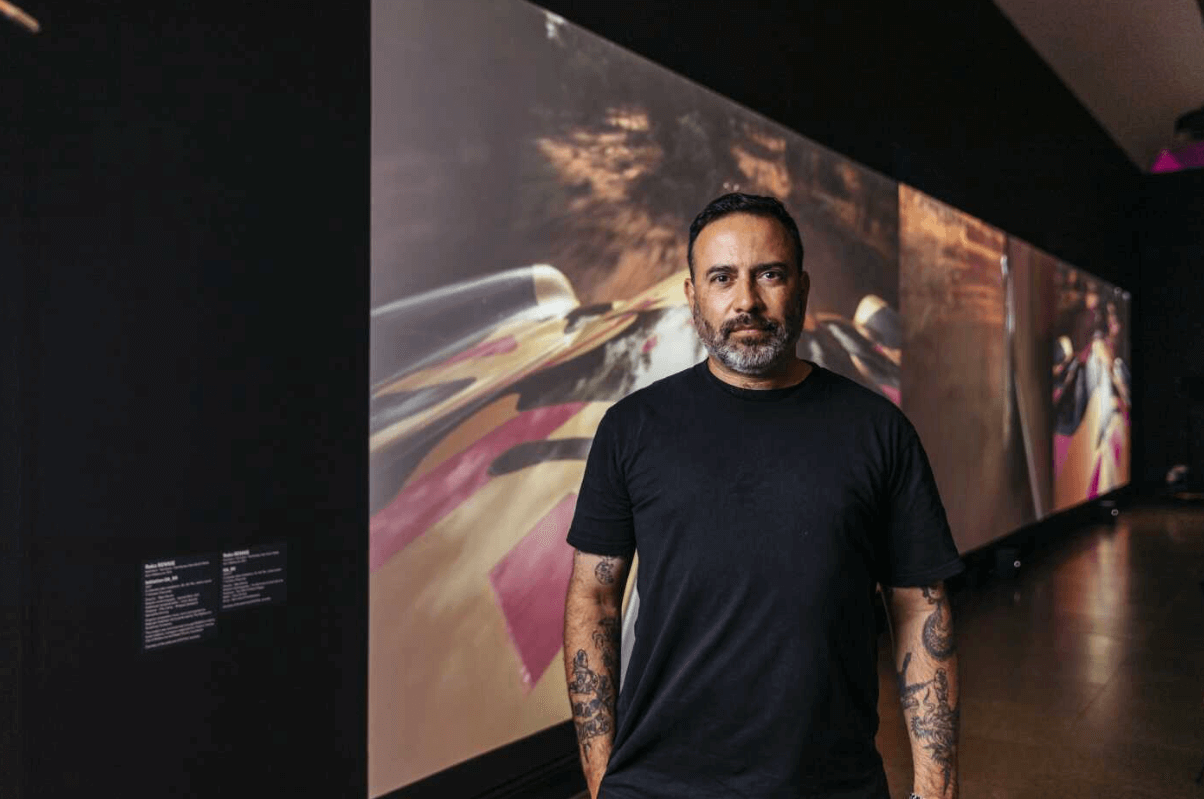
A punk, a rebel and a connoisseur, artist Reko Rennie discusses the power of perspective, expression of identity and why he thrashed a Rolls-Royce Corniche on Country.
A punk, a rebel and a connoisseur, artist Reko Rennie discusses the power of perspective, expression of identity and why he thrashed a Rolls-Royce Corniche on Country.
While the contemporary art world may not be lacking in rebellion, intellect and chutzpah, few artists can lay claim to the centre of a Venn diagram merging all.
Reko Rennie is such a man. Except that this Kamilaroi/Gamilaraay/Gamilaroi artist also manages to throw cool, beauty and an unforgettable, haunting precision into the frame as well.
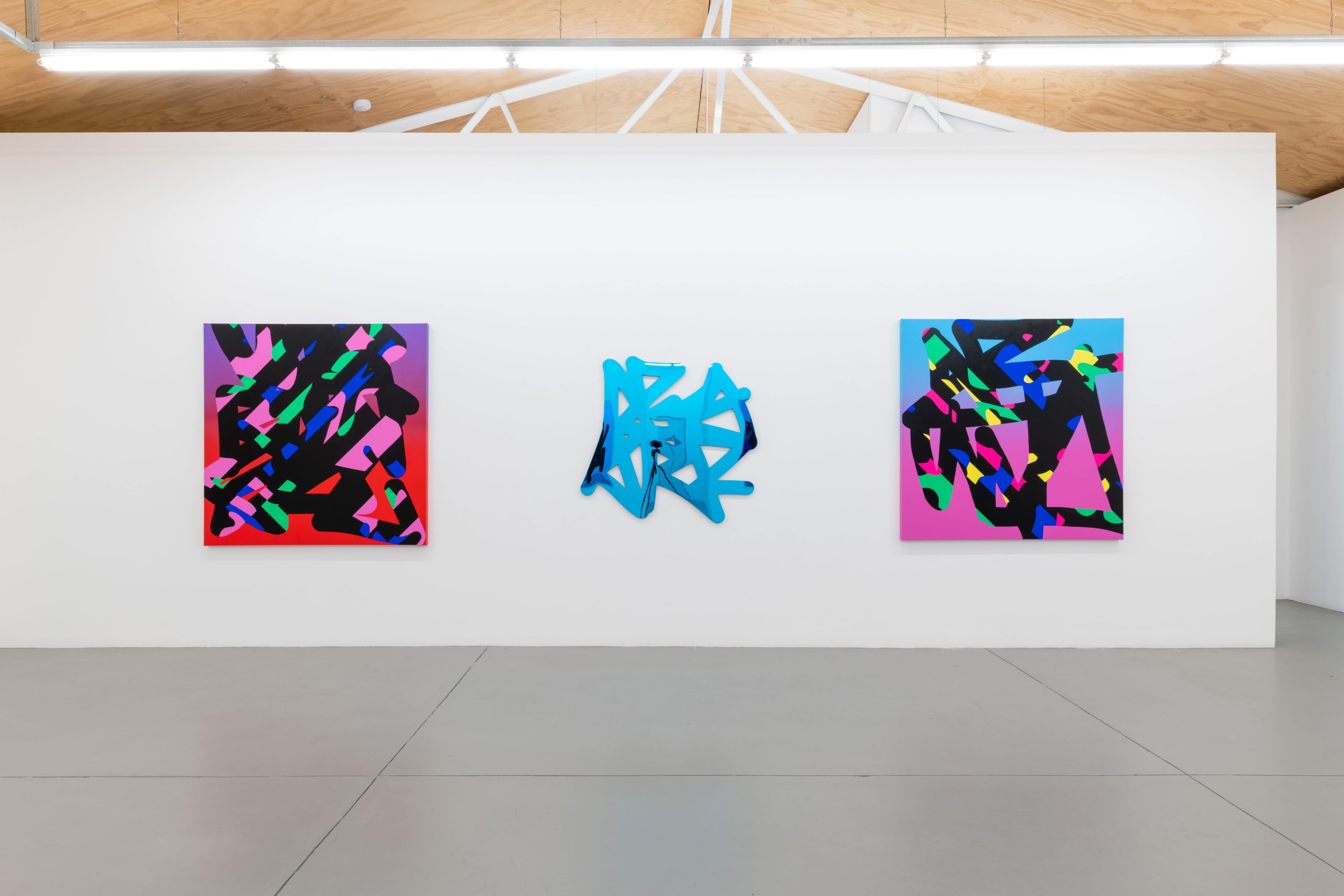
Rennie’s geometric patterns, abstract camouflage, words of remembrance, fierce warriors and neon designs inherited from his grandmother have found acclaim and achieved rightful cut through – beamed across the Sydney Opera House’s sails, laid on a basketball court in Melbourne, hung in the sky in Sydney, flanking the starting line (and Daniel Ricciardo’s helmet) at the Melbourne Grand Prix and found in almost every state gallery collection in the country.
With a diverse output that explores his identity as an Aboriginal man, dismantles and questions the status quo and shines a bright light on Australia’s dark history for future betterment, Rennie is carving his neon-hued mark on culture with a razor-sharp edge.
You grew up in the inner-west Melbourne suburb of Footscray in the ’70s and ’80s, at a time when a lot of activism was taking place —unionism, Aboriginal land rights, feminism and significant political change. How did this steer you towards being an artist?
I got into art by doing graffiti. That was my thing; I got great joy out of writing my name in places illegally. Footscray was a very working-class, multicultural community, and a bunch of us didn’t have much. You saw how others were treated by law and police, and I always had a bit of a strained relationship with their attitudes towards me, as a young Aboriginal kid. All those things make you question the system.
What also resonated with me was the political art movement of the time that was responding to everything going on and it was crudely being illustrated with a can of paint and a brush. I started seeing a lot of that around Melbourne and thought, ‘How cool is it that people are writing shit on the walls, writing comments and statements? I want to do that.’It gave me all these early skills in navigating how to express myself. Those were fundamentally important aspects of childhood and rebelling against the system; skills and experiences that I could then combine with my identity and my family’s narrative and use as fire to create a political and visual artistic language.
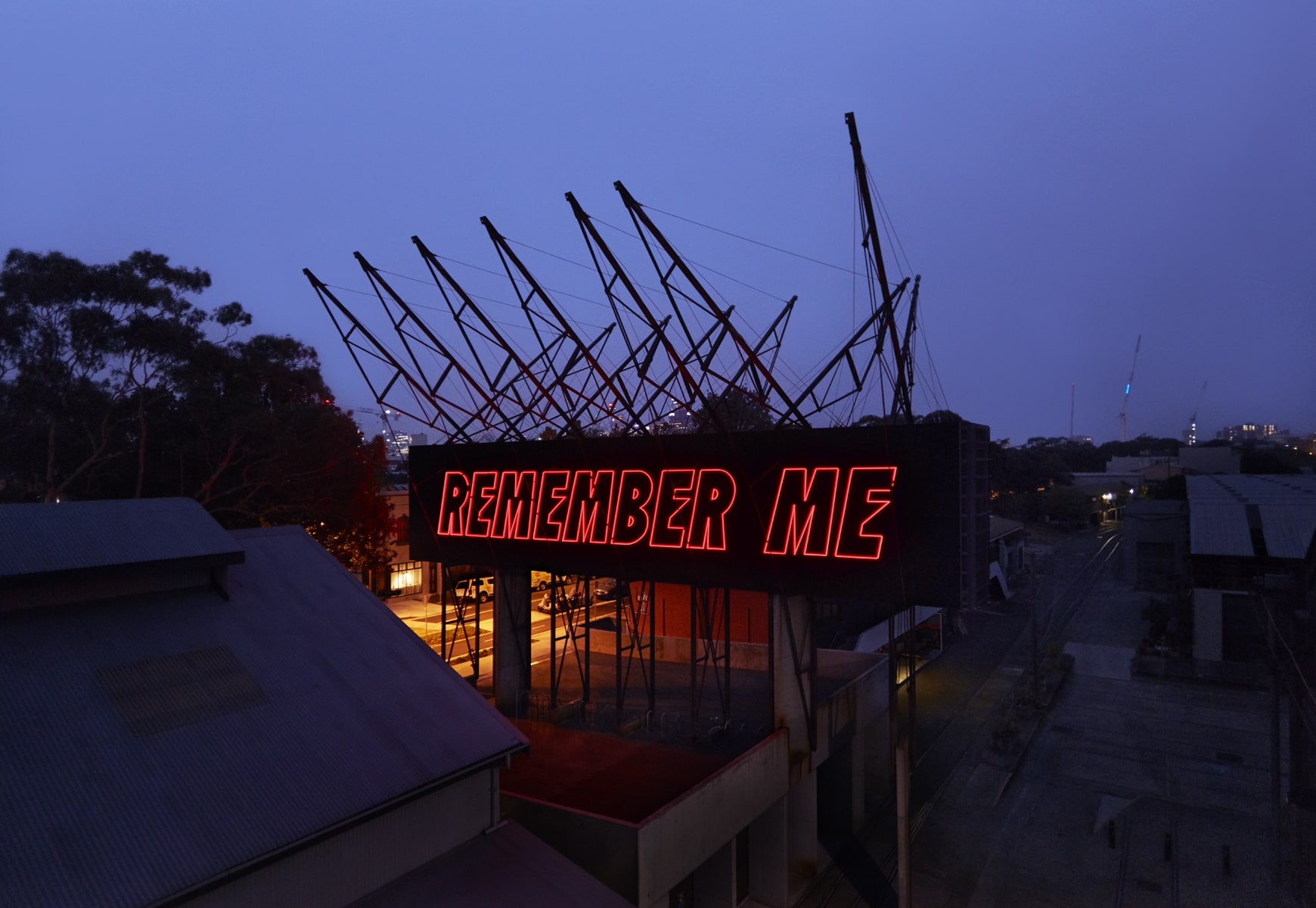
It makes sense considering much of your work today relates to memory, identity and remembrance of who came before, not unlike how graffiti can say, ‘I was here, and you can’t take that away from me’.
That’s right — remember me. Remember the history of this country. We’re a multicultural, multifaceted, unique community of various language groups and artistic practices representing the oldest continuing living culture in the world. Our identity has been dumbed down so much by Western European ideologies, but all that’s changing. Our generation is now seeing all these beautifully vocal and empowered communities speak out because there’s so much to unpack here in this country. That’s why it’s important to acknowledge the past and present, move into the future, and be empowered to do so.
Is it hard to walk the line of communicating the ancient importance of Aboriginal culture and history with that of what it means to be an Aboriginal man in today’s society?
It can be problematic. But you realise you’re contributing to something much bigger, a message that can raise awareness, inform through art, or share a particular message, and there’s beauty in that. I was once a journalist and I thought I’d be able to empower and change how Aboriginal people were portrayed in mass media; obviously so naive and powerless in that mainstream media world. But through art I’ve had this amazing voice where I could share work, opinions, and expressions of form and identity around the world. It’s a really beautiful thing, and it evolves. That’s what drives me.
You’ve risen and risen in the art world. What’s that experience been like?
It’s funny, weirdly, because in this country, it’s tough to break into art. There are so many gatekeepers and so much bullshit nepotism —and it really is a jingoistic kind of nepotism. So that frustrated me. I had a few people say, ‘You can do this, you can’t do that’; ‘You’ve got to do this and not that … when someone tells me I can’t do something or is negative about my work, it fuels me more to prove them wrong.
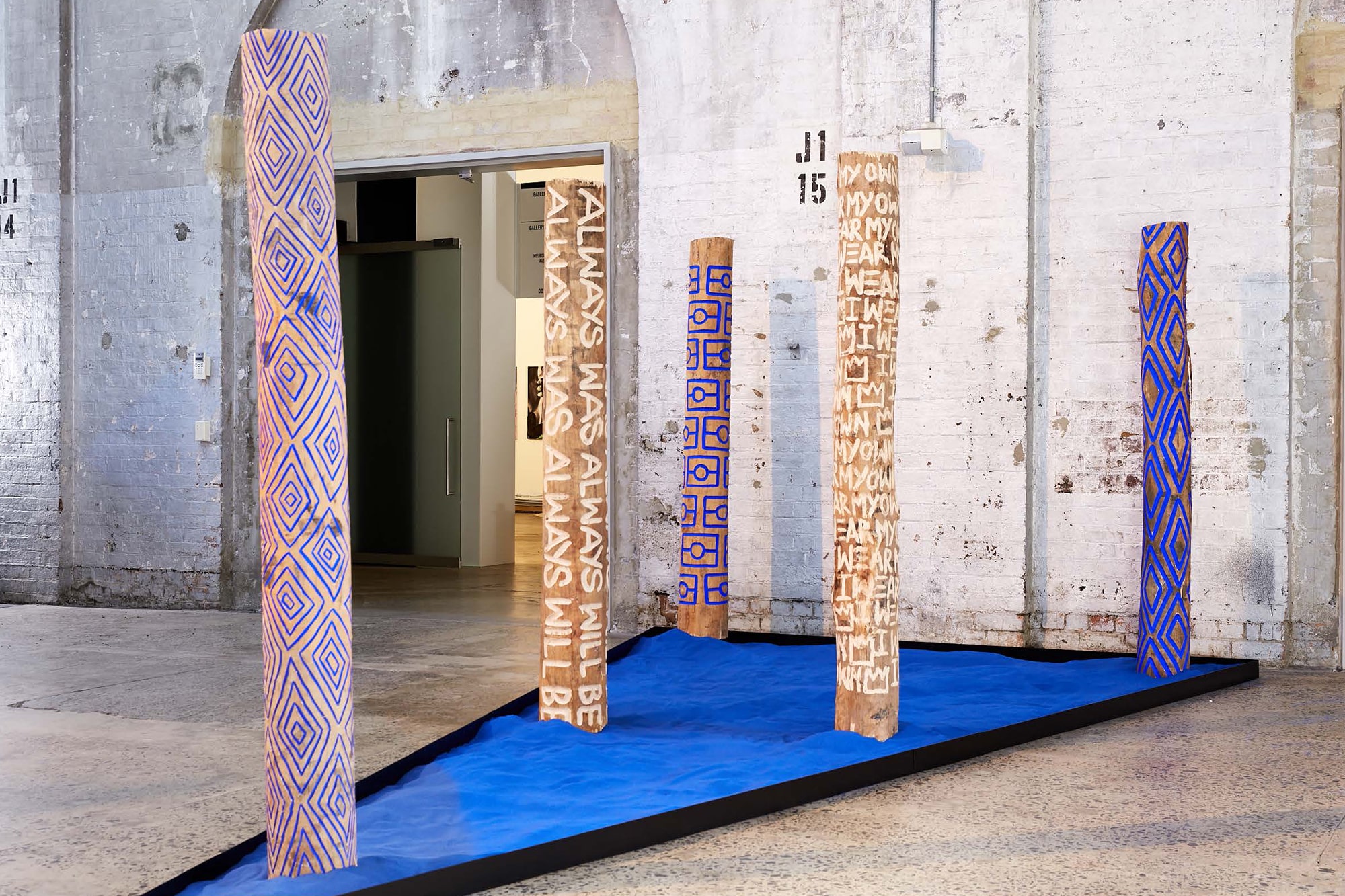
text installation at Sydney’s Carriageworks; Totemic, also at Station Gallery.
Was there a ‘breakthrough moment’?
I went to Paris and did a residency [at Cite Internationale des Artes in 2009], and for some reason, that legitimised my career as an artist here —it was that thing of, ‘oh, he’s gone to Paris. I had won a couple of awards, held shows, but then, ABC did a story on me over there, and it blew up. In those early days, I couldn’t afford art magazines —I used to go to the NGV, have a coffee, take a little notebook, and go through the magazines and write down all the up-and-coming curators. Using my journalistic research skills, I would send out 40-50 emails a week, and every now and then, I’d get a hit, and get invited to do a project overseas. And I’d pay for it all myself, take out a credit card and invest in myself, and that’s what paid off for me: doing things overseas. What then happened back here, galleries and institutions started to take notice of me. It was pretty interesting.
You’ve got a future residency at the American Academy Rome. How would you describe the international attitude to contemporary Aboriginal art right now?
People are really interested and the work is always well-received. I think when you’re talking about loss of identity, land, culture and language; or persecution of identity and cross-generational trauma, it’s a very relatable story. Because at some point in history, people have had that experience as well. So it’s an unfortunately common narrative around the world, and that’s where we can share a bond and a connection.
The shared global sadness of displacement and memory is increasingly relevant. How do you explore themes like this in your process and work?
Thinking about loss and memory and creating work from that is really multilayered. My video work with the Rolls-Royce [OA_RR, 2017] talks about my grandmother’s experience of being eight years old and taken from her family, made to be a slave, working for rations on a pastoral station where there was systematic abuse by pastoralists. People don’t talk about that. That’s why I made that Rolls work. I was reclaiming that symbol of colonial power, wealth and royalty. Those who drove those cars would have Aboriginal people removed from their families as slaves, and then they’d drive to church on Sunday and be absolved of their sins. And this was systemic in Australia, not just in one geographic location. So going back to an ex-pastoral station, taking a cool, ’73 Rolls-Royce Corniche on Country painted in a geometric camouflage, with line work and symbolism that comes from my family area [Kamilaroi] and which I designed to talk to the fact our people had to conceal who they were, it was a declaration of identity. I was saying, ‘I’m proud of who I am and where I come from and all of those who came before me. It’s my right to show and declare that. I don’t want to blend in.’ So we shot it, did some burnouts, and took all the notions of my misspent youth driving cars in the west and put those skills to work, which I did.
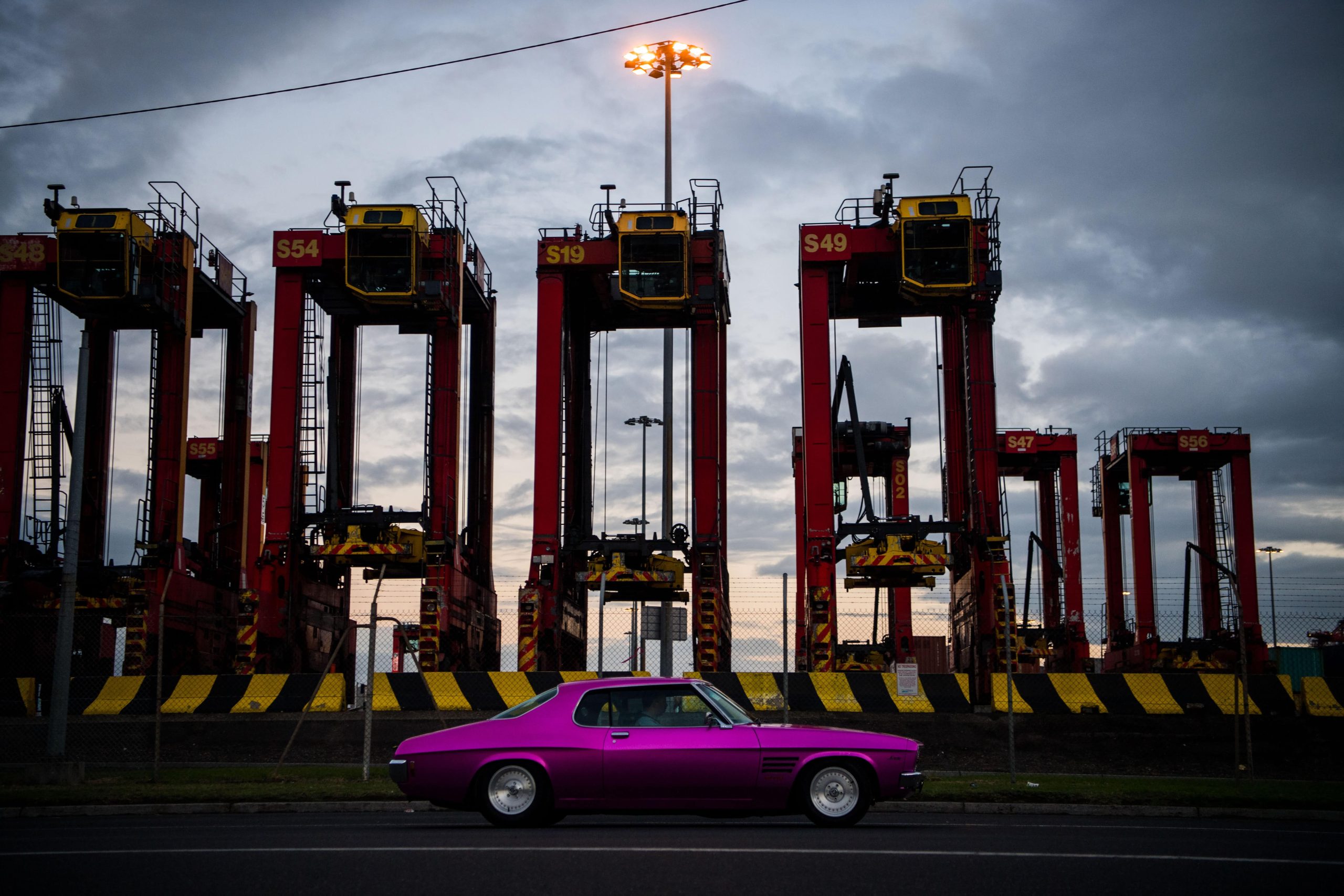
That’s not the only work to feature you in a hotted-up car. 2021’s follow-up Initiation_OA sees you cruising around your old stomping ground in a Holden Monaro, another strong white Australia symbol, albeit with an Aboriginal name. Where’d this love of cars come from?
I’m really attracted to the design aspects of a car and I love classics. At the moment, I only have a three-litre, Australian-delivered Porsche ’77 Targa and a Cayenne GTS, which is my studio car, but I’ve had Alfas, Valiants, Hondas, and lots of different cars, as well as bikes over the years.
I’m actually looking for another thing to paint, maybe a Porsche? But heavy car culture was something I grew up with. There was this whole thing about hotting up cars —old Monaros, Commodore VH SLEs, Alfa Romeos, V8 Interceptors —and a lot of pride and community existed around customising cars. But they were also a symbol of success and aspiration, and there was a weird symbology related to the car too.
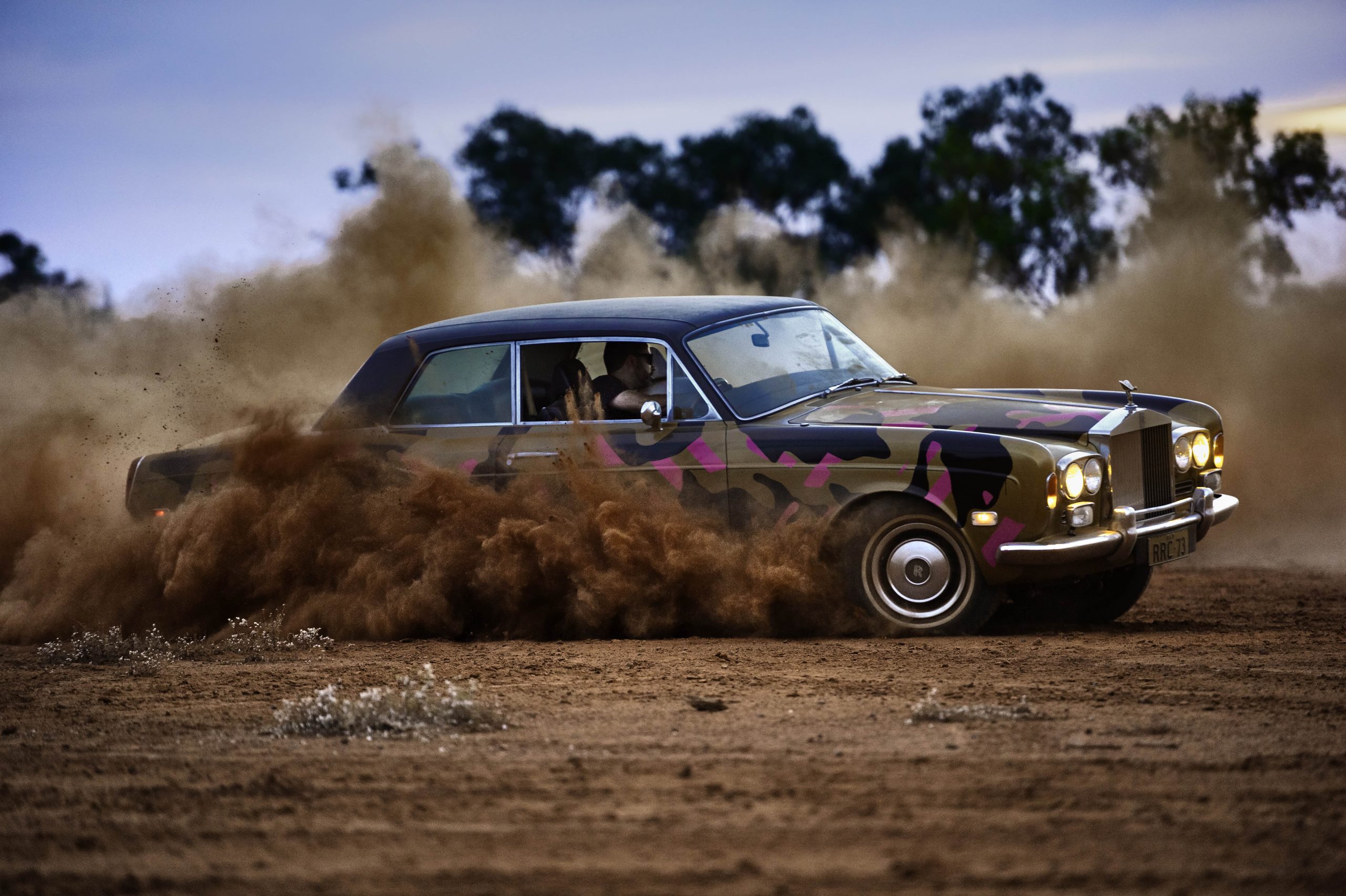
Growing up in the west was pretty wild and heavy in trauma from seeing a lot of things, and it was a certain type of person who drove a Monaro. There is a lot of toxic masculinity associated with those cars as well. I wanted to reclaim all that with a pink, sparkly car and go through these urban landscapes, where I was taught a lot of lessons; that was my form of initiation. And yes, I wanted to reclaim the name, too. That’s why I picked it.
On reclaiming space and looking back to your early days as a graffiti artist, how does it feel now to see your work in almost as many public spaces as institutions built on colonial ideals?
It also comes back to growing up doing stuff out on the street—it’s free for everyone to see. A lot of the work I do, at times, goes into a gallery or an institution, and there’s a particular clientele that sees it. I grew up poor, in a working-class environment and many can relate to that. So I want my art to be seen by people from all aspects of society, not just the wealthy. But it’s also important that in a public environment, too, you have the freedom to say and do things with space and form. That’s an important aspect of having a voice. With the projection on the Opera House, they wanted all this nice, easy stuff, and I did a really powerful symbolic statement of the warrior. That didn’t go down too well. Luckily, I had a few people fight for me, and it went ahead as this proud declaration of identity and history. I think public spaces are great for making those statements, and I love to do that. But also, because in the past, our people were denied the opportunity to contribute to wider society, it’s crucial to occupy those spaces, be vocal and be present. I’ve had people say to me, ‘don’t dream so big’, and I just think, ‘why the fuck not? Who are you to stop me?’ We have to be present in all aspects of society because we were denied so much in the past.
Subscribe to the Newsletter
Recommended for you

Peter Lehmann Masterson Shiraz: The Barossa’s Rarest Expression
A single-vineyard wine released only in exceptional vintages, defined by patience, precision and the long game.
March 26, 2026

Sydney’s Sandstone Precinct Takes Shape at Capella
The former Department of Lands building reopens as a luxury hub for dining, culture and private membership.
By Maeve Galea
March 26, 2026
You may also like.


You may also like.

Inside Loro Piana’s First Sydney Boutique
A first Australian address brings the Italian house’s textile-led approach to retail full circle.
On the fourth floor of Westfield Sydney, near the Castlereagh and Market Street entrance—in the space formerly occupied by Chanel—Loro Piana has opened its first Australian boutique. It is a significant address change for that corner of the mall, and a meaningful one for the Italian house, which has sourced Australian merino wool for decades but until now had no retail presence here.
The facade is understated—creamy, tactile, more about texture than theatre. Inside, the store unfolds across a single, expansive level divided into distinct men’s and women’s wings. The separation is clear without being heavy-handed: womenswear leads from soft accessories and leather goods into ready-to-wear, while menswear occupies its own assured territory, with tailoring and outerwear given proper breathing room. Footwear (supple loafers, luxurious slides, pared-back sneakers) is particularly strong, and the sunglasses are a quiet standout: mineral-toned frames with a disciplined elegance that feels entirely of the house.
That same restraint carries into the interiors, where the surfaces do much of the talking. Walls are wrapped in the company’s own linen and cashmere; carpets are custom, dense underfoot, softening the acoustics and the pace. Oak and carabottino wood add warmth without fuss; marble accents introduce a cool counterpoint. The effect is a composed space calibrated around material, proportion and restraint.

The Spring 2026 collection now in store underscores that sensibility. Silhouettes are elongated and fluid; cashmere, silk and featherweight merino move in sandy neutrals, creams and muddied earth tones, with flashes of marigold and pale turquoise breaking the calm. Tailoring is softly structured and projects confidence without aggression. Leather goods arrive in buttery skins that feel almost pre-lived, as though time has already worked its magic.
What distinguishes Loro Piana, particularly in a market that has grown noisier by the season, is its refusal to perform luxury in an obvious register. There are no oversized insignias telegraphing allegiance. Instead, the status is encoded in fibre count, in hand-feel, in how a coat hangs from the shoulder. It assumes the wearer knows and, crucially, does not need to announce it.
Sydney’s luxury landscape has matured in recent years; global houses no longer test the waters but commit to them. Yet Loro Piana’s arrival feels different. It is not trend-driven expansion but material logic. For a country whose sheep stations have long contributed to the house’s fabric story, this boutique reads almost as a thank-you note written in cashmere.

Photography: Courtesy of Loro Piana.
You may also like.



This Stylish, Water-Resistant Dopp Kit Might Be the Last One You Ever Buy
Patricks’s limited-edition wash bag is designed to keep liquids in and out, so it can come along wherever your travels take you.
If all you’re going to do is look at it, a leather Dopp kit from a fashion house is a fine choice. But if you take travelling seriously—and do it often, for business, pleasure, or both—such a bag will inevitably end up blemished with droplets of water or stained by errant flecks of toothpaste. Get stuck with a cavalier team of baggage handlers, and it can even get soaked in your favourite fragrance or anti-ageing serum.
But Patricks, the high-performance Australian grooming brand stocked in Harrods and Bergdorf Goodman, has a solution. Its limited-edition bathroom bag, called BB1, is purpose-built to protect everything inside and out. Conceived by industrial designer George Cunningham with brand founder Patrick Kidd, the cuboid design is executed in a water-resistant recycled nylon you can rinse clean. It’s lined with a thin layer of shock-absorbing foam to safeguard your products, but if a bottle somehow gets cracked in transit, the two-way water-resistant zippers and sealed seams (which keep liquids from seeping in or out) ensure that whatever leaks won’t ruin your cashmere. Inside, two dual-sided zippered compartments are ideally sized to fit toothbrushes, razors, and other small essentials.
And though its clean lines and rugged construction make it undeniably masculine, its greatest feature is borrowed from women’s makeup bags. Like the best of these, BB1 unzips to lie flat, giving you unobstructed access to everything inside. Well, you and the 999 other gentlemen who move fast enough to snag one. $289
 Courtesy of Patricks
1. Hanging Loop
The G-hook system isn’t just a stylish handle: You can also use it to hang the bag from a hook or secure it to your carry-on.
2. Two-Way Zipper
The closures are water-resistant in both directions, meaning liquids won’t get in or out.
3. Fold-flat Construction
BB1 opens to 180 degrees, letting you scan its 4.2-litre capacity at a quick glance.
4. Technical-Fabric Shell
The durable recycled-nylon is easy to maintain and woven to survive splashes and leaks from your go-to products.
You may also like.


You Can Now Place Bets on the Future Prices of Rolex Models
And which models will get discontinued next, thanks to a new collaboration between Kalshi and Bezel.
You may also like.


Mauve on Up
Brisbane boutique stay Miss Midgley’s offers a viscerally human experience—especially if you dig pink.
On a sun-bleached corner of Brisbane’s New Farm, where the scent of frangipani mingles with the clink of coffee cups, stands a building that has lived more lives than most people. Once a premier’s residence, an orphanage, a hospital and a private school, the 160-year-old stone structure now finds itself reborn as Miss Midgley’s—a boutique stay that teaches a masterclass in how to make heritage feel modern.
Designed and run by architect-mother-daughter duo Lisa and Isabella White, Miss Midgley’s captures the cultural confidence of a city in bloom. Nowhere is that new confidence more visible than along James Street—the leafy, slow-burn heart of the city’s fashion and dining scene—where Miss Midgley’s sits quietly at the edge, its shell-pink façade glowing in the subtropical light.
Built of Brisbane’s rare volcanic tuff, the building’s soft mauves and pinks are more than aesthetic; they are its identity. Locals still remember its 1950s incarnation as the Pink Flats, and the Whites have honoured that legacy with a contemporary blush-toned exterior, chosen to harmonise with the stone’s peachy undertones. Inside, those hues continue in dusty terracottas, russets and the faint shimmer of brass tapware. “Design can’t afford to be for the sake of fashion,” Isabella White has said. “It has to respond to what’s in front of you.”
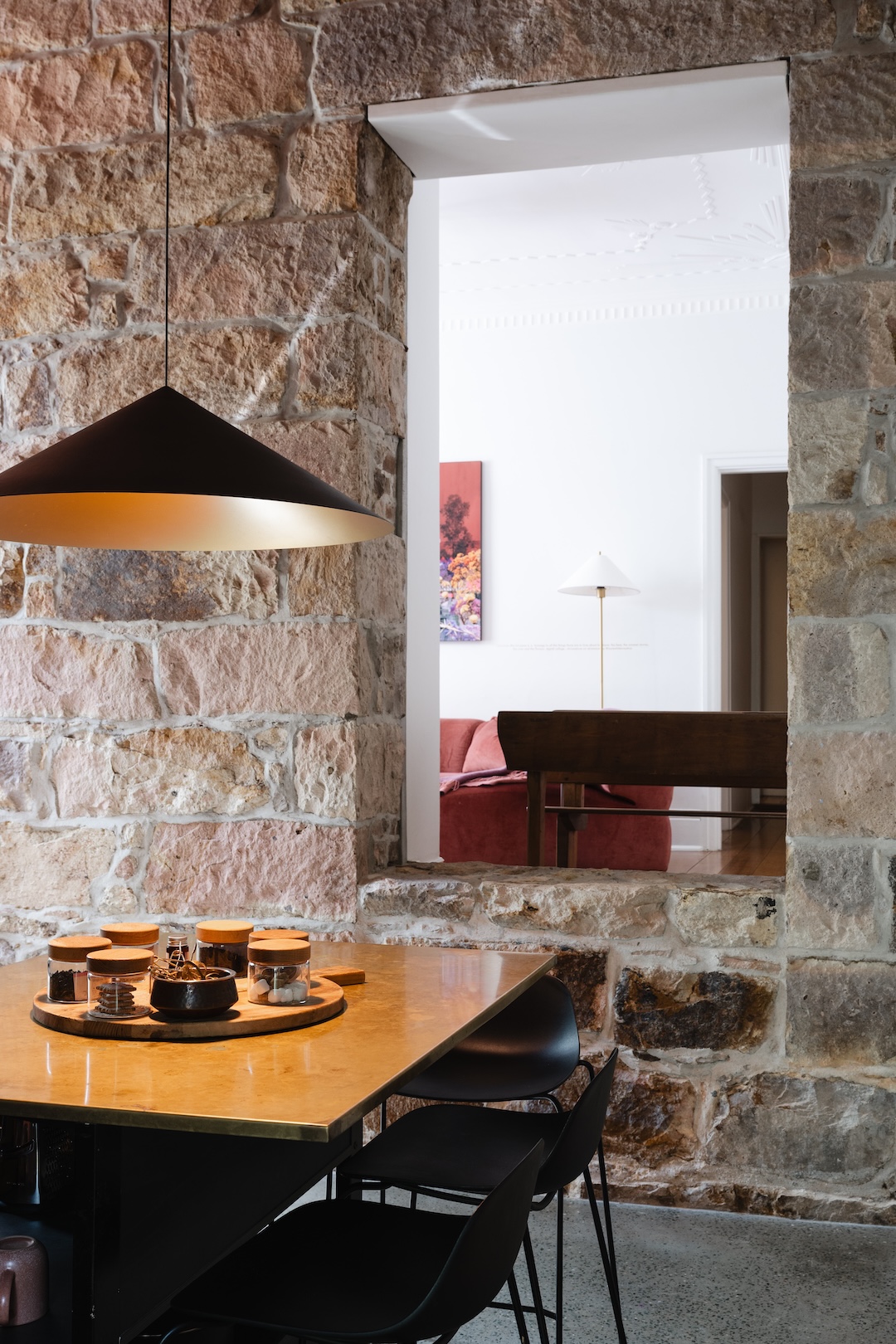
That sentiment is tangible in every corner. Five apartments, each with their own idiosyncratic floor plan, occupy the building. Ceilings bloom with heritage plasterwork, 19th-century wallpaper fragments have been preserved in the kitchens, and tiny hand-painted notes left by the architects point out original quirks: a misaligned beam here, a hidden archway there. It’s a kind of adult treasure hunt for design lovers, where discovery feels personal and unforced.
Even the picket fence, a heritage requirement, has been reimagined in corten steel—a sly nod to regulation turned into sculpture. It’s this blend of reverence and rebellion that gives Miss Midgley’s its edge: heritage without starch, nostalgia without sentimentality.
True to Brisbane’s easy elegance, luxury here is measured not in marble or minibar but in proportion, privacy, and personality. Each apartment—from the Drawing Room and the Assembly Hall to the Principal’s Office—is a self-contained sanctuary with its own kitchen, large bathroom and outdoor space. The ground-floor units open onto leafy courtyards and welcome small dogs; upstairs, the larger suites spill onto verandahs shaded by jacarandas.
At the heart of the property lies a solar-heated pool hemmed with tropical greenery and fringed umbrellas—more mid-century Palm Springs than colonial Brisbane. Around it, guests share a petite laundry, a communal library and that rarest of urban luxuries: a car park per apartment. The atmosphere is quietly collegiate—a handful of travellers who might nod to each other on the stairs but otherwise inhabit their own creative bubbles.
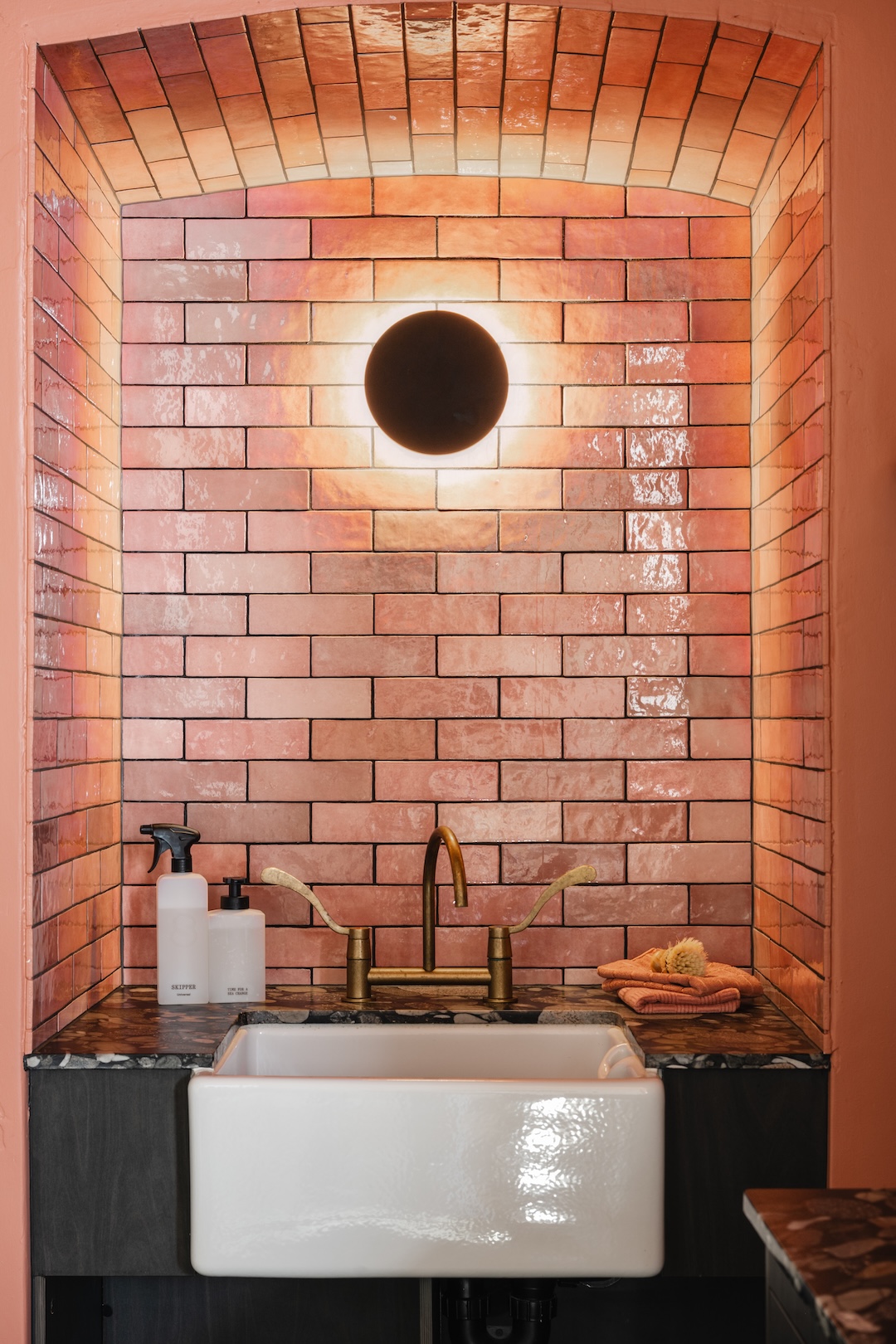
The hotel’s namesake, Annie Midgley, lends the project both its name and its spirit. An ambidextrous artist and teacher, she famously instructed two students at once, writing with both hands simultaneously—a fitting metaphor for the dual vision the Whites bring to the building: one hand rooted in history, the other sketching toward the future. “Not famous, yet known,” goes the property’s understated tagline—and indeed, Miss Midgley’s has quietly become that most desirable of addresses: the one whispered about by people who know.
Sustainability isn’t an accessory here; it’s structural. The adaptive reuse of the heritage building is its boldest environmental act. Solar panels power the property; an electric heat pump warms the pool; recycled decking and tiles frame the courtyard. The metre-thick tuff walls regulate temperature naturally, and the amenities follow suit—refillable bath products, biodegradable pods, Seljak blankets spun from textile off-cuts, and compendiums wrapped in Australian-made kangaroo leather. It’s slow luxury in the truest sense.
In a world of carbon-copy hotels, Miss Midgley’s feels deeply human—a place where history isn’t curated behind glass but lives in the warmth of stone and the flicker of afternoon light. The lesson it offers is simple and resonant: that the most elegant modernity often comes not from reinvention, but from listening to what’s already there.
You may also like.

My Brisbane…Monique Kawecki
The Queensland capital is carving its own distinctive take on Australian culture. Here, a clued-up local aesthete takes us around town.
It’s almost a given that all globally minded creatives will, at some juncture in their careers, choose a path that leads directly to one of the planet’s vital cultural hubs—metropolises with the cosmopolitan thrum of New York, the lofty elegance of Paris, the futuristic edge of Tokyo.
True to form, Monique Kawecki’s work odyssey transported her to the buzz of London for over a decade, but the editor and creative consultant now admits to “finding a balance” in Brisbane, using the Queensland capital as a base for generating international content. Together with her husband, industrial designer Alexander Lotersztain, she’s proud to call the fast-blooming city her home.
Driven by curiosity, Monique joins the dots between creative communities and helps bring visionary projects to life through her studio Champ Creative, a space she runs with her twin sister in Tokyo. Her work as co-founder and editorial director of Ala Champ Magazine, a print-turned-digital-media platform rooted in design, architecture and creative culture, allies thinkers and makers who are shaping the future.
EAT
Central
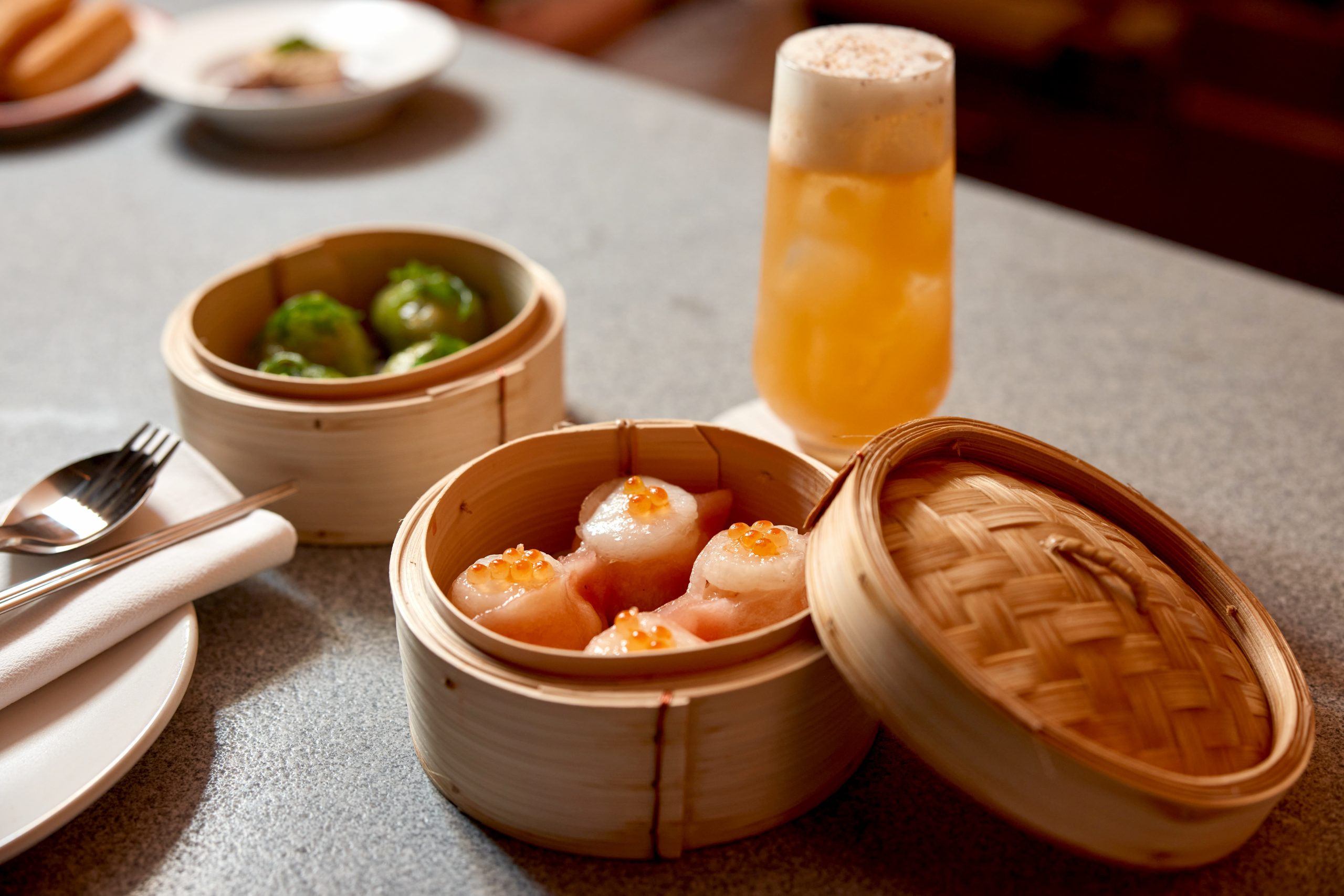
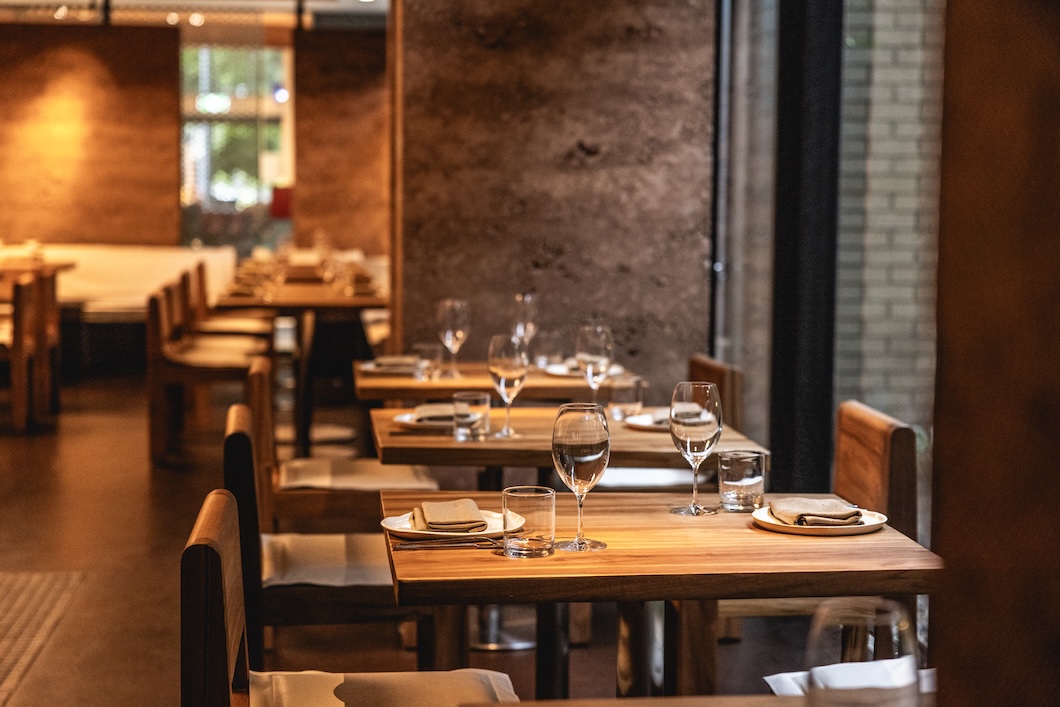
Step underground and you’ll find more than just a Hong Kong-inspired eatery. This vibrant enclave in the CBD is the vision of chef Benny Lam and young restaurateur David Flynn, combining an avant-garde space—designed by up-and-coming J.AR Office—with inventive Asian-fusion plates and a curated Chinese and Australian wine list. Every detail, from the menu to the disco-era soundscape, combines for a memorable experience.
Gerards
A restaurant that has long held its place among Brisbane’s primo venues, and its makeover by J.AR Office has confirmed it is a mainstay in the city. Rich, rammed-earth textures and sleek steel set the stage for the Levantine-inflected fare, where Queensland produce meets Middle Eastern tradition—all served on textured Sally Kerkin tableware that casts the eclectic dishes in an even more visually pleasing light.
DRINK
+81 Aizome Bar
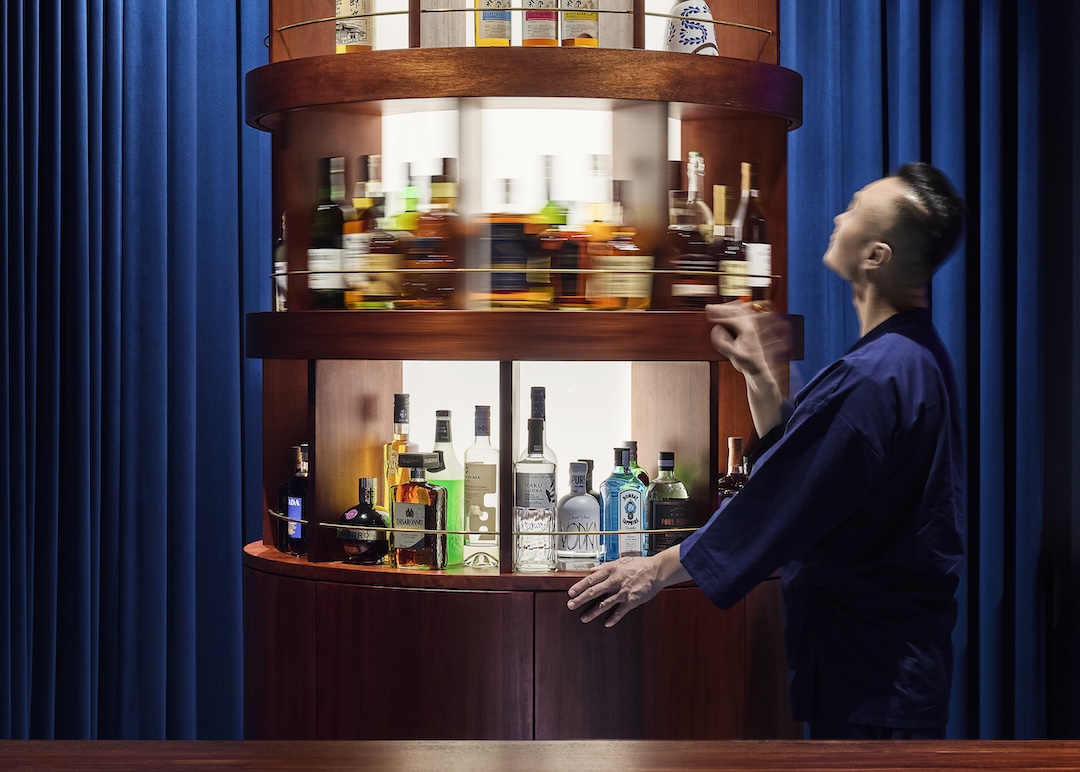
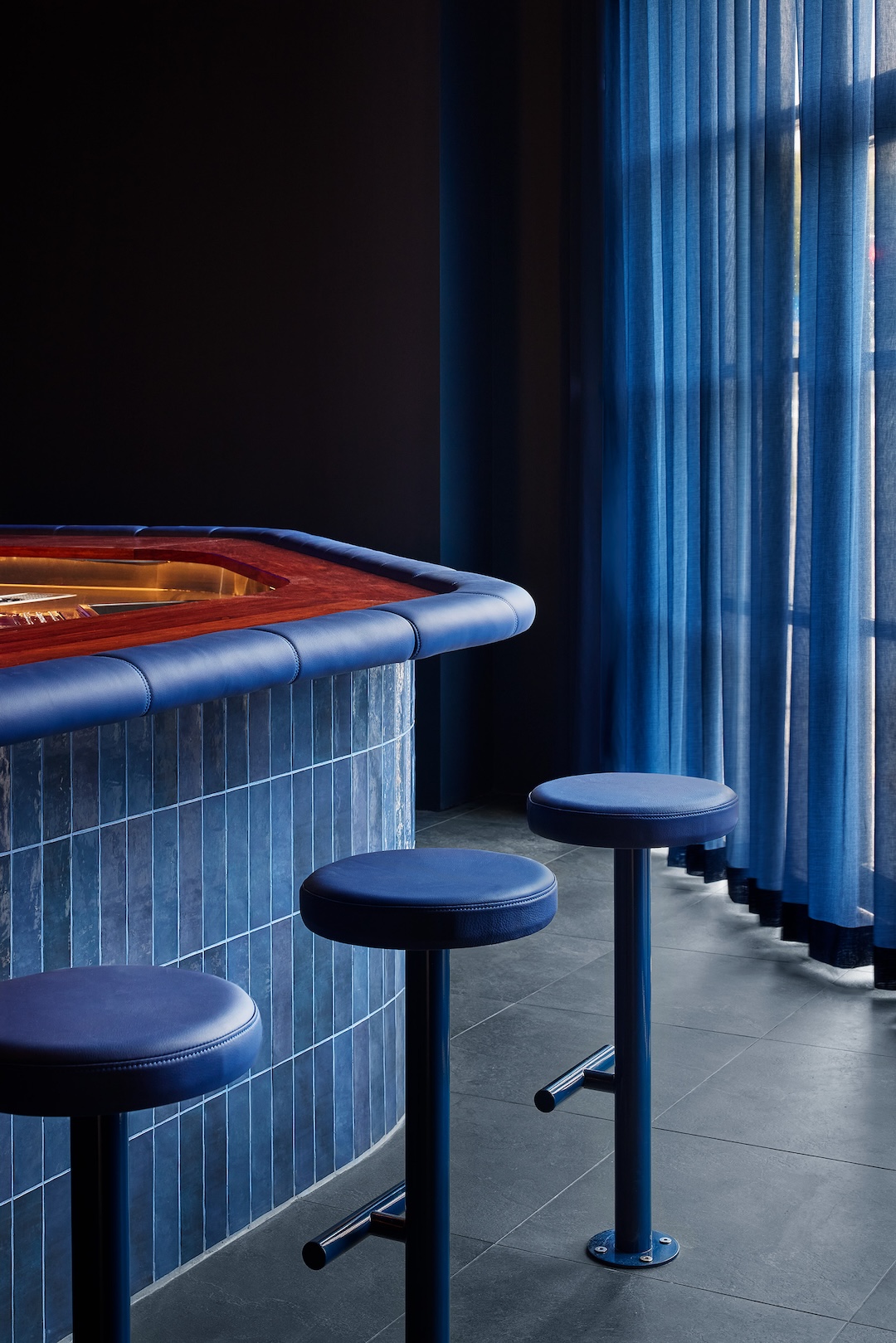
Inspired by the hidden cocktail bars in Tokyo’s Ginza district, an intimate, indigo-hued 10-seater designed by Alexander Lotersztain. The dimly lit space presents drinks served over hand-cut Japanese ice and expertly crafted “neo cocktails” courtesy of mixologist Tony Huang. Champ Creative curated and sourced the artisan-made tableware and glassware from Japan, making sure the experience is as authentic as possible.
Bar Miette
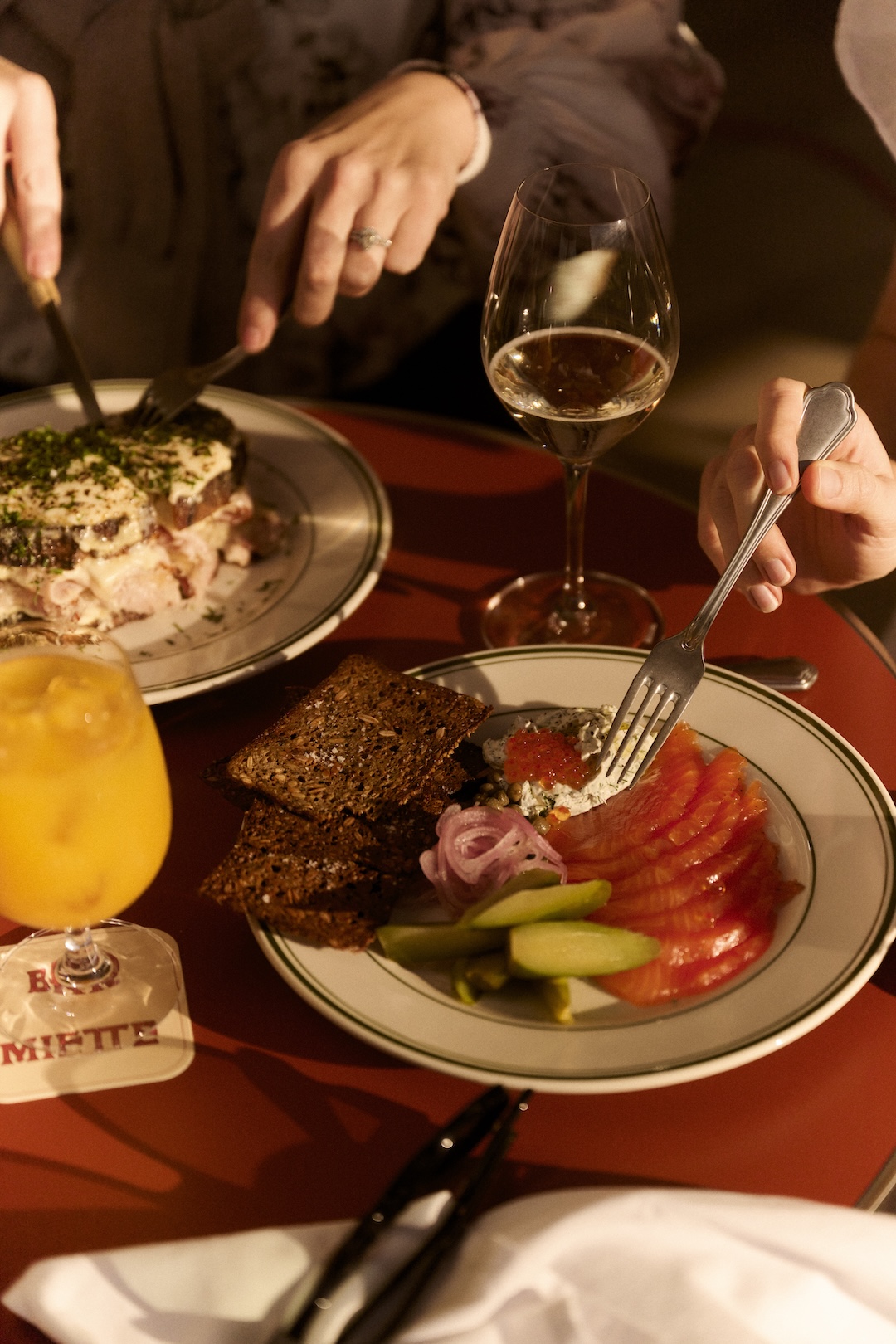
Overlooking the Brisbane River, Australian chef Andrew McConnell has enlisted executive chef Jason Barratt to direct two of his standout dining ventures—this venue and Supernormal—on the waterfront at 443 Queen Street. Both offer stellar dining—the milk bun with mortadella and smoked maple syrup is simple yet sublime—but this is the spot to visit for a glass of wine accompanied by water vistas.
ART & CULTURE
QAGOMA
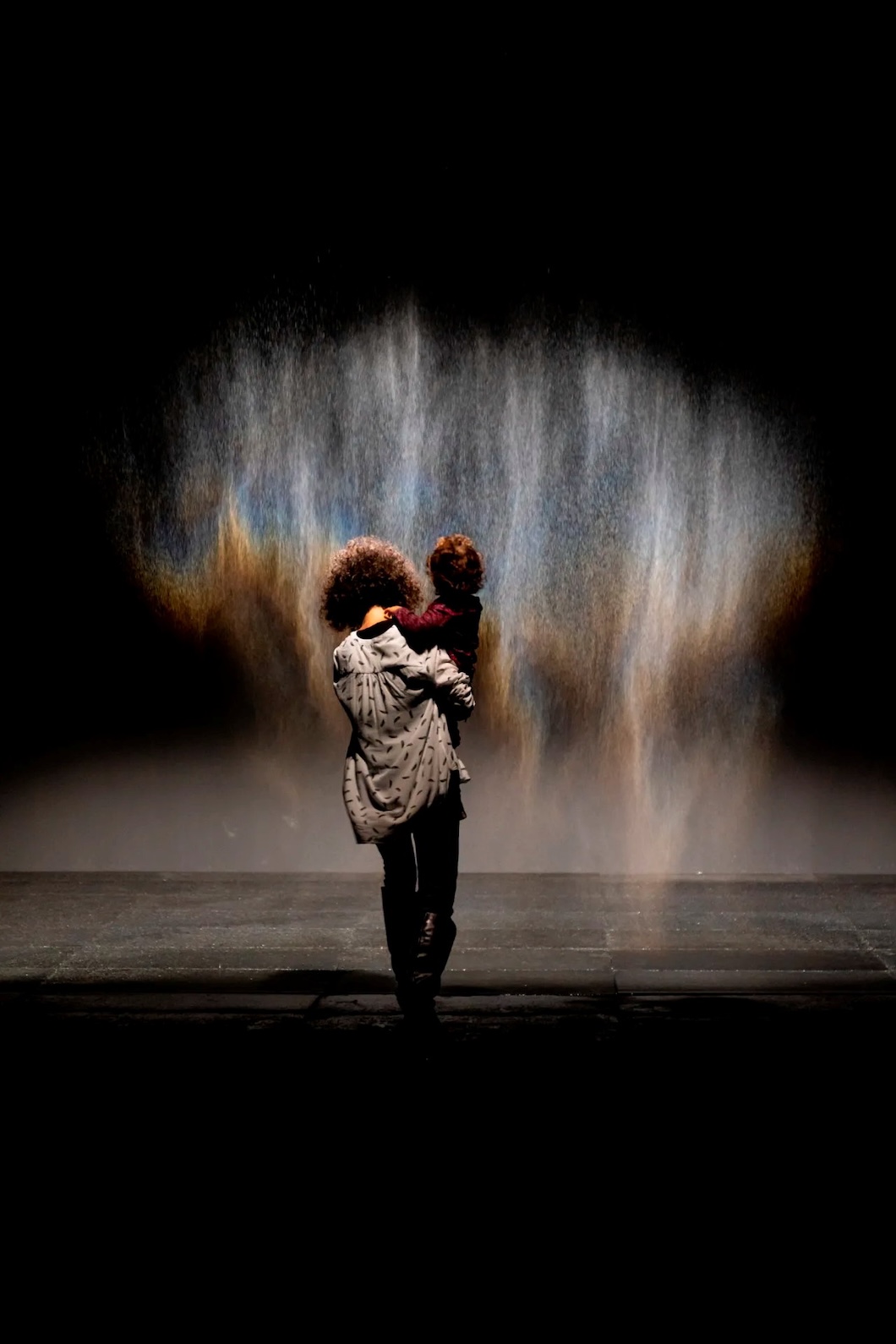
Together, the Queensland Art Gallery (QA) and Gallery of Modern Art (GOMA) form Australia’s largest modern and contemporary art gallery. Roosting on Brisbane’s South Bank, the establishment showcases exemplary art from Australia, Asia and the Pacific, and, as such, has become a firm favourite among both locals and tourists. By day, world-class exhibitions such as Danish artist Olafur Eliasson’s Presence—beginning December 6th—take centre stage; after dark, expect illuminated theatrics as GOMA permanently projects an intense, multi-hued James Turrell artwork onto its facade.
SHOP
BrownHaus
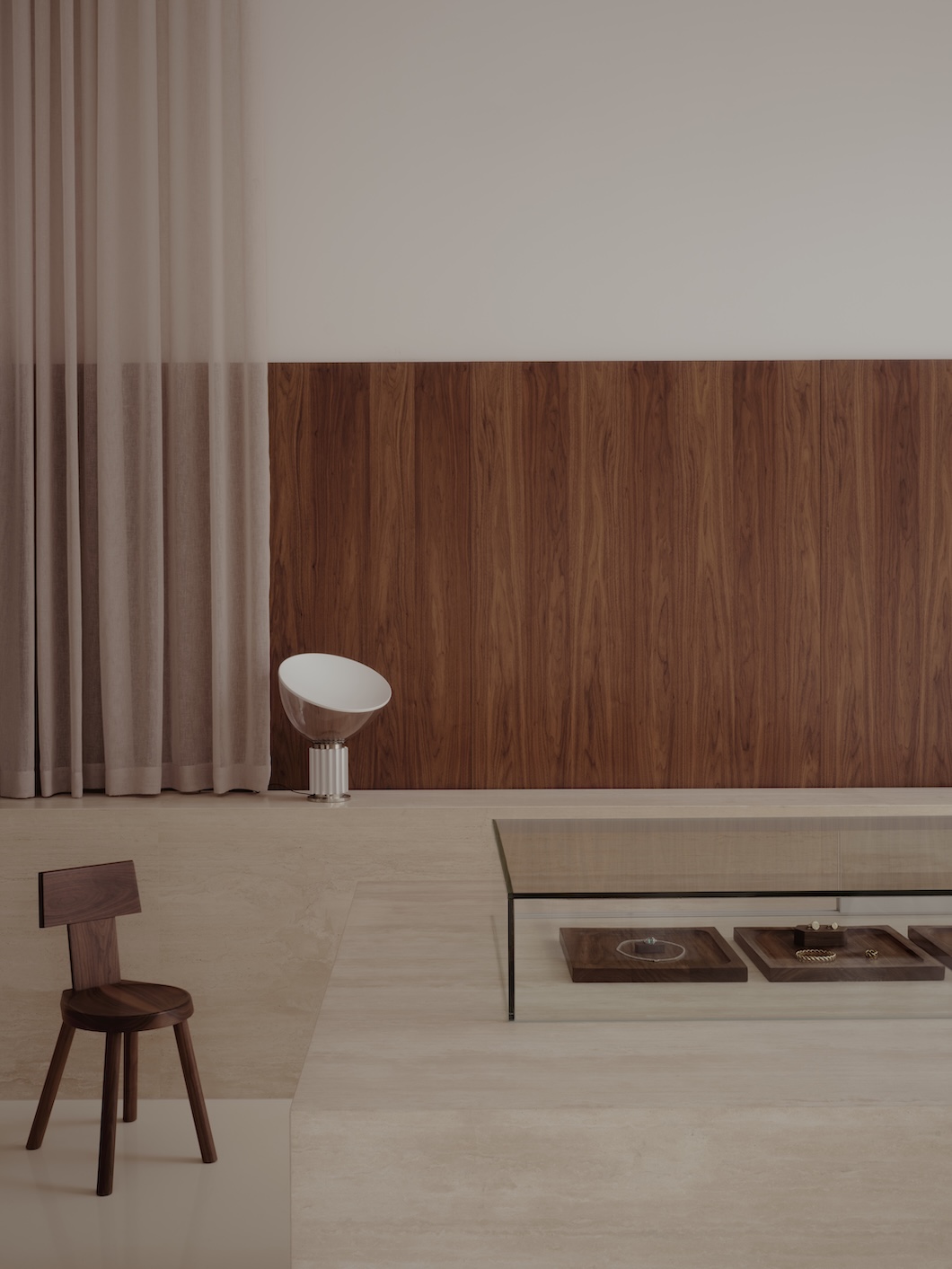
The experience of entering the luxurious, travertine-clad space is as beautiful as the creations the jewellery studio constructs. The culmination of founder Drew Brown’s 25 years of refining his craft, fine jewels and elevated everyday pieces for both men and women captivate your gaze, each example formed with the utmost intention and care. Moreover, Brown is redefining traditional artisanship and service in a new, modern way, ensuring the flagship store is accessible and exciting in equal measure.
James Street Precinct
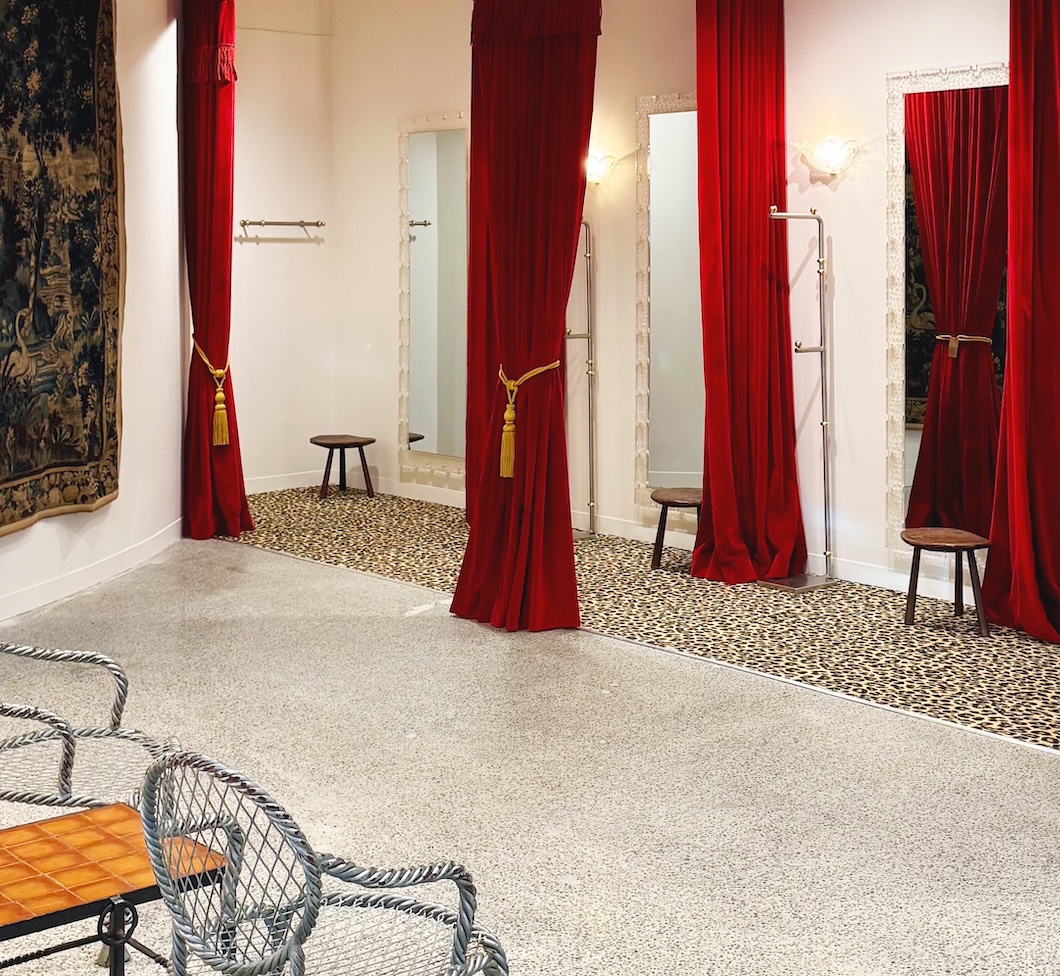
For shopping, dining or even just perfecting the time-honoured art of people-watching, James Street is a one-stop hub where fashion, cinema, design and dining converge in Fortitude Valley. Wandering through the streets, discovering fresh, and established, ventures is a cinch. Restaurants sAme sAme and Biànca (from the team behind Agnes and the new Idle bakery) are hard to pass up; next door, be prepared to queue for a cone at Gelato Messina. A recent arrival to the zone is Heidi Middleton’s Artclub atelier, while Australian tailoring brand P. Johnson recently launched its new store, designed by the renowned Tamsin Johnson, across from The Calile hotel.
WELLNESS
The Bathhouse Albion
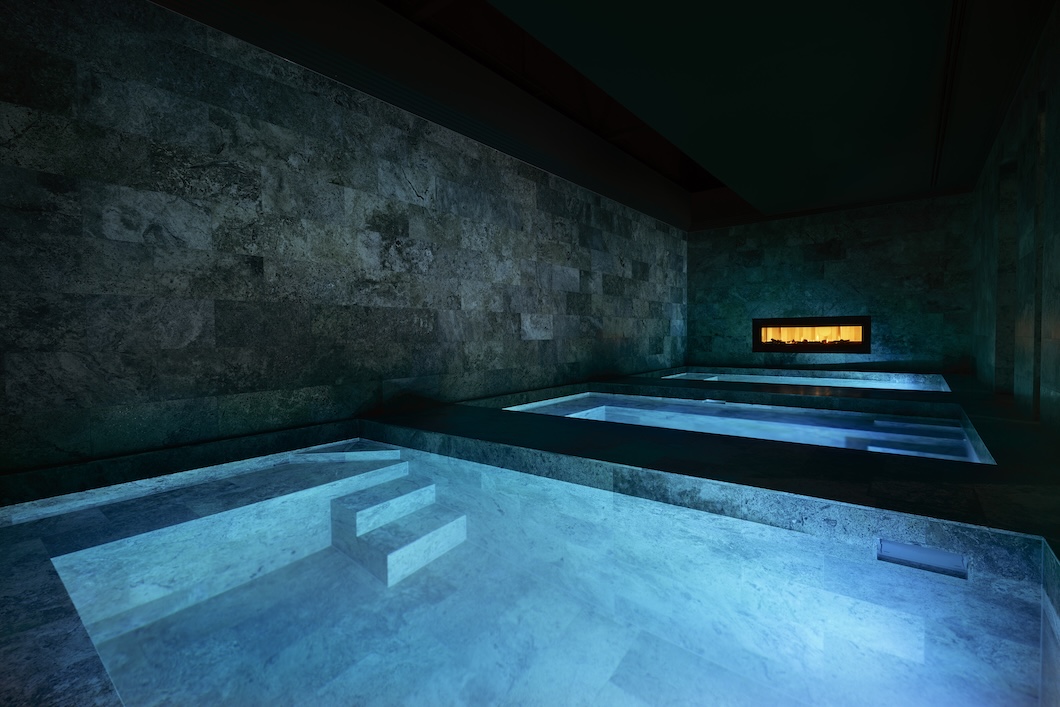
In Brisbane is home to multiple wellness centres in which one can work out or unwind, such as the five-floor, $80 million TotalFusion Platinum Newstead. This facility, designed by architectural practice Hogg & Lamb, presents a more serene, temple-like experience in the once-industrial Albion Fine Trades district, delivering a communal yet luxe bathhouse with spa, cold plunge, sauna, float, and steam room. With a separate area for hydration spruiking organic TeaGood loose-leaf teas, an hour session ensures a restorative reset.
DAY TRIP
Lady Elliot Island
Visiting one of the most pristine sections of the Great Barrier Reef in one day from Brisbane? Yes, it is indeed possible—and in style, too. With an early start from Redcliffe, around 40 minutes’ drive from the city, take a 90-minute flight to the 45-hectare island and then indulge in a glass-bottom boat viewing, an island tour, and a guided snorkel where you will swoon over mesmerising coral and other-worldly marine life. Lunch is included.