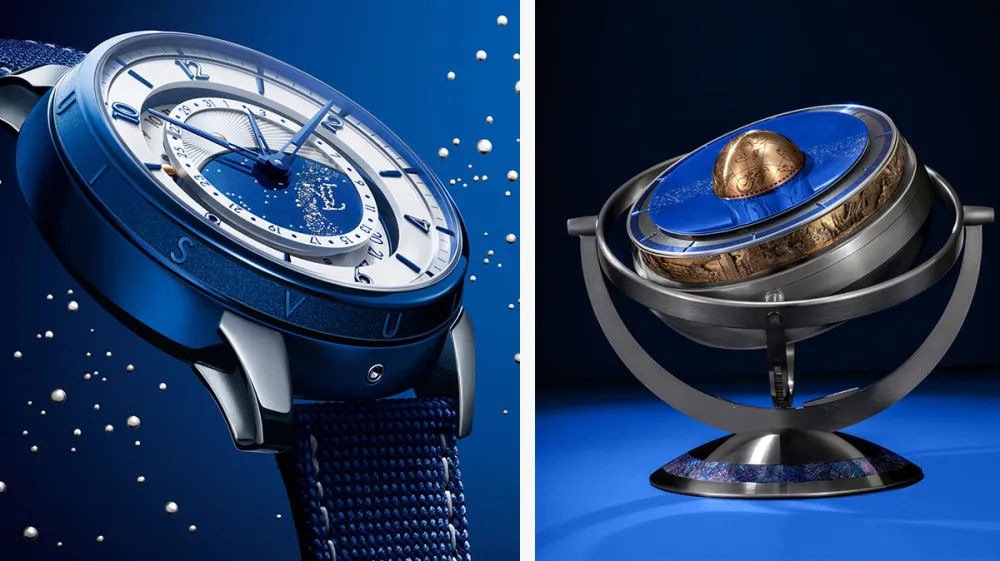
AP Gave Its New Royal Oak Chronograph a Light Touch—Literally
You can start, stop, and reset the new model’s signature complication with a lot less pressure.
Powered by a minuscule engine composed of tiny springs, diminutive gears and screws so small they barely register to the human eye, the mechanical watch remains an anachronistic vestige of a pre-digital age. But for dedicated collectors, such technological obsolescence isn’t a concern. In fact, the very drawbacks of these wrist-borne machines—their reliance on a human being as an energy source, their lack of uniformity even within identical references, their temperamental tendencies—are precisely what give them their charm.
Still, the engineers at Audemars Piguet are no Luddites. What, they wondered, could be done to lend a chronograph the tactile feel of a smartphone? Such a refinement, they reasoned, would go a long way toward improving the connoisseur’s daily experience. Since the 1970s, developments in serial production and waterproofing had increased the force required to activate a chronograph pusher to roughly 1.5 kg over a travel distance of about 1 mm. Giulio Papi, Audemars Piguet’s director of watchmaking design, sought to reduce those figures dramatically—to just 300 g of force over a travel of 0.3 mm, approximately the same pressure needed to adjust the volume on an iPhone.
These next-generation pushers are one of the defining innovations of the Royal Oak “Jumbo” Extra-Thin Selfwinding Flying Tourbillon Chronograph RD#5, the latest marvel in A.P.’s cutting-edge Research and Development series. At its heart is the new Calibre 8100, which debuts a reimagined reset mechanism. In place of the traditional hammer-and-heart-shaped system, it uses a patented rack-and-pinion design that harnesses stored energy to return the titanium chronograph hand to zero in a near-instantaneous retrograde motion. Coupled with a lightning-fast chronograph minute jump, the result is an exceptionally accurate and intuitive flyback chronograph.

Audemars Piguet didn’t stop there. Building upon the RD#3 from 2022, the maison incorporated a high-amplitude flying tourbillon with a titanium cage and a lighter, thinner escapement—enhancing both reliability and energy efficiency. Remarkably, all this innovation is contained within a movement measuring just 4 mm thick, despite comprising 379 individual components and 44 jewels.
Even with its technical advances, the RD#5 preserves the unmistakable DNA of a classic Royal Oak. Its Petite Tapisserie dial, rendered in deep blue, features rhodium-toned 18-karat pink-gold “bathtub” hour markers, matching white-gold hands, dual chronograph registers at three and nine o’clock, and a flying tourbillon aperture at six. The 39 mm case, crafted from titanium rather than stainless steel or gold, is paired with a bracelet that combines the same lightweight metal with bulk metallic glass—an alloy composed of 50 percent palladium and other metals that’s exceptionally resistant to corrosion and wear.
Merging classical horological artistry with 1970s aesthetics and state-of-the-art materials, the RD#5 represents a stunning technical and tactile coup—a reminder that, sometimes, analogue really is better.
Price on request
Subscribe to the Newsletter
Recommended for you

TAG Heuer’s New Monaco and Carrera Watches
The latest chronographs blend cutting-edge engineering with the brand’s racing heritage.
March 26, 2026

Jacob & Co.’s Latest Billionaire Watch Is Adorned With Hundreds of New ‘Angel-Cut’ Diamonds
The 216 stones showcase a novel patented cut with 37 precisely engineered facets.
March 22, 2026
You may also like.



You may also like.
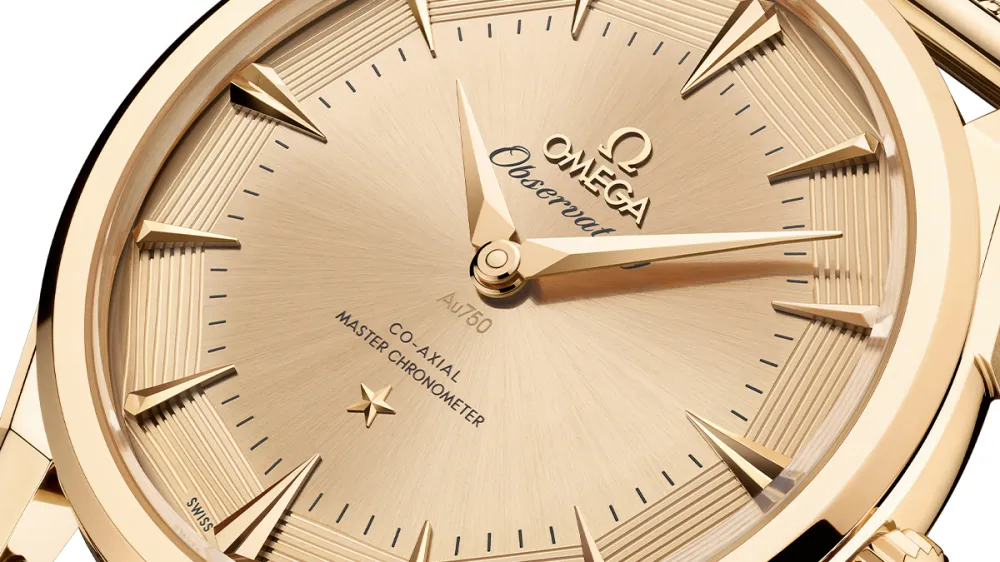
Omega Just Unveiled 9 Watches in Its New Constellation Observatory Collection
The line-up shows up a bevy of metals and colours, too, as well as two new calibres.
Omega’s latest watch is in a universe of its own.
The Swiss watchmaker just unveiled its new Constellation Observatory Collection today, the next step in its Constellation lineage and the first two-hand hour and minute timepieces to ever earn Master Chronometer certification. And if you were paying attention to any of the dazzling watches spotted at the Oscars this year, you would’ve caught a glimpse of the new line already: Sinners star Delroy Lindo rocked one of the models on the Academy Awards red carpet, giving us a pre-release preview of the collection.
Developed at Omega’s new Laboratoire de Précision (its chronometer testing lab open to all brands), the collection houses a set of nine 39.4 mm watches. The watches underwent 25 days of scrutiny there, analysed via a new acoustic testing method that recorded every sound emitted from the timepiece to track irregularities, temperature sensitivities, and more in the name of all things precision. (Details such as water resistance and power reserve are also thoroughly examined.) This meticulous process is all in the name of snagging that Master Chronometer label, meaning that the timepiece is highly accurate and surpasses the threshold for ultra-high performance. The Constellation Observatory Collection has now changed the game, though, thanks to its lack of a seconds hand.

“Until now, precision certification has required a seconds hand,” Raynald Aeschlimann, president and CEO of OMEGA, said in a press statement. “The development of a new acoustic testing methodology has made that requirement obsolete. It is this breakthrough that has enabled us to present the Constellation Observatory, the first two-hand watch to achieve Master Chronometer certification.”
In addition to notching its place in history, the collection also debuted a new pair of movements: the Calibre 8915 and the Calibre 8914, each perched on a skeletonised rotor base. The former’s Grand Luxe iteration will appear on the 950 Platinum-Gold model in the collection, which offers up that base in 18-karat Sedna Gold alongside a Constellation medallion in 18-karat white gold with an Observatory dome done in white opal enamel surrounded by stars. The second Calibre 8915, the Luxe, will find its home on the other precious-metal models in the line, either made with the brand’s 18-karat Sedna, Moonshine, or Canopus gold seen across the case, the hand-guilloché dial, and, of course, the movement itself. (Lindo chose to rock the Moonshine Gold on Moonshine Gold iteration, priced at approximately $86,000, for Sinners‘s big night at the Oscars.) As for the Calibre 8914, it can be found in the collection’s four steel models.

Each model is a callback to myriad design features on past Omega models. That two-hand dial, for one, comes from the 1948 Centenary (the brand’s first chronometer-certified automatic wristwatch), while the pie-pan dial (seen in various blue, green, and golden hues throughout the line) and that Constellation medallion caseback both appear on watches from 1952. The star adorning the space above 6 o’clock also harks back to 1950s timepieces from Omega. And to finish off the look, you can opt for alligator straps in a variety of colours, or perhaps a gold iteration to match the precious-metal models; the brick-like pattern on the 18-karat Moonshine bracelet was also inspired by Omega watches from the ’50s.
We’ll have to keep our eyes peeled for any other Constellation Observatory timepieces (or any other unreleased models from the brand) at the rest of the star-studded events headed our way this year—perhaps the Met Gala?
You may also like.


Inside Loro Piana’s First Sydney Boutique
A first Australian address brings the Italian house’s textile-led approach to retail full circle.
On the fourth floor of Westfield Sydney, near the Castlereagh and Market Street entrance—in the space formerly occupied by Chanel—Loro Piana has opened its first Australian boutique. It is a significant address change for that corner of the mall, and a meaningful one for the Italian house, which has sourced Australian merino wool for decades but until now had no retail presence here.
The facade is understated—creamy, tactile, more about texture than theatre. Inside, the store unfolds across a single, expansive level divided into distinct men’s and women’s wings. The separation is clear without being heavy-handed: womenswear leads from soft accessories and leather goods into ready-to-wear, while menswear occupies its own assured territory, with tailoring and outerwear given proper breathing room. Footwear (supple loafers, luxurious slides, pared-back sneakers) is particularly strong, and the sunglasses are a quiet standout: mineral-toned frames with a disciplined elegance that feels entirely of the house.
That same restraint carries into the interiors, where the surfaces do much of the talking. Walls are wrapped in the company’s own linen and cashmere; carpets are custom, dense underfoot, softening the acoustics and the pace. Oak and carabottino wood add warmth without fuss; marble accents introduce a cool counterpoint. The effect is a composed space calibrated around material, proportion and restraint.

The Spring 2026 collection now in store underscores that sensibility. Silhouettes are elongated and fluid; cashmere, silk and featherweight merino move in sandy neutrals, creams and muddied earth tones, with flashes of marigold and pale turquoise breaking the calm. Tailoring is softly structured and projects confidence without aggression. Leather goods arrive in buttery skins that feel almost pre-lived, as though time has already worked its magic.
What distinguishes Loro Piana, particularly in a market that has grown noisier by the season, is its refusal to perform luxury in an obvious register. There are no oversized insignias telegraphing allegiance. Instead, the status is encoded in fibre count, in hand-feel, in how a coat hangs from the shoulder. It assumes the wearer knows and, crucially, does not need to announce it.
Sydney’s luxury landscape has matured in recent years; global houses no longer test the waters but commit to them. Yet Loro Piana’s arrival feels different. It is not trend-driven expansion but material logic. For a country whose sheep stations have long contributed to the house’s fabric story, this boutique reads almost as a thank-you note written in cashmere.

Photography: Courtesy of Loro Piana.
You may also like.


This Stylish, Water-Resistant Dopp Kit Might Be the Last One You Ever Buy
Patricks’s limited-edition wash bag is designed to keep liquids in and out, so it can come along wherever your travels take you.
If all you’re going to do is look at it, a leather Dopp kit from a fashion house is a fine choice. But if you take travelling seriously—and do it often, for business, pleasure, or both—such a bag will inevitably end up blemished with droplets of water or stained by errant flecks of toothpaste. Get stuck with a cavalier team of baggage handlers, and it can even get soaked in your favourite fragrance or anti-ageing serum.
But Patricks, the high-performance Australian grooming brand stocked in Harrods and Bergdorf Goodman, has a solution. Its limited-edition bathroom bag, called BB1, is purpose-built to protect everything inside and out. Conceived by industrial designer George Cunningham with brand founder Patrick Kidd, the cuboid design is executed in a water-resistant recycled nylon you can rinse clean. It’s lined with a thin layer of shock-absorbing foam to safeguard your products, but if a bottle somehow gets cracked in transit, the two-way water-resistant zippers and sealed seams (which keep liquids from seeping in or out) ensure that whatever leaks won’t ruin your cashmere. Inside, two dual-sided zippered compartments are ideally sized to fit toothbrushes, razors, and other small essentials.
And though its clean lines and rugged construction make it undeniably masculine, its greatest feature is borrowed from women’s makeup bags. Like the best of these, BB1 unzips to lie flat, giving you unobstructed access to everything inside. Well, you and the 999 other gentlemen who move fast enough to snag one. $289
 Courtesy of Patricks
1. Hanging Loop
The G-hook system isn’t just a stylish handle: You can also use it to hang the bag from a hook or secure it to your carry-on.
2. Two-Way Zipper
The closures are water-resistant in both directions, meaning liquids won’t get in or out.
3. Fold-flat Construction
BB1 opens to 180 degrees, letting you scan its 4.2-litre capacity at a quick glance.
4. Technical-Fabric Shell
The durable recycled-nylon is easy to maintain and woven to survive splashes and leaks from your go-to products.
You may also like.




You Can Now Place Bets on the Future Prices of Rolex Models
And which models will get discontinued next, thanks to a new collaboration between Kalshi and Bezel.
You may also like.


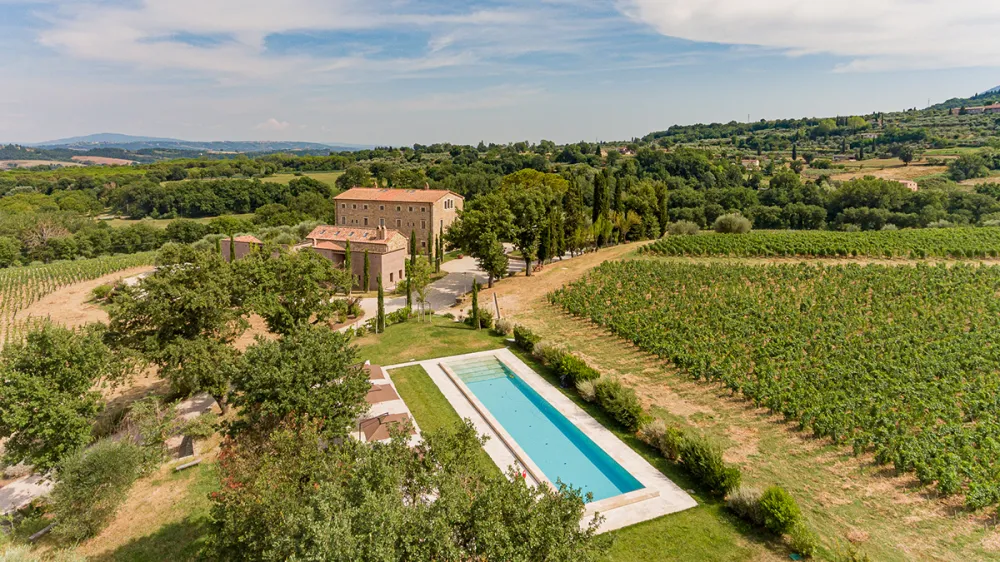

Mauve on Up
Brisbane boutique stay Miss Midgley’s offers a viscerally human experience—especially if you dig pink.
On a sun-bleached corner of Brisbane’s New Farm, where the scent of frangipani mingles with the clink of coffee cups, stands a building that has lived more lives than most people. Once a premier’s residence, an orphanage, a hospital and a private school, the 160-year-old stone structure now finds itself reborn as Miss Midgley’s—a boutique stay that teaches a masterclass in how to make heritage feel modern.
Designed and run by architect-mother-daughter duo Lisa and Isabella White, Miss Midgley’s captures the cultural confidence of a city in bloom. Nowhere is that new confidence more visible than along James Street—the leafy, slow-burn heart of the city’s fashion and dining scene—where Miss Midgley’s sits quietly at the edge, its shell-pink façade glowing in the subtropical light.
Built of Brisbane’s rare volcanic tuff, the building’s soft mauves and pinks are more than aesthetic; they are its identity. Locals still remember its 1950s incarnation as the Pink Flats, and the Whites have honoured that legacy with a contemporary blush-toned exterior, chosen to harmonise with the stone’s peachy undertones. Inside, those hues continue in dusty terracottas, russets and the faint shimmer of brass tapware. “Design can’t afford to be for the sake of fashion,” Isabella White has said. “It has to respond to what’s in front of you.”
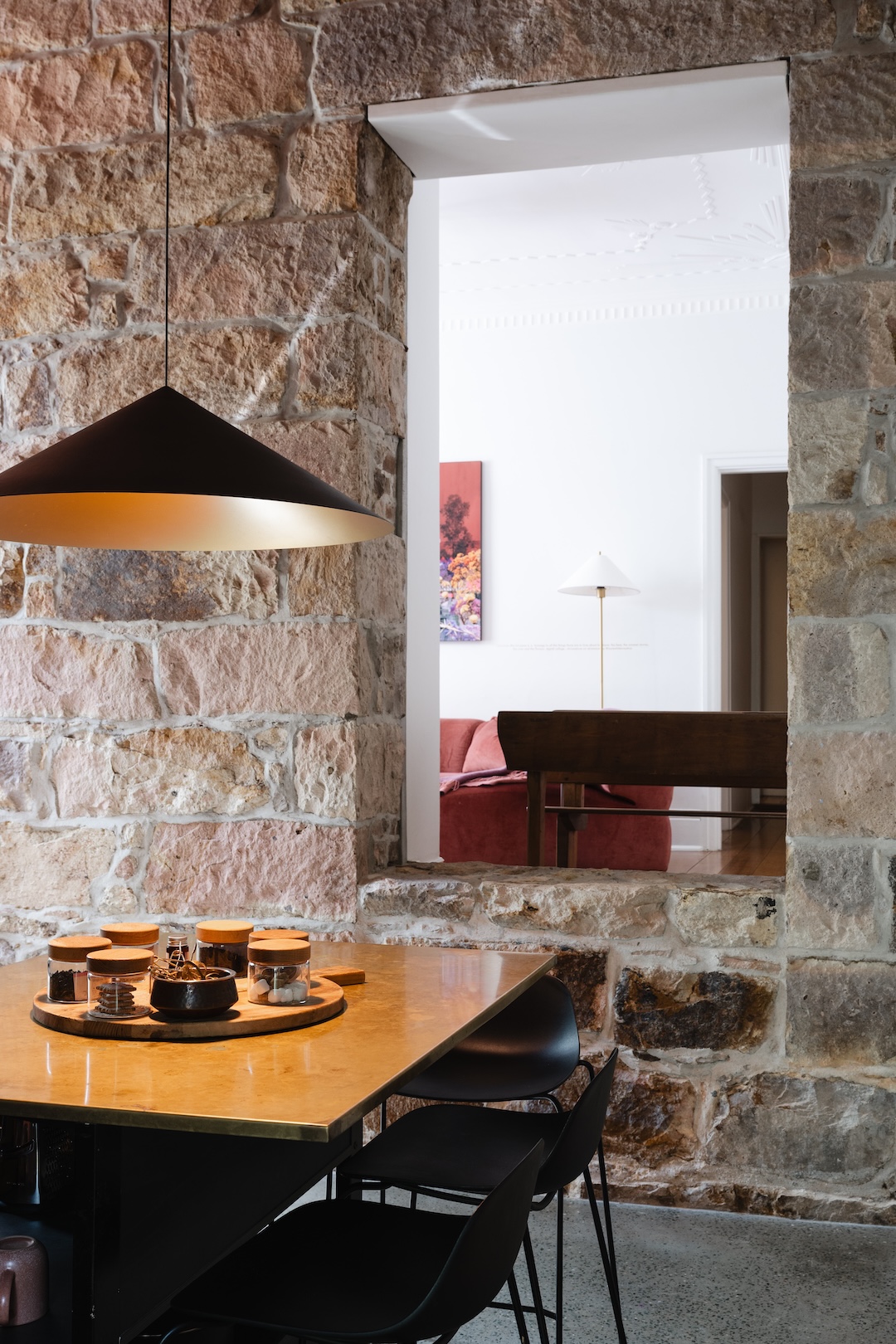
That sentiment is tangible in every corner. Five apartments, each with their own idiosyncratic floor plan, occupy the building. Ceilings bloom with heritage plasterwork, 19th-century wallpaper fragments have been preserved in the kitchens, and tiny hand-painted notes left by the architects point out original quirks: a misaligned beam here, a hidden archway there. It’s a kind of adult treasure hunt for design lovers, where discovery feels personal and unforced.
Even the picket fence, a heritage requirement, has been reimagined in corten steel—a sly nod to regulation turned into sculpture. It’s this blend of reverence and rebellion that gives Miss Midgley’s its edge: heritage without starch, nostalgia without sentimentality.
True to Brisbane’s easy elegance, luxury here is measured not in marble or minibar but in proportion, privacy, and personality. Each apartment—from the Drawing Room and the Assembly Hall to the Principal’s Office—is a self-contained sanctuary with its own kitchen, large bathroom and outdoor space. The ground-floor units open onto leafy courtyards and welcome small dogs; upstairs, the larger suites spill onto verandahs shaded by jacarandas.
At the heart of the property lies a solar-heated pool hemmed with tropical greenery and fringed umbrellas—more mid-century Palm Springs than colonial Brisbane. Around it, guests share a petite laundry, a communal library and that rarest of urban luxuries: a car park per apartment. The atmosphere is quietly collegiate—a handful of travellers who might nod to each other on the stairs but otherwise inhabit their own creative bubbles.
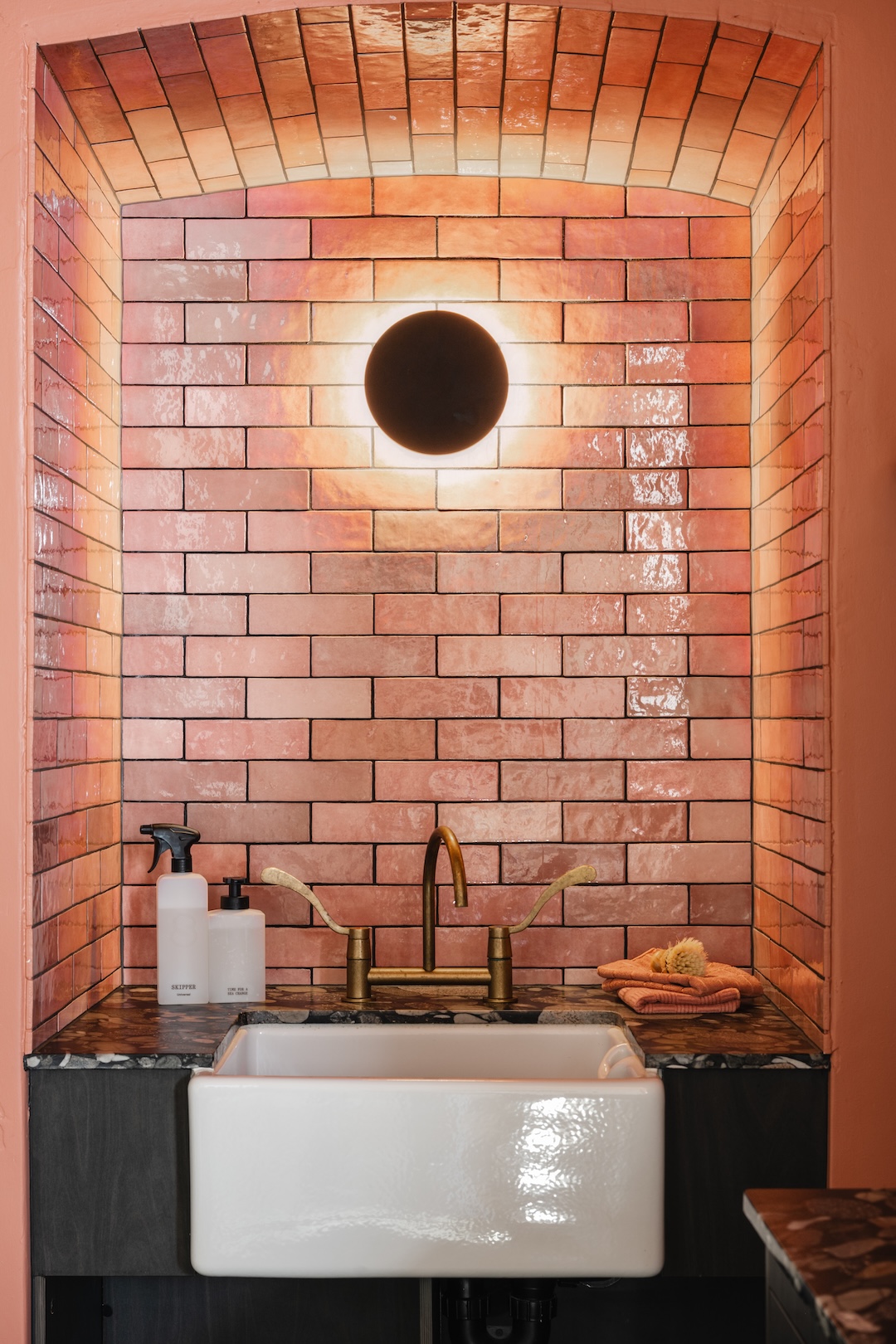
The hotel’s namesake, Annie Midgley, lends the project both its name and its spirit. An ambidextrous artist and teacher, she famously instructed two students at once, writing with both hands simultaneously—a fitting metaphor for the dual vision the Whites bring to the building: one hand rooted in history, the other sketching toward the future. “Not famous, yet known,” goes the property’s understated tagline—and indeed, Miss Midgley’s has quietly become that most desirable of addresses: the one whispered about by people who know.
Sustainability isn’t an accessory here; it’s structural. The adaptive reuse of the heritage building is its boldest environmental act. Solar panels power the property; an electric heat pump warms the pool; recycled decking and tiles frame the courtyard. The metre-thick tuff walls regulate temperature naturally, and the amenities follow suit—refillable bath products, biodegradable pods, Seljak blankets spun from textile off-cuts, and compendiums wrapped in Australian-made kangaroo leather. It’s slow luxury in the truest sense.
In a world of carbon-copy hotels, Miss Midgley’s feels deeply human—a place where history isn’t curated behind glass but lives in the warmth of stone and the flicker of afternoon light. The lesson it offers is simple and resonant: that the most elegant modernity often comes not from reinvention, but from listening to what’s already there.